
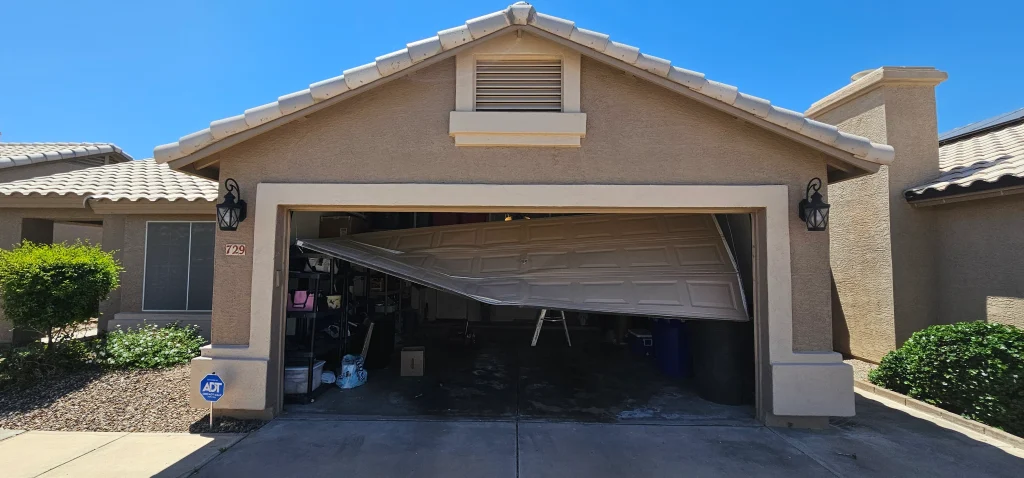
Residential garage door systems combine mechanical force, stored energy, and precise alignment, which can make problems appear manageable while underlying risks increase quietly. This is especially true with garage door cable repair, where many tasks seem approachable at first glance, yet system complexity often exceeds what is visible during basic inspection.
Understanding when professional residential garage door repair is necessary requires examining how components interact under load rather than focusing on isolated symptoms. Certain conditions introduce safety and reliability risks, making professional evaluation essential to preserving system integrity.
Situations Involving High Stored Energy Components
Garage door systems rely on components that store and release significant energy during normal operation. Springs and cables operate under constant tension, creating conditions where improper handling can result in serious injury.
Professional service focuses on controlled energy management rather than surface correction.
Find out which residential garage door repair issues homeowners should keep an eye on and how early action can prevent larger repairs by reading: What Are the Most Common Residential Garage Door Repair Issues Homeowners Should Watch For?
High-Risk Components That Require Professional Handling
- Torsion springs under high rotational tension
- Extension springs stretched during door movement
- Cables supporting full door weight
- Drums controlling cable wrap and release
- Anchor brackets securing spring assemblies
- Hardware is experiencing uneven load distribution
Garage door spring repair involves precise tension calibration that maintains balance across the system. Improper adjustment alters the force distribution, increasing the risk of failure.
Professional handling prevents the sudden release of stored energy that often causes severe injury during DIY attempts.
Learn how to evaluate whether residential garage door repair or full replacement makes the most sense based on condition, cost, and longevity by reading: Residential Garage Door Repair vs Replacement: How to Know Which Option Is Right.
Situations Where Door Balance Has Been Compromised
Balance determines how smoothly a garage door moves and how much strain is placed on the opener. When the balance changes, the system behavior becomes unpredictable.
Balance issues often appear subtle before escalating.
Explore the main factors that influence residential garage door repair costs, including parts, labor, and the complexity of the issue, by reading: How Much Does Residential Garage Door Repair Cost? Factors That Affect Pricing.
Indicators That Balance Requires Professional Evaluation
- The door feels unusually heavy during manual operation
- The door fails to remain stationary at mid-travel
- Opener strains or stalls during movement
- Uneven door height when partially open
- Sudden acceleration or deceleration during travel
- Repeated loss of adjustment effectiveness
Restoring balance requires coordinated adjustment of springs, cables, and hardware. Residential garage door repair performed by professionals ensures force distribution returns to safe operating ranges and supports ongoing care and maintenance of the entire system.
DIY balance attempts often worsen instability rather than correct it.
Scenarios Involving Cable Damage or Tension Loss
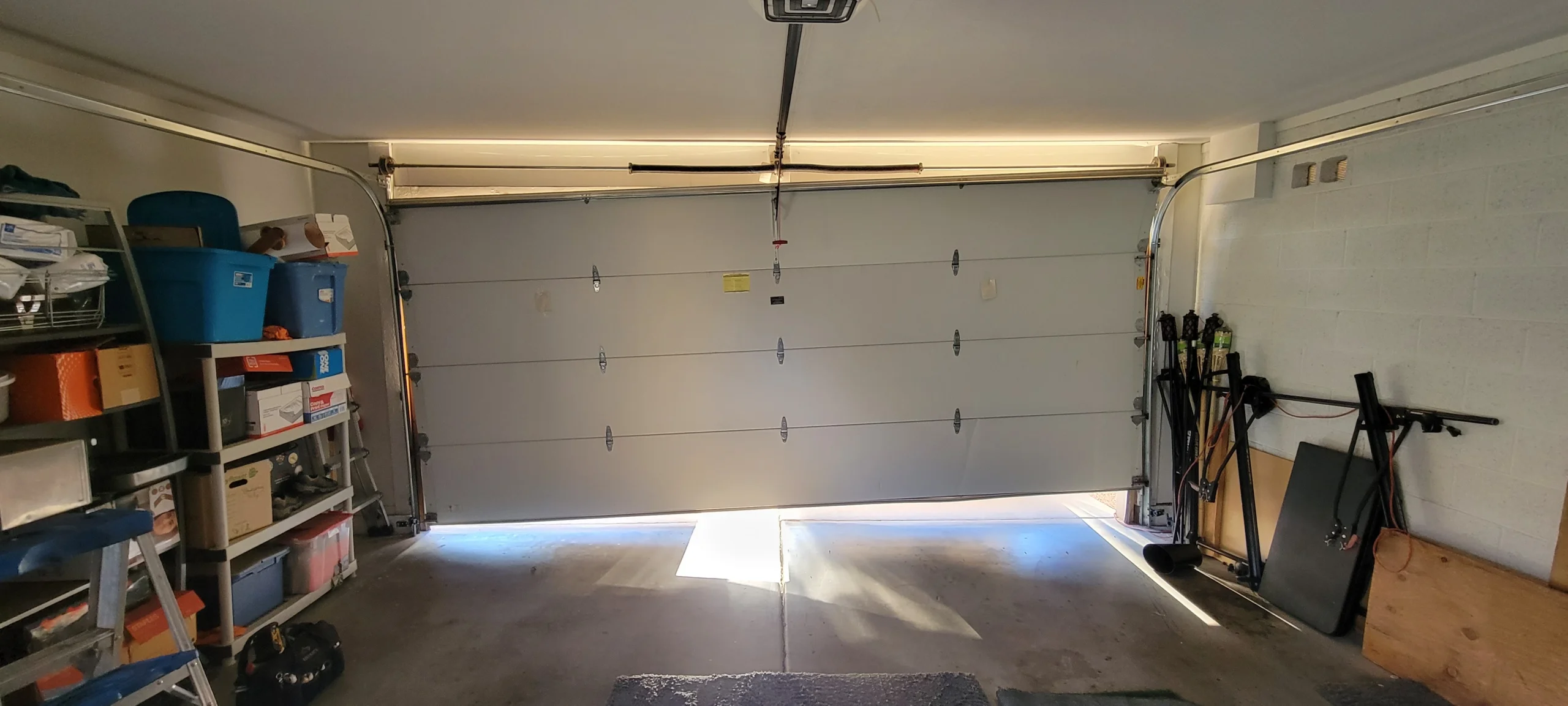
Cables support the full weight of the door and maintain synchronized movement across both sides. Cable issues introduce immediate safety concerns.
Cable damage rarely remains isolated.
Warning Signs That Require Garage Door Cable Repair
- Visible fraying or corrosion on cable strands
- Uneven slack between left and right cables
- Door tilting during movement
- Sudden jerking near floor level
- Audible snapping or grinding sounds
- Difficulty maintaining alignment
As detailed in a comprehensive guide to garage doors, garage door cable repair involves controlled unloading of tension and precise reattachment. Professional service ensures both sides remain synchronized after repair.
DIY cable work increases the risk of door collapse or sudden movement.
Conditions Involving Spring Fatigue or Failure
Springs lose tension gradually through repeated cycles, eventually reaching a point where performance degrades or failure occurs. Spring issues often precede emergency situations.
Spring repair demands specialized tools and expertise.
Signs That Spring Issues Require Professional Service
- Loud snapping noise during operation
- Visible separation within torsion springs
- Door opening more slowly than usual
- Increased reliance on opener force
- Door slamming shut unexpectedly
- Inconsistent stopping positions
Garage door spring repair restores proper counterbalance and reduces stress on other components. Professional service ensures springs match door weight and configuration.
DIY spring handling exposes individuals to uncontrolled force release.
Track Misalignment and Structural Interaction Problems
Tracks guide door movement and must remain aligned precisely to prevent binding or derailment. Structural shifts often affect track positioning gradually.
Track issues rarely resolve on their own.
Indicators That Track Issues Require Professional Repair
- Door rubbing against track edges
- Rollers jumping or binding during movement
- Visible gaps between rollers and tracks
- Uneven spacing between door panels
- Door coming partially off track
- Increased vibration near track joints
Track realignment requires understanding how structural forces interact with door movement. Professional residential garage door repair restores alignment without introducing secondary stress.
DIY attempts often fail to address underlying structural causes.
Roller Wear and Track Interaction Concerns
Rollers facilitate smooth movement along tracks, and worn rollers increase friction and noise. Roller replacement may appear simple, yet requires alignment precision.
Improper roller installation affects the entire system.
Situations Where Garage Door Roller Repair Needs Professional Service
- Cracked or deformed roller wheels
- Excessive vibration during operation
- Noise concentrated near curved track sections
- Rollers binding under load
- Uneven wear patterns across rollers
- Repeated roller failure after replacement
Garage door roller repair performed professionally ensures the rollers seat correctly and distribute the load evenly. Misalignment during DIY replacement accelerates track wear.
Professional service preserves smooth movement and system balance.
Sensor and Safety System Irregularities
Safety systems detect obstructions and control door response. Sensor issues often appear intermittent, making diagnosis difficult without experience.
Safety system reliability affects injury risk.
Sensor Issues That Require Professional Evaluation
- Door reversing without obstruction
- Inconsistent sensor indicator lights
- Sensitivity to lighting changes
- Door refusing to close consistently
- Temporary improvement after reset
- Reduced tolerance for obstruction detection
Professional service ensures sensors align correctly and integrate with opener force settings. Residential garage door repair addresses safety performance comprehensively rather than symptomatically.
DIY sensor adjustments often overlook system-wide calibration needs.
Repeated Adjustments That Fail to Hold
When repairs require frequent readjustment, underlying system instability likely exists. Repeated DIY fixes often signal deeper issues.
Professional evaluation identifies root causes.
Patterns That Indicate DIY Efforts Are No Longer Effective
- Adjustments lose effectiveness quickly
- Increasing frequency of minor repairs
- Escalating noise or vibration
- Multiple components are showing wear simultaneously
- Temporary fixes masking larger problems
- Growing dependence on emergency garage door repair
Professional residential garage door repair focuses on restoring system stability rather than applying short-term corrections.
Addressing instability early prevents emergency situations.
Emergency Situations Requiring Immediate Professional Response
Certain conditions demand immediate professional attention due to safety risks. Emergency garage door repair situations often involve sudden failure.
Delaying response increases risk.
Conditions That Require Emergency Professional Service
- Door stuck in a partially open position
- Sudden cable or spring failure
- Door off track and unstable
- The opener is unable to control the movement
- Structural damage after impact
- Inability to secure the garage opening
Emergency situations involve unpredictable forces that exceed safe DIY intervention. Professional service stabilizes the system before further repair.
Safety remains the primary concern in emergency scenarios.
Situations Where DIY Efforts Increase Long-Term Cost
DIY repairs may appear cost-effective initially, yet improper service often increases long-term expense through repeated failure.
Professional service supports cost predictability.
Cost Risks Associated With DIY Repairs
- Incorrect part selection or installation
- Accelerated wear on surrounding components
- Increased likelihood of emergency service
- Damage to tracks or panels
- Reduced system lifespan
- Loss of alignment stability
Professional residential garage door repair prioritizes correct resolution over temporary savings. Quality service reduces cumulative cost by preventing repeated failure.
Supporting Safe and Reliable Operation Through Professional Service
Residential garage door systems require precise coordination among components operating under load and tension. Professional evaluation ensures repairs restore balance, alignment, and safety margins.
Understanding when to call a professional protects both personal safety and system reliability. Viewing repair decisions through a system-level lens supports long-term performance rather than short-term fixes.
Professional oversight maintains reliable operation and reduces the risk of emergencies, ensuring that garage door systems continue to function safely and consistently over time.
GT Garage Door Repair specializes in garage door services that prioritize responsiveness, affordability, and customer satisfaction. A strong local presence in Chandler, Arizona, allows for prompt service and competitive pricing. Every repair and installation is completed with precision and care.
Contact us today or give us a call to schedule professional garage door service.
Frequently Asked Questions