Garage Door Opener Repair in Chandler, AZ
When your opener hums without moving, reverses before the door closes, or ignores the remote, the cause is usually one part: a sensor, a drive gear, a logic board or a setting. GT Garage Door Repair finds that part, gives you a price before any work, and fixes most openers on the first visit, the same day you call. We are a veteran-owned, family-operated company based in Chandler, and we service LiftMaster, Chamberlain, Genie and Craftsman openers.
Last updated October 2026.
Licensed, bonded and insured · ROC 358301 · Same-day service
What Your Opener Is Telling You
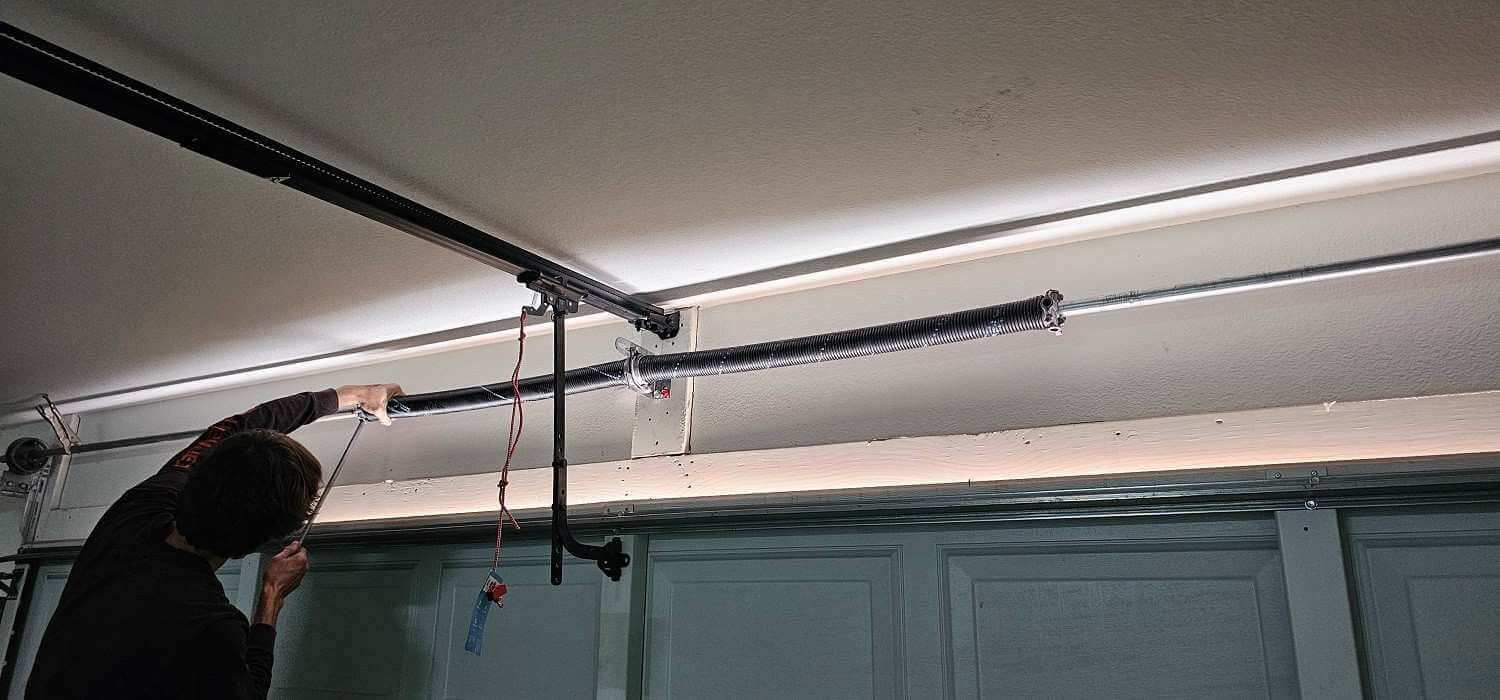
Most opener problems show up as one of a handful of symptoms. The table below matches each one to its usual cause and tells you whether it is normally a repair or a sign the unit is near the end.
| Symptom | Likely cause | Usually repairable or time to replace? |
|---|---|---|
| Motor hums, door does not move | Stripped drive gear, failed start capacitor, or a broken spring making the door too heavy to lift | Usually repairable. If a spring is broken, the spring gets fixed first |
| Door starts down, then reverses back up | Photo-eye sensors dirty, knocked out of line, or wired poorly; close force set too low; door binding in the track | Usually repairable |
| Door will not close and the opener light blinks | Sensor fault: misaligned lens, damaged wire, or sun shining directly into a sensor | Usually repairable |
| Wall button works, remote does not | Remote battery, lost programming, or radio interference from certain LED bulbs | Usually repairable; see remotes and keypads |
| Nothing happens at all | Tripped breaker or GFCI outlet, unplugged unit, or a failed logic board | Repairable when the board is still available; an old unit with a failed board is often better replaced |
| Opener runs, door stays put | Trolley disengaged by the emergency release, or a broken carriage or belt | Usually repairable |
| Loud grinding, chain slapping the rail | Loose chain, worn sprocket, dry rail | Usually repairable |
| Door stops partway or goes past the floor | Travel limits drifted, or worn limit switch | Usually repairable |
| Opener made before 1993 with no photo-eyes near the floor | No entrapment protection | Replace, do not repair |
Photo-eye sensors are a frequent cause of opener trouble, and their position matters. DASMA's guidance on photo-eye sensor placement (opens in a new tab) calls for sensors mounted low, near the floor, so a small child cannot crawl under the beam. In Arizona, dust storms coat the lenses and a low afternoon sun can shine straight into a west-facing sensor, so we clean, realign and shade them as part of the repair.
Check the Door Before Blaming the Opener
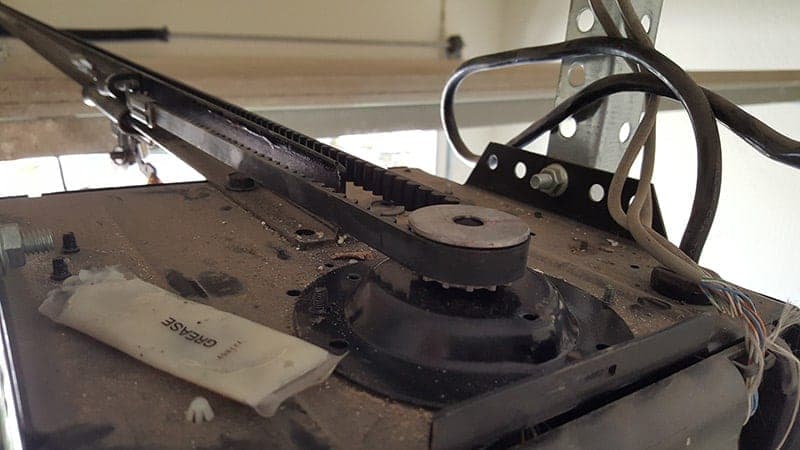
An opener is built to move a balanced door, not to lift its full weight. When a spring breaks or a cable frays, the door gets heavy, and the opener strains, hums or reverses. Replacing the opener in that case leaves the real problem in place and wears out the new unit.
That is why every opener visit starts with the door. We disconnect the opener, lift the door by hand and check that it stays put halfway. If the door slams down or shoots up, the fix is broken spring repair or garage door cable repair, not a new motor. If rollers are grinding or the door rubs the track, roller repair may clear up what looked like an opener fault.
Veteran-Owned, Family-Run, and Based in Chandler
GT Garage Door Repair is a veteran-owned, family-operated garage door company based in Chandler.
- Veteran-owned and family-operated in Chandler, AZ
- Licensed, bonded and insured: Arizona ROC 358301 (verify our license (opens in a new tab))
- Free, upfront estimate before any work begins
- Same-day service is our standard, not an upcharge
Is It Worth Repairing, or Time to Replace?
Repair makes sense when the opener has its safety features, parts are available, and the fault is one part. Drive gears, sensors, capacitors, limit switches and most logic boards are standard repair parts for the brands we service.
Replacement makes sense in three situations:
- The opener predates 1993. Federal rules under 16 CFR 1211 (UL 325) (opens in a new tab) have required automatic reversal and entrapment protection on residential openers since 1993. An opener without photo-eyes should be replaced, not repaired.
- The board has failed on an older unit and replacement boards are discontinued or cost close to a new opener.
- It keeps coming back. If the same opener has needed several repairs and still struggles, money is better spent on a new unit.
DASMA's FAQ on automated residential garage door systems (opens in a new tab) covers the reversal and sensor requirements every working opener should meet, whatever its age. When replacement is the honest answer, we tell you before any work and explain the options on our garage door opener replacement page.
What Happens on an Opener Repair Visit
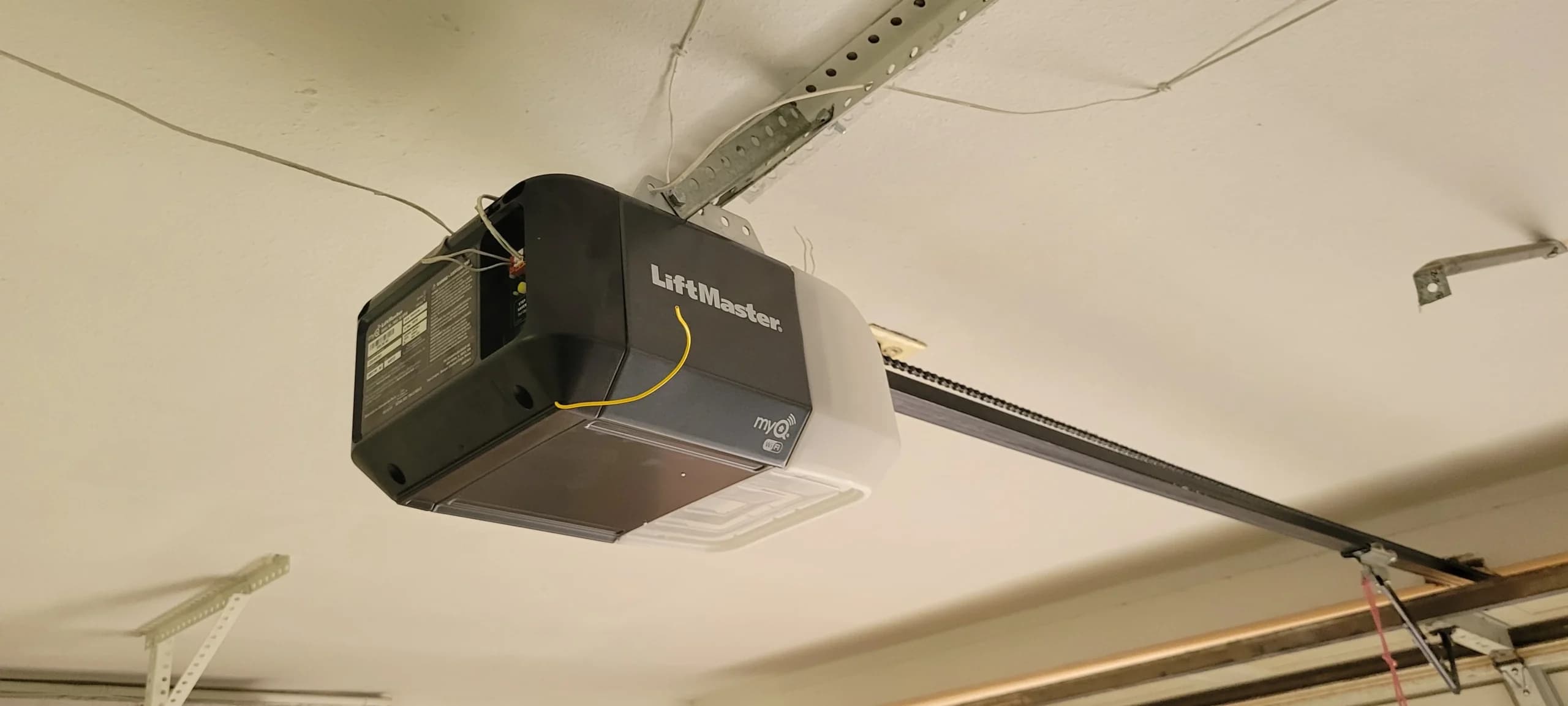
The technician checks the door balance first, then tests the opener: wall button, remotes, sensors, travel and force. You get a plain explanation of what failed and a price before any work starts.
Most repairs are finished on that visit. Before we leave, we run the door through several full cycles, confirm it stops at the floor and the top, and do the reversal test with a 2x4 laid flat under the door. If your remotes or keypad lost programming during the repair, we reprogram them on the spot.
What You Can Safely Check Before You Call
A few checks are safe for any homeowner and sometimes solve the problem:
- Confirm the opener is plugged in and the outlet has power. Garage outlets are often on a GFCI that trips.
- Wipe both sensor lenses with a soft cloth and look for a steady light on each one.
- Replace the remote battery and try the wall button.
- If the door is fully closed and the opener will not run, you can pull the red emergency release handle to open the door by hand. Do not pull it with the door open; a door with a broken spring can drop.
Do not touch springs, cables or the bottom brackets; DASMA's homeowner checklist (opens in a new tab) is clear that those parts belong to a trained technician. If the door looks crooked or heavy, stop using the opener and call.
Questions
Garage Door Opener Repair FAQs
Why does my garage door go down and then come right back up?
My opener hums but the door does not move. What is wrong?
Can you repair an opener that is more than 20 years old?
Does Arizona heat damage garage door openers?
Is there a charge to diagnose my opener?
Garage Door Opener Repair Across the East Valley
We repair openers in homes across the East Valley, from 1980s Tempe garages to San Tan Valley builds whose original openers are now wearing out.
- Chandler, AZ
- Gilbert, AZ
- Mesa, AZ
- Tempe, AZ
- Queen Creek, AZ
- Ahwatukee, AZ
- Sun Lakes, AZ
- San Tan Valley, AZ
- Apache Junction, AZ
- Scottsdale, AZ
Not on the list? Call (602) 680-9700 and we will tell you right away whether we can get to you today.
Schedule service
Get Your Opener Working Again Today
Tell us what the door is doing and we will send a technician the same day with the parts most openers need.
Phone
(602) 680-9700Business Hours
- Monday to Friday:
- 7:00 AM to 8:00 PM
- Saturday:
- 9:00 AM to 2:00 PM
- Sunday:
- Closed
- Same-day service