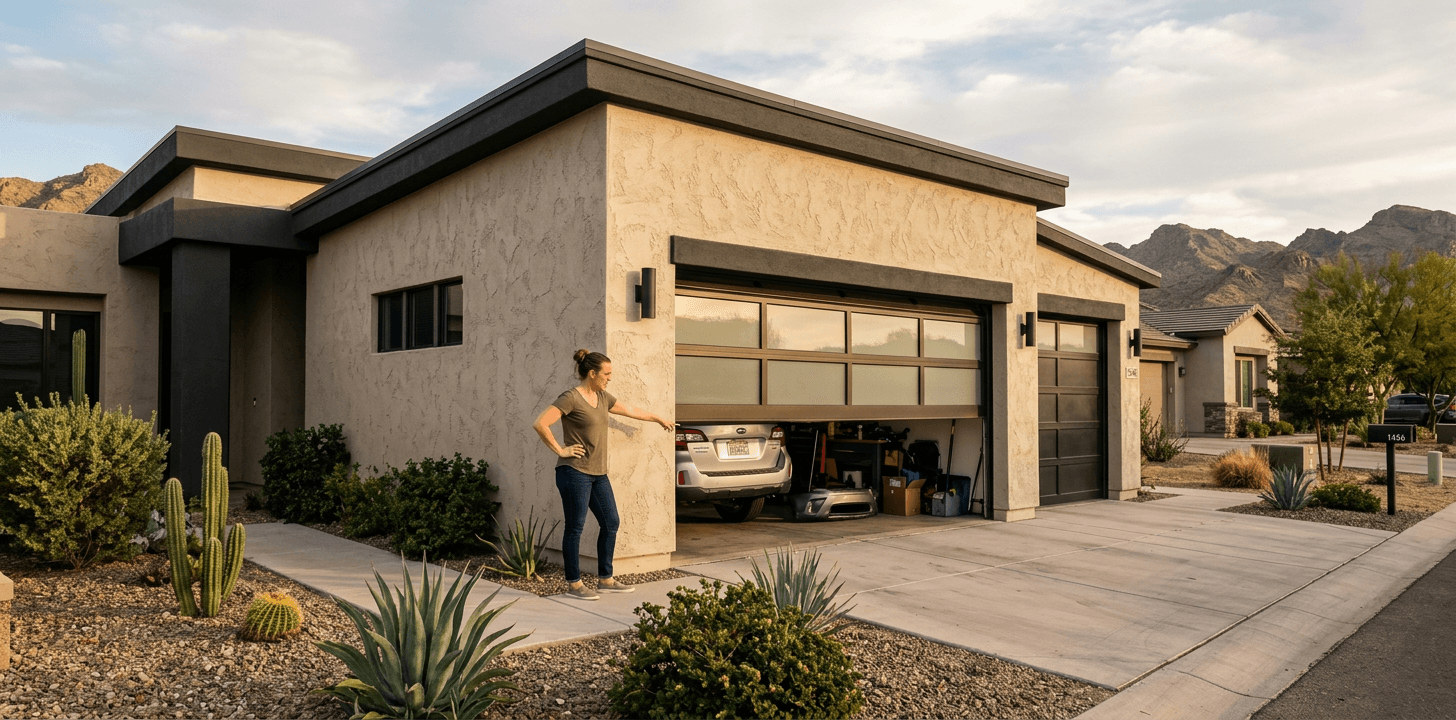
A garage door that opens normally but refuses to close can disrupt everything from leaving for work to securing your home for the evening. In many cases, the problem is a blocked safety sensor or a small alignment issue, but a door that binds, reverses, hangs crooked, or makes grinding sounds may have a mechanical problem that needs professional attention.
If you are thinking, my garage door won't close San Tan Valley, start by looking for the symptom. Does the door reverse as soon as it starts down? Does it stop near the floor? Or does the opener hum while the door stays put? I recommend avoiding repeated attempts to force the system. The way the door behaves provides useful clues about what is wrong.
My Garage Door Won't Close in San Tan Valley: Start With These Safe Checks
Before adjusting anything, make sure children, pets, vehicles, and stored items are clear of the garage doorway. Then try these simple checks that do not involve springs, cables, or track hardware.
- 1.Clear the doorway and sensor path. Look for a trash bin, bicycle, rake, cardboard, cobwebs, or anything crossing the path between the two photo-eye sensors near the floor.
- 2.Wipe the sensor lenses. Use a soft, dry cloth to remove dust or residue from both lenses.
- 3.Check the sensor indicator lights. The lights vary by opener brand, but a blinking, dim, or unlit sensor often points to misalignment, a loose wire, or a failed sensor.
- 4.Look at the door from inside the garage. Stop using the opener if the door is crooked, a cable is loose, a roller is out of the track, or a spring is visibly broken.
- 5.Check the opener power source. Confirm the opener is plugged in and that a tripped breaker or GFCI outlet has not interrupted power.
Modern openers are supposed to stop or reverse when their safety system detects an obstruction. The International Door Association (opens in a new tab) explains that openers manufactured after January 1, 1993 are required by federal law to include a reversing mechanism plus a photo eye or edge sensor. That safety system is important, so I do not recommend bypassing it as a long-term fix.
Common Reasons a Garage Door Will Not Close
Photo eyes are blocked or out of alignment
This is one of the most common explanations when the garage door begins closing, then reverses back up. The sensors create an invisible beam across the opening. A small bump to the track, dust on a lens, direct sun glare, or a loose bracket can interrupt that beam.
Cleaning the lenses and gently checking whether both sensors face each other is reasonable. If the lights will not stay steady, the wiring may be damaged or the sensor brackets may need a more precise adjustment.
The close limit or force setting is incorrect
If the door reaches the floor, presses down briefly, and then rises again, the opener may think it has encountered an obstruction. An incorrect travel limit, excessive resistance, or a worn bottom seal can contribute to this symptom.
I recommend leaving force-setting changes to a technician when the door is heavy, noisy, or inconsistent. Adjusting an opener without finding the source of resistance can conceal a door-side problem instead of solving it.
Tracks, rollers, or hinges are binding
A garage door needs to travel smoothly through both vertical and horizontal tracks. Bent track sections, worn rollers, loose hardware, or debris can make the door catch at the same point every time it closes.
Do not lubricate the tracks heavily or try to bend them back with hand tools. A professional inspection can determine whether a roller, hinge, bracket, or track section needs repair. Routine garage door maintenance can also identify developing wear before the door stops moving altogether.
A cable has slipped or the door is off track
A door that hangs lower on one side, moves unevenly, or has a loose cable near the drum should not be operated. The door can become increasingly misaligned with every attempt to run it.
This issue calls for professional service because cables and drums work alongside high-tension spring components. I inspect the full system, correct the alignment, and verify that the door moves evenly before putting it back into regular use.
A broken spring is making the opener work too hard
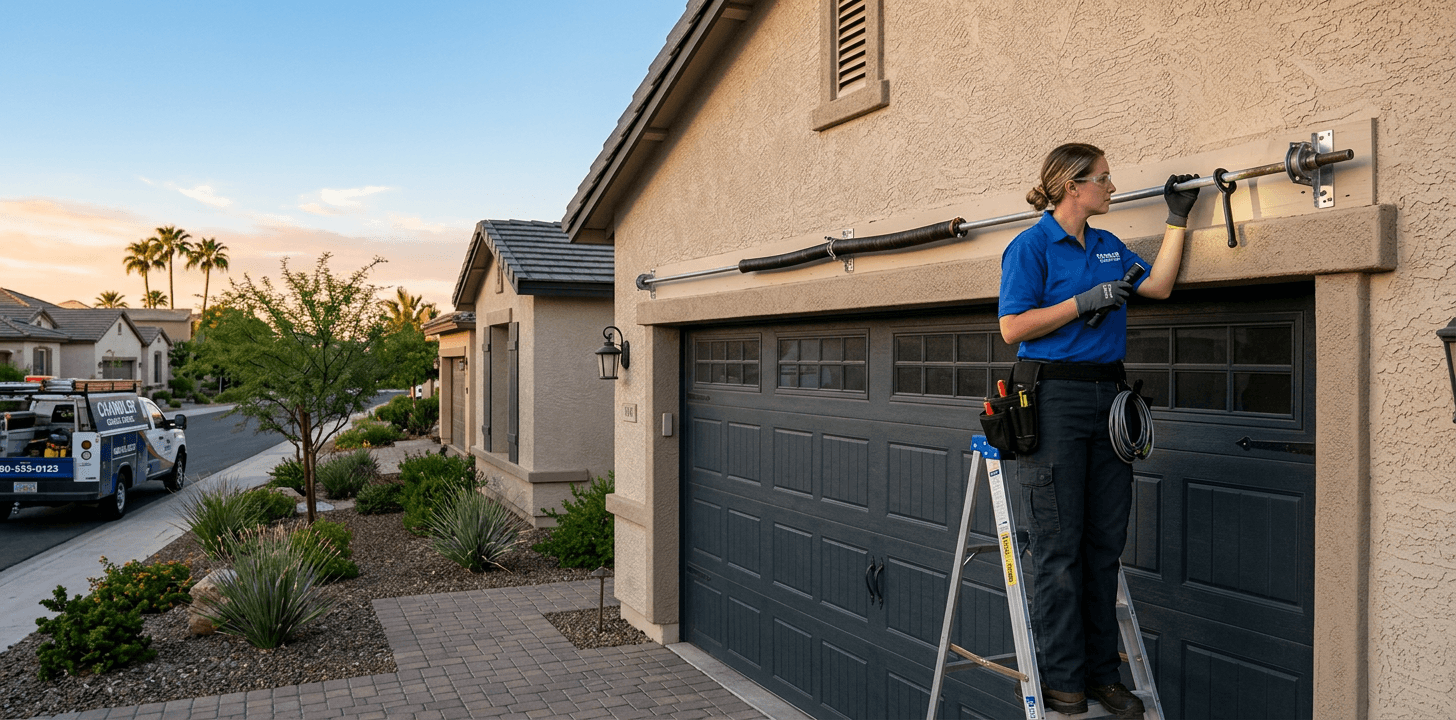
Springs carry much of the door's weight. When one breaks, the opener may struggle, stop, or reverse because the door is no longer balanced. A loud bang from the garage followed by a very heavy door is a common warning sign.
Never attempt to replace or re-tension a garage door spring without the proper training and tools. If you suspect a broken spring, use a professional residential garage door repair service to diagnose the issue safely.
The opener has an electrical or internal drive problem
Sometimes the door itself is fine, but the opener is not receiving commands correctly or cannot complete its closing cycle. A failing logic board, worn drive gear, damaged sensor wiring, remote issue, or motor problem can all affect closing performance.
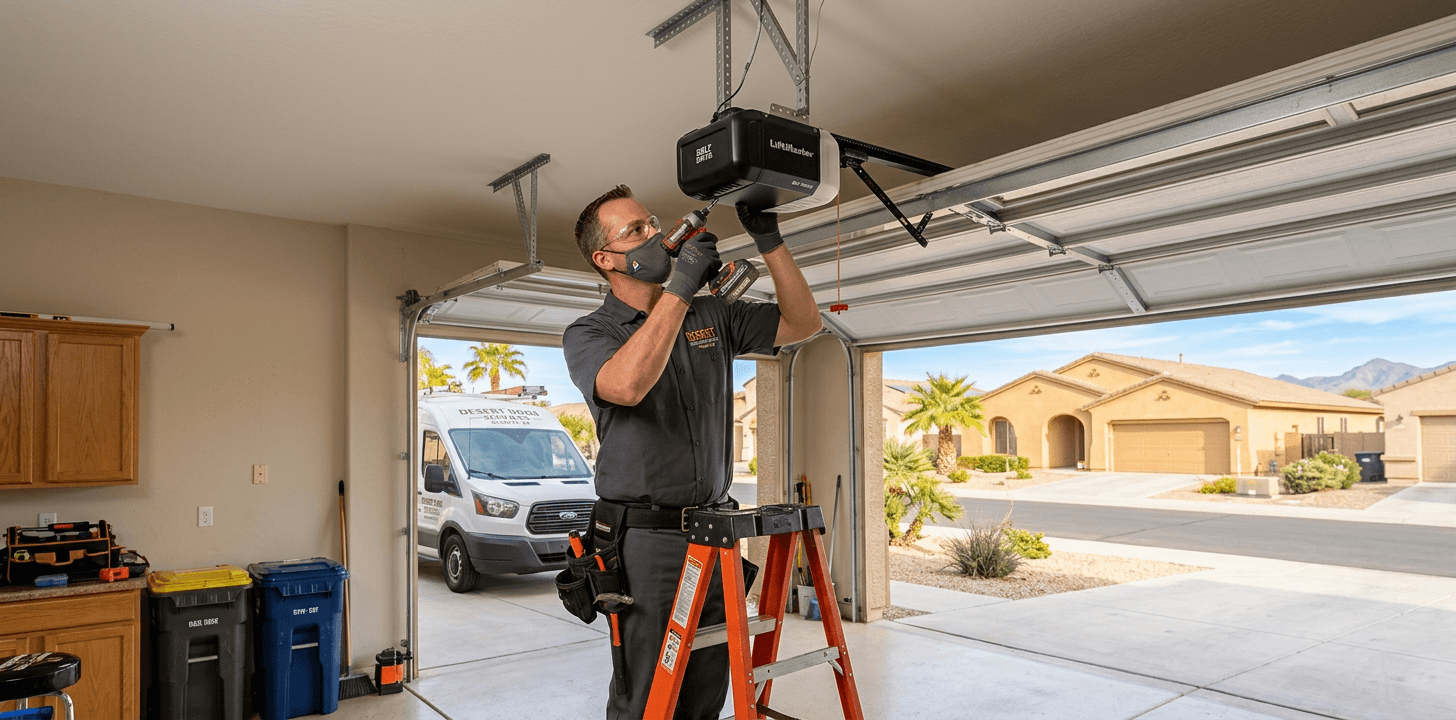
When sensor cleaning does not help and the door is balanced and on track, I evaluate the opener and the door together. That approach prevents replacing an opener when the real cause is resistance in the door system. Learn more about garage door opener repair if the motor hums, lights flash, or controls respond inconsistently.
When I Recommend Calling a Professional
A homeowner can safely clear an obstruction and clean photo-eye lenses, but certain symptoms should not become a DIY project. Contact a garage door professional if the door is crooked, off track, unusually heavy, making loud metal-on-metal noises, or showing a loose cable or broken spring.
I also recommend service when the door only closes while you hold the wall button, when it repeatedly reverses with a clear doorway, or when it fails to close securely. Holding the wall control may override the photo-eye system on some openers, but it does not repair the reason the safety system is not working.
Get Your San Tan Valley Garage Door Closing Properly
If the door will not secure your garage, affects vehicle access, or shows signs of a cable, spring, track, or opener failure, schedule an inspection rather than forcing it. GT Garage Door Repair serves local homeowners with diagnosis and repair for doors that reverse, stick, close unevenly, or will not close at all. Call (602) 680-9700 or use the San Tan Valley garage door repair page to arrange service.
Frequently Asked Questions
Why does my garage door start closing and then go back up?
The photo-eye safety sensors are often the cause. Check for objects, dust, or misalignment near the sensors first. If both sensors appear clear and the issue continues, the door may be binding or the opener settings may need professional adjustment.
Why will my garage door close only when I hold the wall button?
On many systems, constant pressure on the wall control is a monitored closing method used when the photo-eye system is not confirming a clear path. It is a sign to inspect the sensors, wiring, and alignment. Do not rely on that method as your normal operation.
Can sunlight keep garage door sensors from working?
Yes. Strong low-angle sunlight can interfere with some photo-eye sensors, especially when one sensor faces the sun at certain times of day. A technician can verify the issue and recommend the right adjustment or sensor solution.
Can I close my garage door manually if the opener will not close it?
You may be able to use the emergency release only when the door is fully closed or securely supported and the springs, cables, and tracks appear intact. If the door is open, crooked, heavy, or visibly damaged, do not disengage the opener without professional guidance.
Does a garage door that will not close always need a new opener?
No. Many closing issues come from sensors, travel settings, worn rollers, track resistance, or a door that is out of balance. A complete inspection helps identify whether repair or replacement is the practical option.
How can I tell if a broken spring is causing the problem?
Look for a visible gap in the torsion spring above the door, listen for a sharp bang that occurred before the problem began, and note whether the door feels extremely heavy. Stop using the opener if you suspect a broken spring.
The Practical Next Step
Most garage doors that will not close have a clear cause, but that cause is not always visible from the driveway. Start with the safe checks, pay attention to the door's movement, and avoid forcing a door that appears uneven or damaged. A prompt diagnosis can restore dependable operation while protecting the opener and the rest of the door system.
Schedule Help for My Garage Door Won't Close San Tan Valley
For a door that will not close reliably, I can inspect the sensors, opener, springs, cables, rollers, tracks, and balance as one system. Contact GT Garage Door Repair to schedule local service, or call (602) 680-9700 for help with my garage door won't close San Tan Valley concerns.
About GT Garage Door Repair
Local Garage Door Service You Can Count On.
GT Garage Door Repair is a family-owned and operated garage door company based in Chandler, Arizona, serving homeowners throughout Chandler, Gilbert, Queen Creek, Mesa, Tempe, Ahwatukee, San Tan Valley, Sun Lakes and surrounding East Valley communities.
GT Garage Door Repair provides garage door repair, broken spring and torsion spring repair, garage door opener repair and installation, cable and roller repair, off-track garage door repair, garage door maintenance, replacement garage doors and related residential garage door services.
If your garage door is stuck, will not open or close, has a broken spring, has come off track, or simply is not operating correctly, contact GT Garage Door Repair for professional local service.
Garage Door Repair Services | Schedule Service
Call (602) 680-9700