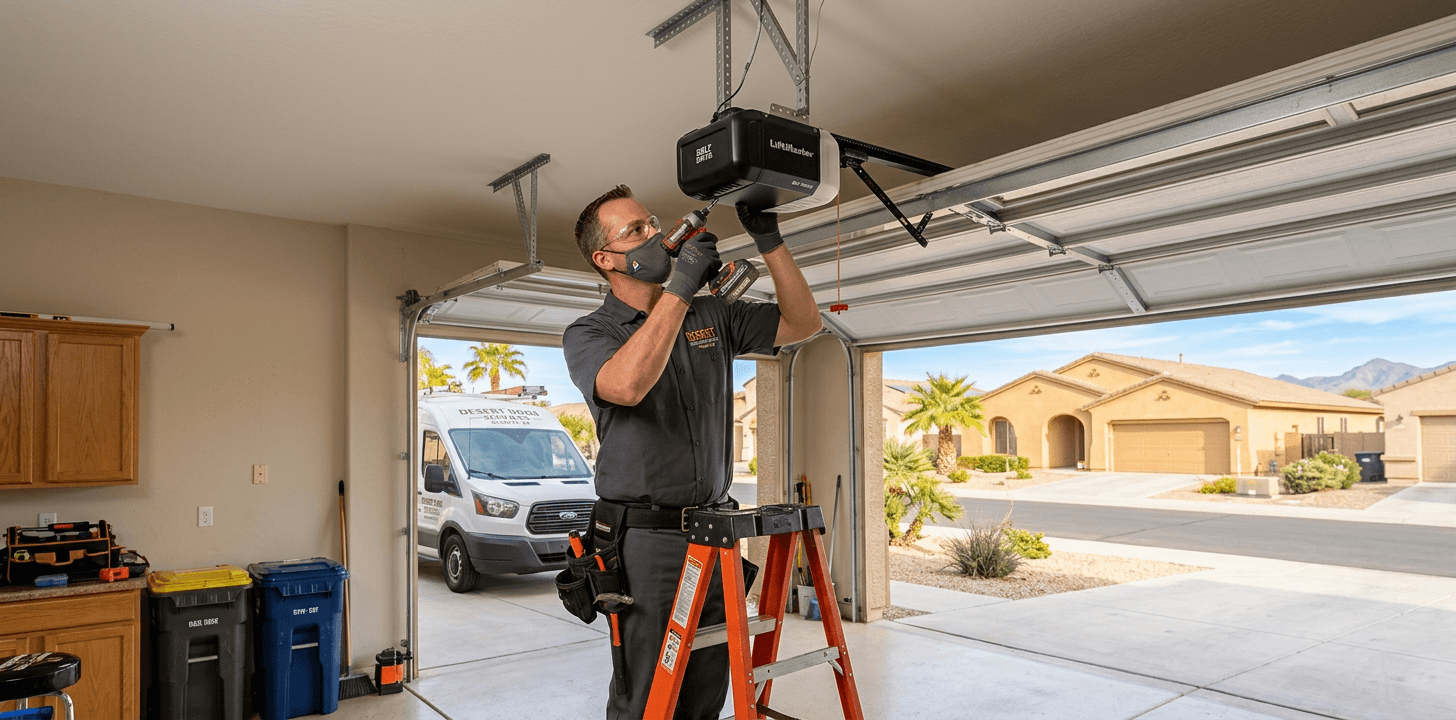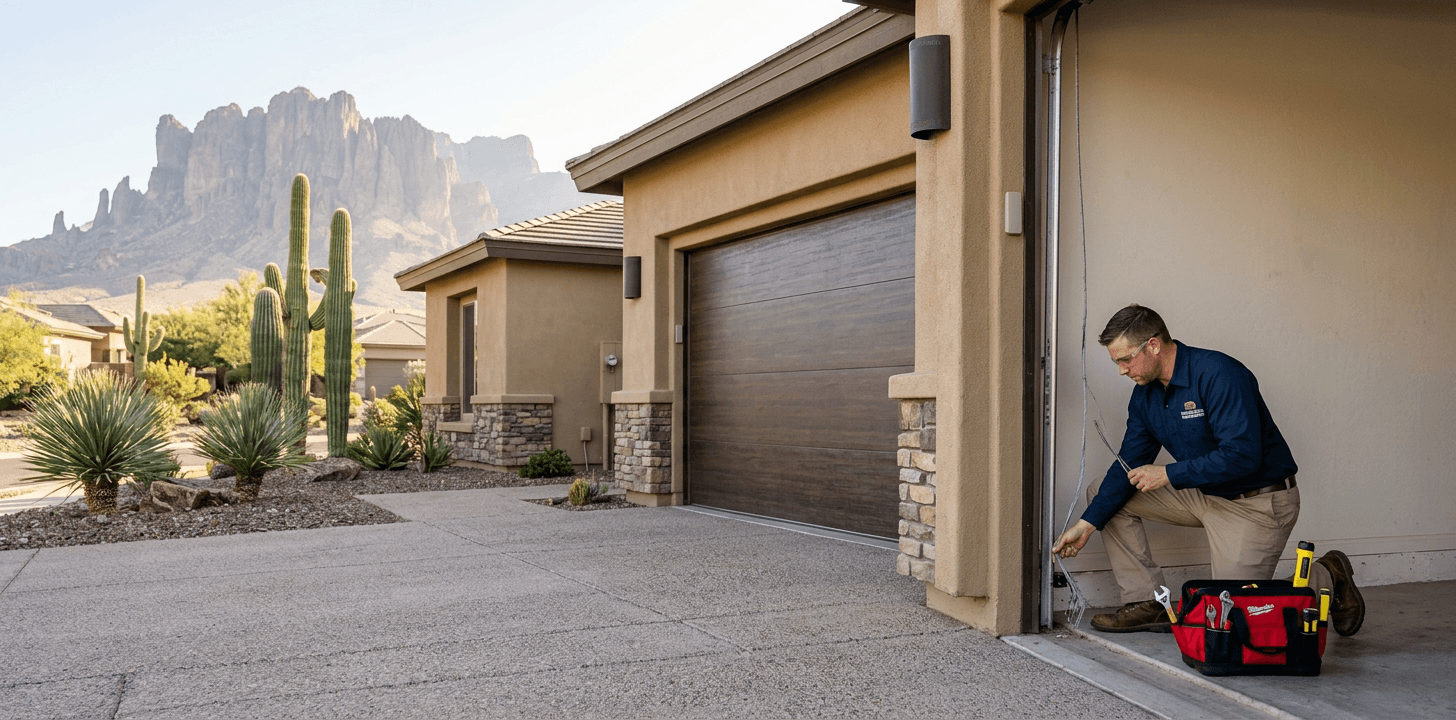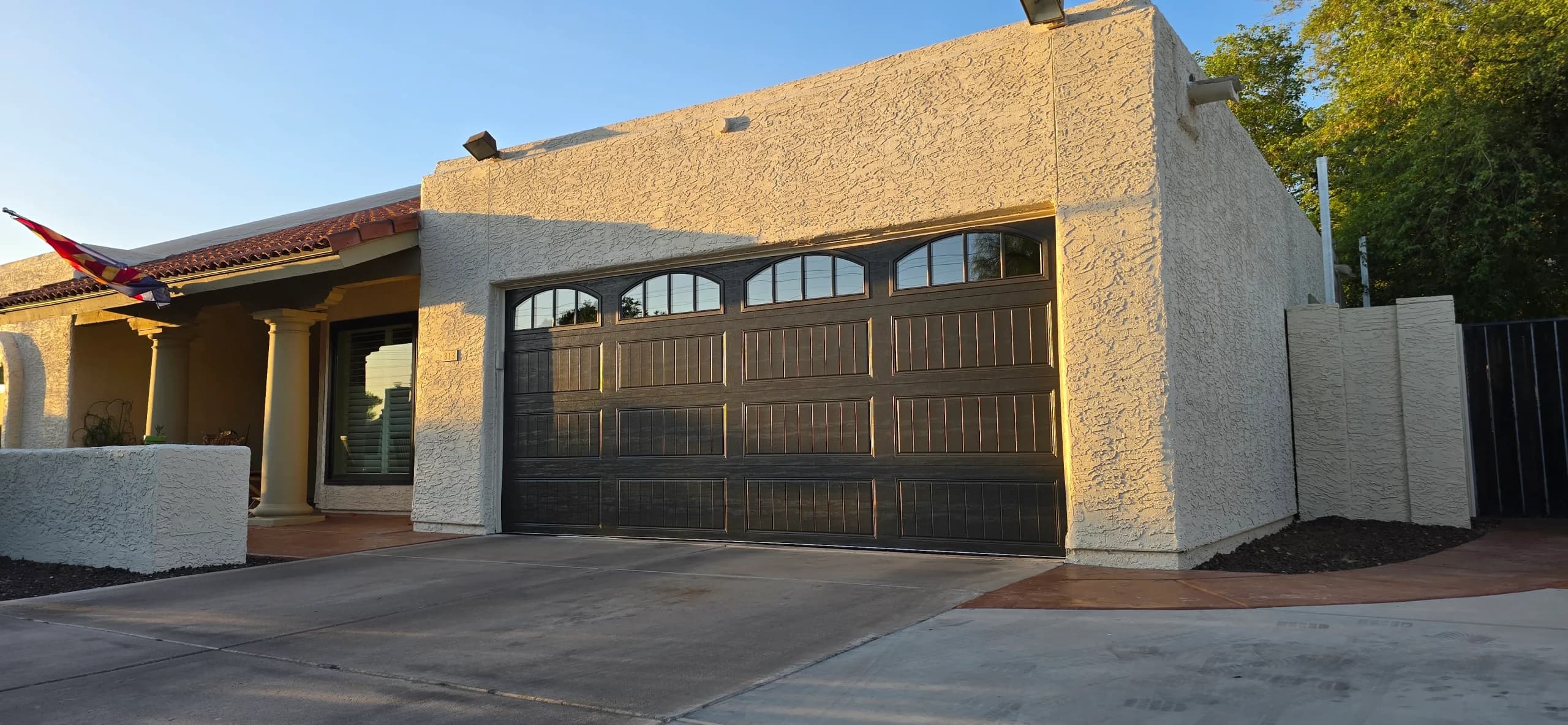
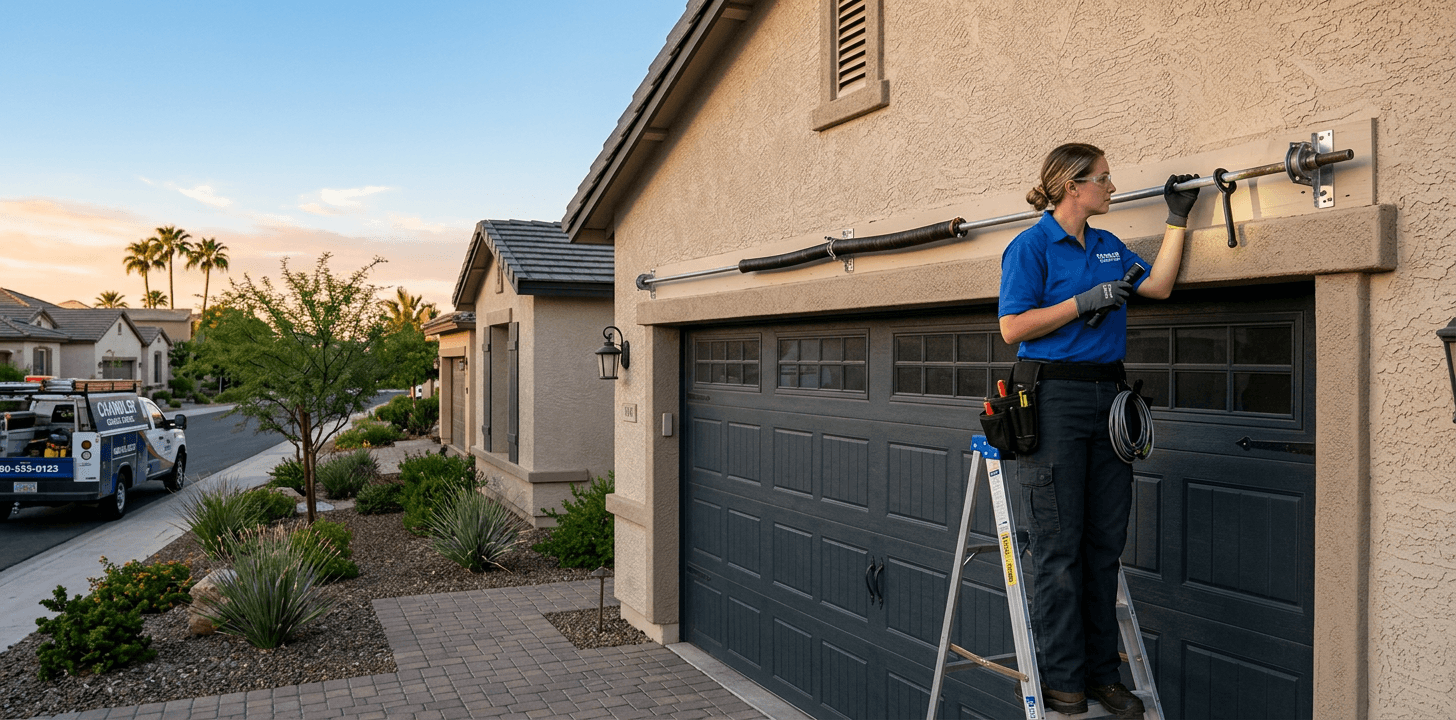
A garage door that suddenly feels too heavy, opens only a few inches, or makes a sharp bang from inside the garage often has a spring problem. For homeowners needing garage door spring repair Chandler AZ, the safest next step is to stop using the door and arrange professional service before the imbalance affects the cables, opener, or tracks.
I know how disruptive this issue can be. Your garage may be the main entrance to the house, your vehicle may be stuck inside, and a door that will not move normally can create a security concern. A spring repair is not a place for trial and error because the counterbalance system carries significant stored tension.
What a Broken Garage Door Spring Looks Like
A failed garage door spring usually creates clear symptoms, even when the spring itself is not easy to see. Springs counterbalance the door’s weight, so when one breaks, the opener is suddenly trying to lift far more weight than it was designed to handle.
Common signs include:
- A loud pop or bang from the garage
- A visible gap in the coil above the door, common with torsion springs
- A garage door that rises a few inches, then stops
- An opener motor that runs while the door barely moves
- A door that feels unusually heavy when disconnected from the opener
- Crooked movement, loose cables, or a door that will not fully close
- A door that slams down or will not stay open manually
The Door and Access Systems Manufacturers Association (opens in a new tab) gives homeowners a clear safety instruction: “If a spring is broken, do not operate the door until the spring is replaced.” That is especially important if the door is open, crooked, or has a cable that has come loose.
Why Garage Door Springs Fail in Chandler Homes
Most springs fail from normal metal fatigue after repeated open-and-close cycles, but Chandler conditions can contribute to wear in other ways. Heat, dust, and an unmaintained door that binds in the tracks can all make the complete system work harder.
Normal Cycle Wear
Every opening and closing cycle gradually wears a spring. A family that uses the garage as its primary entrance can put substantially more use on the system than a household that opens the door only once or twice a day. When a spring reaches the end of its service life, it may break with little warning.
An Unbalanced or Binding Door
A spring is selected to match the door’s size and weight. If the door is not properly balanced, has worn rollers, or drags against damaged tracks, the counterbalance system and opener are under unnecessary strain. A qualified technician checks the door’s movement as a complete system, not just the broken part.
Corrosion and Lack of Maintenance
Surface rust can weaken spring wire over time. Dust buildup, dry rollers, worn bearings, and loose hardware can also contribute to rough operation. Regular professional maintenance can identify these issues before a spring failure leaves your door stuck.
For related problems such as noisy operation, worn rollers, or uneven travel, residential garage door repair in Chandler can address the system components that affect safe movement.
Torsion Springs and Extension Springs Need Different Repairs
Both spring styles counterbalance the garage door, but their locations and hardware differ. Identifying the type helps explain what a technician will inspect, although neither type should be adjusted by a homeowner.
| Spring Type | Typical Location | Common Failure Sign | Service Consideration |
|---|---|---|---|
| Torsion spring | Above the door opening | Gap in the coil, heavy door | Requires precise winding and balance |
| Extension spring | Along both horizontal tracks | Stretched or separated spring | Requires intact safety cables |
Torsion springs are mounted on a shaft above the garage opening. Extension springs run along the horizontal tracks on both sides of the door and should have containment cables routed through them. The DASMA safety guidance (opens in a new tab) recommends that trained technicians handle spring-related repairs and notes that extension springs need safety cables to help contain a broken spring.
If your door uses a torsion system, review our torsion spring repair service for more detail about the repair process and the symptoms that require attention.
What to Do Before Garage Door Spring Repair in Chandler AZ
The best immediate response is simple: leave the door alone, keep people clear of the opening, and avoid trying to force it with the opener. This limits the chance of additional damage and gives the technician a safer starting point.
Do not pull on cables, loosen bottom brackets, remove the spring, or use the opener repeatedly to see if it will lift the door. If the door is closed, use another entrance to the home. If it is partially open or blocking your vehicle, tell the service provider exactly where the door is positioned when you call.
When I inspect a spring issue, I look beyond the obvious break. The visit should include checking cable condition, drums, bearings, rollers, track alignment, door balance, and the opener’s operation after the door has been safely restored. A spring that is correctly matched and installed helps protect the rest of the system from premature wear.
When Spring Repair Becomes an Urgent Service Call
A broken spring deserves prompt service when it affects access, security, or the door’s stability. The need is greater when the garage door is stuck open, hanging unevenly, resting off track, or preventing you from getting a vehicle in or out.
A door that is only partially raised is not something to walk or drive beneath. Likewise, if a cable has slipped off a drum, the spring repair may need to be paired with garage door cable repair or an off-track correction. Continuing to operate a heavy, unbalanced door can convert a contained repair into a larger system problem.
Get a Clear Assessment From a Local Chandler Technician
A professional assessment should explain what failed, what related parts were inspected, and whether repair or replacement makes sense for your specific door. A spring replacement is often the practical solution when the door panels, tracks, and opener are otherwise in good condition.
GT Garage Door Repair serves Chandler homeowners and nearby East Valley communities with spring repairs, cable and roller service, opener work, and complete door solutions. If your garage door is heavy, stuck, or making a sudden loud noise, call (602) 680-9700 to discuss the problem and schedule service.
Garage Door Spring Repair Questions Chandler Homeowners Ask
Can I open my garage door manually with a broken spring?
Usually, no. The door can be extremely heavy without spring support, and trying to lift it may cause injury or allow the door to drop unexpectedly. Leave the door in its current position when possible and arrange professional service.
Should both garage door springs be replaced if only one broke?
If your door has a pair of torsion springs, replacing both is often recommended because they have experienced similar use. The second spring may be close to failure, and matched springs help the door operate in a balanced way.
Can a broken spring damage my garage door opener?
Yes. Repeatedly running the opener with a broken spring can overload the motor, gears, rail, or trolley because the opener is not meant to lift the full weight of the door. Stop using the opener until the counterbalance issue is corrected.
How long does a garage door spring repair take?
The appointment length depends on the spring style, door condition, and whether cables, rollers, or other components also need attention. A technician can give a more accurate expectation after evaluating the door and confirming the proper parts.
Why is my garage door crooked after a spring broke?
A broken spring can allow one side of the door to move differently from the other, particularly if a cable becomes loose or shifts on its drum. Do not try to straighten the door yourself because it may be under uneven tension.
Is a loud bang always a broken garage door spring?
Not always, but it is a common sign. The sound can also come from a cable issue, hardware failure, or an object striking the door. If the door will not lift normally after the noise, a spring inspection is a sensible next step.
Will I need a new garage door after a spring failure?
Not necessarily. Many doors only need the spring system restored and balanced. Replacement may be worth considering if the door has major panel damage, severe track problems, recurring failures, or an aging opener and door system that no longer meets your needs.
Restore Safe, Reliable Garage Door Operation
A broken garage door spring can stop a normal day in its tracks, but the repair starts with the right decision: do not force the door or attempt to release spring tension yourself. A correct inspection and properly matched replacement spring can restore smoother movement while helping protect the opener, cables, and tracks.
For professional garage door spring repair in Chandler, AZ, contact GT Garage Door Repair at (602) 680-9700 or schedule garage door service. I recommend calling when the door is heavy, stuck, uneven, or unable to open and close as it should.
About GT Garage Door Repair
Local Garage Door Service You Can Count On.
GT Garage Door Repair is a family-owned and operated garage door company based in Chandler, Arizona, serving homeowners throughout Chandler, Gilbert, Queen Creek, Mesa, Tempe, Ahwatukee, San Tan Valley, Sun Lakes, and surrounding East Valley communities.
GT Garage Door Repair provides garage door repair, broken spring and torsion spring repair, garage door opener repair and installation, cable and roller repair, off-track garage door repair, garage door maintenance, replacement garage doors, and related residential garage door services.
If your garage door is stuck, will not open or close, has a broken spring, has come off track, or is not operating correctly, contact GT Garage Door Repair for professional local service.
Garage Door Repair Services | Schedule Service
Call (602) 680-9700