Few home problems interrupt a normal day quite like a garage door that stops halfway, reverses to the open position, or refuses to move down at all. Your vehicle may be stuck, the garage may be left exposed, and it is hard to know whether the cause is a simple sensor issue or a mechanical repair.
If you are thinking, my garage door won't close Ahwatukee, begin with a quick visual check and avoid forcing the door. Dust, intense heat, worn components, and an opener safety issue can all create similar symptoms, but the safest next step depends on what the door is doing.
What the Door Is Doing Can Point to the Cause
A garage door that will not close is not always an opener failure. The motion, sound, and point where the door stops give useful clues about the part that needs attention.
| What you notice | Likely cause | Safe homeowner check | Best next step |
|---|---|---|---|
| Door starts down, then reverses | Blocked or misaligned photo eyes | Clear and wipe sensors | Inspect alignment or wiring |
| Opener hums, but door will not move | Spring, cable, or opener issue | Look for loose or broken parts | Professional diagnosis |
| Door closes only while wall button is held | Photo-eye safety fault | Check sensor lights and path | Sensor service |
| Door is crooked or jammed | Cable, roller, or track problem | Stop using the opener | Professional repair |
| Door reaches floor then rises | Limit or force setting issue | Do not adjust springs | Opener adjustment service |
My Garage Door Won't Close Ahwatukee: The Most Common Reasons
The photo-eye sensors are blocked, dirty, or out of alignment
Photo-eye sensors sit low on both sides of the opening and create an invisible beam. If that beam is interrupted by dust, leaves, a stored item, cobwebs, sunlight glare, or a sensor that has shifted slightly, the opener may refuse to close the door or reverse it after starting down.
I recommend clearing the floor area, gently wiping each sensor lens with a soft dry cloth, and checking whether both sensors face one another. Do not tape, bypass, or disconnect these safety devices. The International Door Association (opens in a new tab) recommends a monthly photo-eye test and notes that openers made after January 1, 1993 require a reversing system and photo eye or edge sensor.
Something is blocking the door or binding the track
A small object near the floor can stop the door, but binding can also occur higher on the track. Look from a safe distance for bent track sections, damaged rollers, loose hardware, or a panel that appears to catch as it moves.
If the door is visibly crooked, a roller has left the track, or one side hangs lower than the other, stop operating it. Repeated attempts can strain the opener and worsen the alignment problem. A trained technician can inspect the track, rollers, hinges, and cables as part of a garage door repair visit.
A cable has slipped or a spring has failed
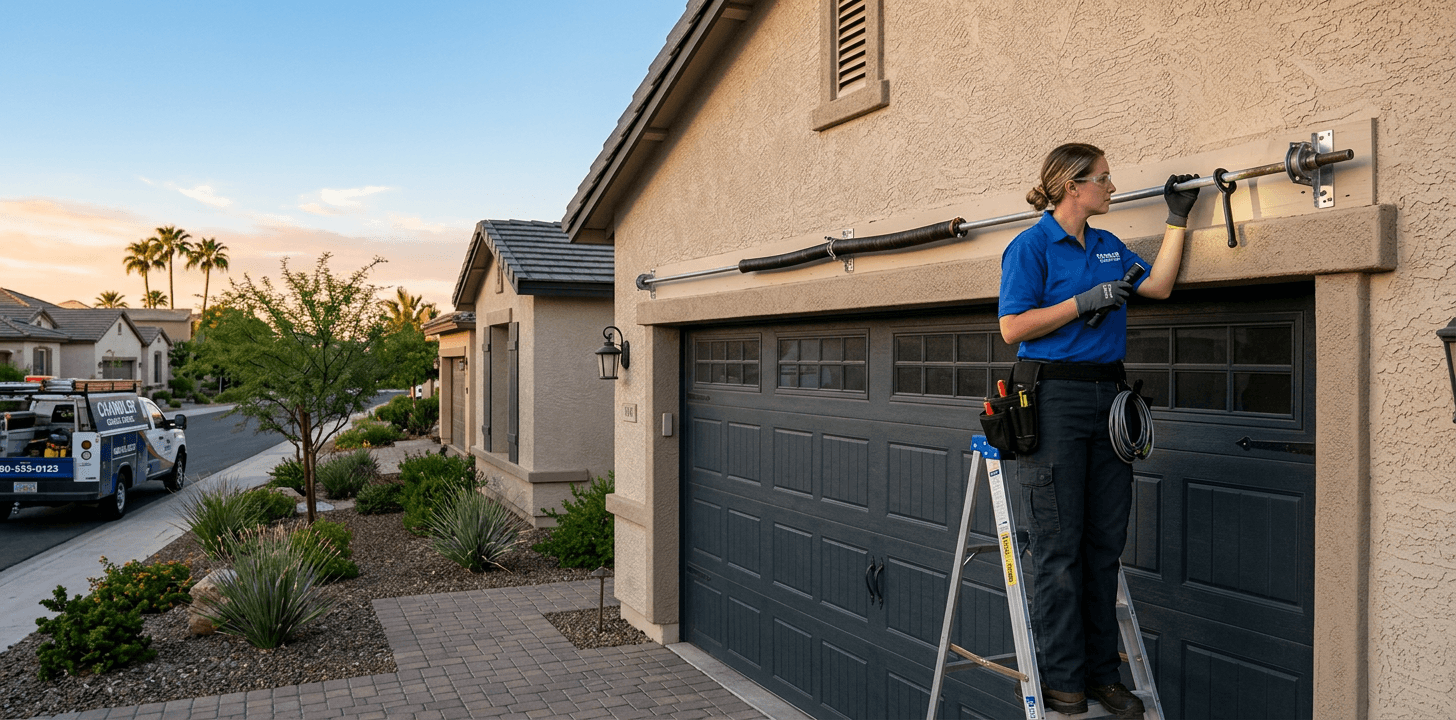
Springs provide most of the lifting support for a heavy garage door. When a spring breaks or a cable comes loose, the door may feel unusually heavy, sit unevenly, refuse to close smoothly, or make a loud bang before the failure becomes obvious.
Do not pull on cables, touch springs, or try to lift a crooked door by hand. Those parts carry significant stored force, and a professional repair is the appropriate solution. If the door is stuck open, partially open, or leaves your home unsecured, it may need emergency garage door service.
The opener travel limit or closing force needs adjustment
When a door reaches the floor and then lifts again, the opener may interpret normal floor contact as an obstruction. This can happen when the down-travel setting or closing-force setting is no longer calibrated correctly.
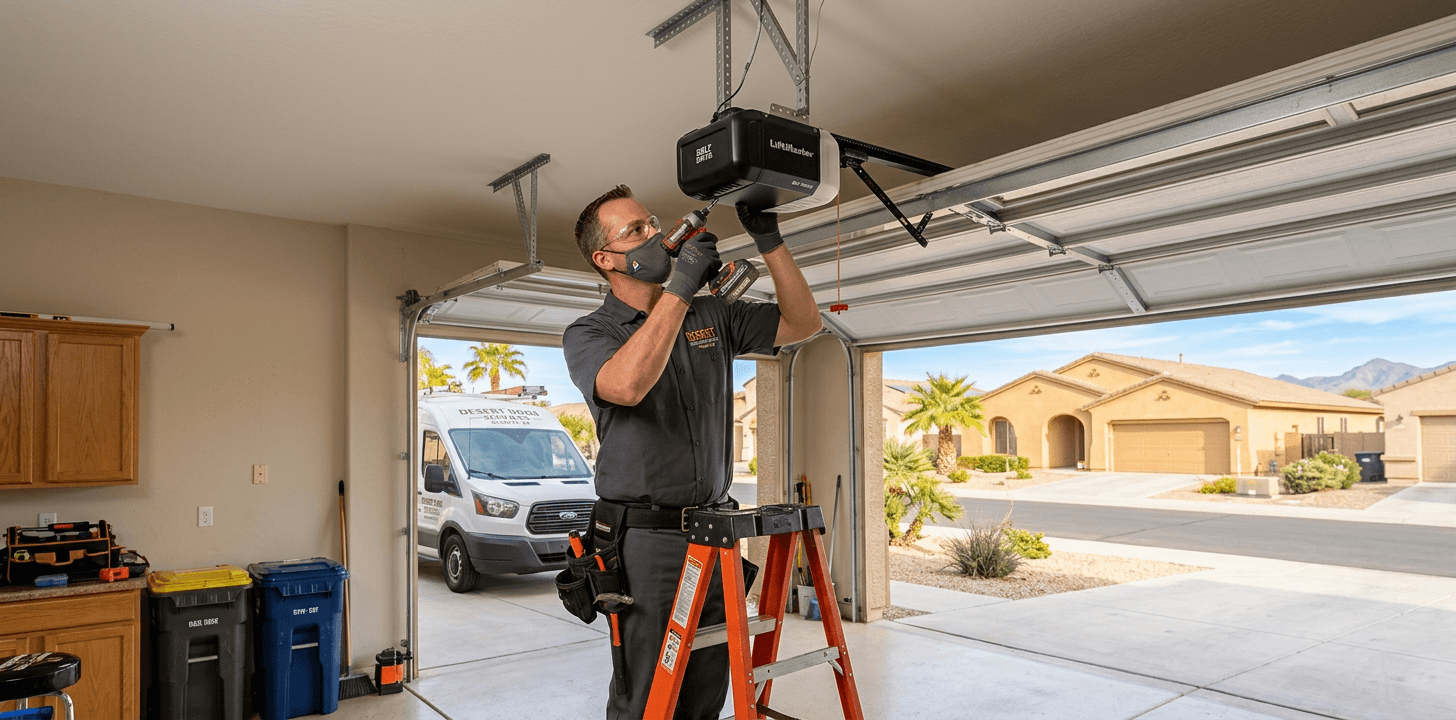
Some opener manuals provide adjustment instructions, but I would not treat those controls as a cure for a door that binds, shakes, or closes unevenly. A qualified technician should first rule out worn rollers, track resistance, balance problems, and sensor faults before making adjustments.
The remote, wall control, or opener has an electrical issue
If neither the remote nor wall button closes the door, the issue may involve the opener, power supply, logic board, wiring, or a locked control panel. Start by confirming that the opener has power and that the wall control is not in lock mode.
If the opener makes unusual clicking, buzzing, or grinding sounds, stop using it. An opener problem can look like a door problem, especially when the motor receives a command but cannot move the door safely.
Safe Checks I Recommend Before Calling for Service
You do not need special tools to gather useful information. These simple checks can help you describe the issue clearly and may resolve a minor obstruction or sensor problem.
- 1.Remove boxes, tools, toys, and debris from the garage door opening.
- 2.Wipe the photo-eye lenses with a soft cloth and check for obvious misalignment.
- 3.Watch the door from a safe distance as another adult uses the wall control.
- 4.Listen for grinding, popping, scraping, or a motor that hums without moving the door.
- 5.Look for a loose cable, broken spring, bent track, or roller outside the track.
- 6.Stop using the opener if the door is crooked, heavy, jammed, or only moving on one side.
The International Door Association also advises a monthly reversal test using a 2×4 placed on the floor in the door's path. If the door does not reverse after contacting it, arrange professional service rather than continuing to use the system.
When a Garage Door That Won't Close Needs Professional Repair
Call for help when the door is stuck open, your vehicle cannot get out, the opener repeatedly reverses, or you see mechanical damage. A door that will not secure the garage also affects home access and can expose belongings stored inside.
I would also schedule service if you need to hold the wall button to make the door close. That symptom commonly points to a photo-eye safety problem, and it deserves a proper inspection instead of a workaround.
For Ahwatukee homeowners, GT Garage Door Repair provides local garage door repair service in Ahwatukee for sensor issues, opener problems, cables, rollers, off-track doors, broken springs, and replacement options. Call GT Garage Door Repair at (602) 680-9700 to discuss the symptoms and arrange service.
Repair or Replace the Garage Door?
Most doors that will not close need a targeted repair, not a complete replacement. Sensor alignment, roller wear, cable issues, opener settings, and many track concerns can often be addressed without replacing the entire door.
Replacement makes more sense when the door has severe panel damage, extensive corrosion, repeated structural problems, or an older opener and door system that no longer meets your needs. A technician can explain the condition of the existing system and provide options without pressuring you into more work than the problem requires.
Why does my garage door close a few inches and then go back up?
This usually indicates that the photo-eye beam is blocked or misaligned, or that the opener detects resistance while closing. Clear the opening and clean the sensor lenses first. If the problem continues, have the sensors, tracks, rollers, and opener settings inspected.
Why will my garage door only close when I hold the wall button?
Many openers allow this behavior when the photo-eye safety system is not working correctly. It is a signal to inspect the sensors and their wiring. Do not rely on holding the button as a permanent solution.
Can heat and dust affect an Ahwatukee garage door?
Yes. Dust can collect on sensor lenses and tracks, while high temperatures can add stress to older electronics, lubricants, rollers, and weather seals. Regular inspection and cleaning help identify small issues before daily operation becomes unreliable.
Should I disconnect the opener and close the door manually?
Only do this if the door is fully closed or you are certain it is properly balanced and safe to move. If a spring is broken, a cable is loose, or the door is crooked, manual movement can be unsafe. Keep clear and arrange professional service.
Why is my garage door crooked when it will not close?
A crooked door often points to a cable, roller, track, or spring issue. Do not continue pressing the opener because the door can bind further. A technician should inspect the full lifting and guiding system before the door is used again.
How often should my garage door receive maintenance?
A professional annual tune-up is a practical baseline for many homes, especially when the door is used multiple times each day. Between visits, clean the sensor lenses, keep the track area clear, and pay attention to new noises or uneven motion. You can also schedule garage door maintenance when the system begins to sound rough or operate inconsistently.
Get Your Ahwatukee Garage Door Closing Reliably Again
A door that will not close may be a quick sensor correction, but it can also be the first visible sign of a cable, spring, track, or opener problem. The key is to avoid forcing the mechanism and address unusual movement before a smaller issue becomes a larger repair.
If you have ruled out a clear obstruction and the door still will not close, professional diagnostics are the sensible next step. Restoring safe, smooth operation helps protect your vehicle access, your garage, and your peace of mind.
About GT Garage Door Repair
GT Garage Door Repair is a family-owned and operated garage door company based in Chandler, Arizona, serving Ahwatukee, Chandler, Gilbert, Mesa, Queen Creek, Tempe, San Tan Valley, Sun Lakes, and nearby East Valley communities. The team provides residential repairs for garage doors, springs, openers, cables, rollers, tracks, and doors that have come off track, along with maintenance, replacement, and new door installation.
If your garage door will not close, is stuck open, or is moving unevenly, request a free estimate through GT Garage Door Repair or call GT Garage Door Repair at (602) 680-9700 for professional local service.