
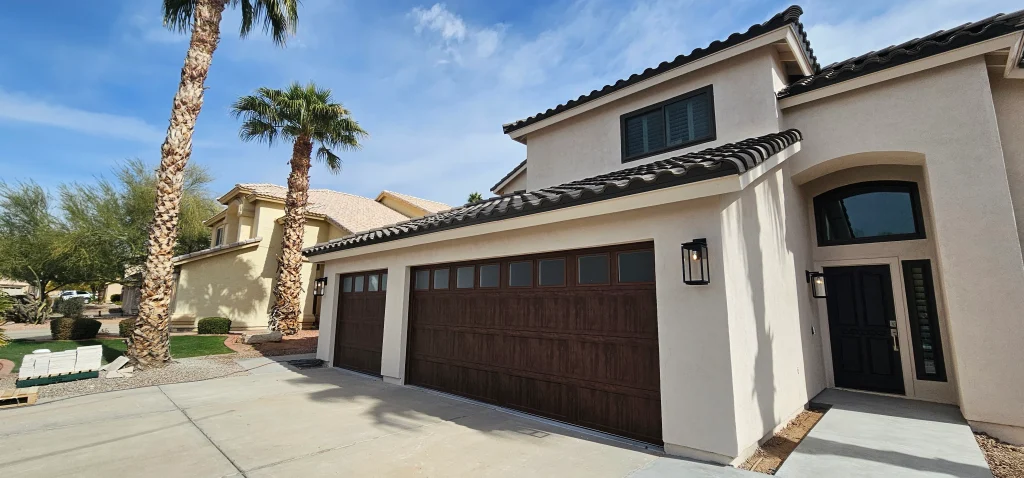
Buying a garage door is not as simple as picking the one that looks good in a catalog. The right door has to fit your opening, match your home’s style, hold up in Chandler’s intense summer heat, and actually work the way you need it to day after day. Get it wrong, and you are looking at early repairs, higher energy bills, and a door that does not serve your home the way it should. In some cases, a poor buying decision leads homeowners straight into an unexpected garage door repair within the first few years of ownership.
This guide covers everything you need to check before you commit. Whether you are replacing an old door or buying for the first time, these are the factors that actually matter when making this decision.
Start With the Right Measurements
Before anything else, you need accurate measurements of your garage opening. A door that does not fit correctly will not seal properly, will wear out faster, and may not operate safely.
Key Measurements to Take Before You Shop
- Width and height of the rough opening, measured at the widest and tallest points. Do not assume a standard size without checking, since older homes especially can have non-standard openings.
- Headroom, which is the space between the top of the opening and the ceiling. Most standard door systems need at least 10 to 12 inches of headroom. Less than that and you may need a low-headroom conversion kit.
- Side room on both sides of the opening, typically at least three and a half inches, for the vertical tracks to mount properly.
What Happens If You Skip This Step
- A door ordered too narrow or too short will leave gaps that allow heat, dust, and pests into your garage, all common complaints in the Chandler area.
- A door that is too wide for the framing will require structural modifications that add time and cost to the installation.
- Insufficient headroom or side room can limit the type of opener you can use and may require specialty hardware at an added expense.
If you are also weighing your options between brands, our breakdown of Which Garage Door Is Better: Clopay or CHI? is a helpful reference once you have the sizing sorted out.
Understand the Panel Construction Options
Garage door panels come in single-layer, double-layer, and triple-layer constructions. The difference matters more than most homeowners realize, especially in a climate like Chandler where heat, UV, and dry air put real stress on exterior surfaces.
Single-Layer Doors
- One layer of steel with no insulation. These are the most affordable options but offer the least protection against heat, noise, and physical impact.
- Best suited for detached garages that are not connected to the living space and are not used as work or storage areas.
- In Chandler’s summer heat, a single-layer door on an attached garage can significantly raise the temperature in adjacent rooms.
Double and Triple-Layer Doors
- Double-layer doors add a layer of polystyrene or polyurethane insulation between the outer steel skin and an inner backing, improving both thermal and noise performance.
- Triple-layer doors, steel-foam-steel, offer the best combination of strength, insulation, and rigidity. They feel heavier and more solid in operation.
- For attached garages in Chandler, a double or triple-layer door is the more practical long-term investment, even if the upfront cost is higher.
Check the R-Value for Your Specific Situation
R-value tells you how well the door resists heat transfer. In a state where summer temperatures regularly push past 110 degrees, this number is not a marketing detail. It directly affects how comfortable your garage is, how hard your home’s cooling system works, and how much you spend on energy each month.
R-Value Guide for Chandler Homeowners
- Detached garage with no living space above: R-6 to R-8 is generally adequate. The focus here is reducing heat buildup rather than maintaining conditioned air.
- Attached garage sharing a wall with the house: R-12 to R-16 is the recommended range. This limits heat transfer into your home and reduces the load on your HVAC system.
- Garage with living space above or used as a workshop or gym: R-16 to R-18 or higher. Consistent temperature control becomes much more important in these situations.
Polyurethane vs Polystyrene Insulation
- Polyurethane foam is injected directly into the panel cavity and bonds with both steel skins, adding structural rigidity as well as higher R-value per inch.
- Polystyrene is pre-cut and placed inside the panel without bonding. It is less expensive but delivers a lower R-value and does not add the same structural benefit.
- If you are comparing two doors at a similar price and one uses polyurethane while the other uses polystyrene, the polyurethane option is the stronger buy for Chandler conditions.
Evaluate the Hardware That Comes With the Door
The door panel is only part of the system. The springs, rollers, hinges, and cables that operate the door are equally important to long-term performance. Knowing how to inspect your garage door before buying can help you ask the right questions and spot any hardware concerns before the installation is complete.
Springs: Torsion vs Extension
- Torsion springs are mounted horizontally above the door opening and wind up as the door closes. They last longer, operate more smoothly, and are the preferred choice for heavier insulated doors.
- Extension springs stretch along the horizontal tracks on each side of the door. They are more common on lighter, less expensive doors and typically have a shorter lifespan.
- For insulated or heavier-gauge doors in Chandler, ask specifically for torsion springs. The smoother operation and longer cycle life justify the difference in cost.
Rollers, Hinges, and Tracks
- Steel rollers with nylon coating run quieter than basic steel and last longer without frequent lubrication. If noise is a concern, look for doors packaged with nylon rollers.
- Heavier gauge hinges hold up better under daily use. Thin hinges on a heavy door are a common source of squeaking and eventual failure.
- Tracks should be aligned and level during installation. Misaligned tracks are a leading cause of door binding, uneven wear, and premature hardware damage.
Match the Style to Your Home’s Architecture
A garage door that does not fit the architectural character of your home will stand out in the wrong way. In Chandler neighborhoods where curb appeal matters and HOA standards may apply, taking the time to match the door style to your home is worth the extra thought. The style you choose also plays a role in long-term garage door maintenance, since certain materials and finishes require more upkeep than others, depending on the design.
Common Style Categories to Know
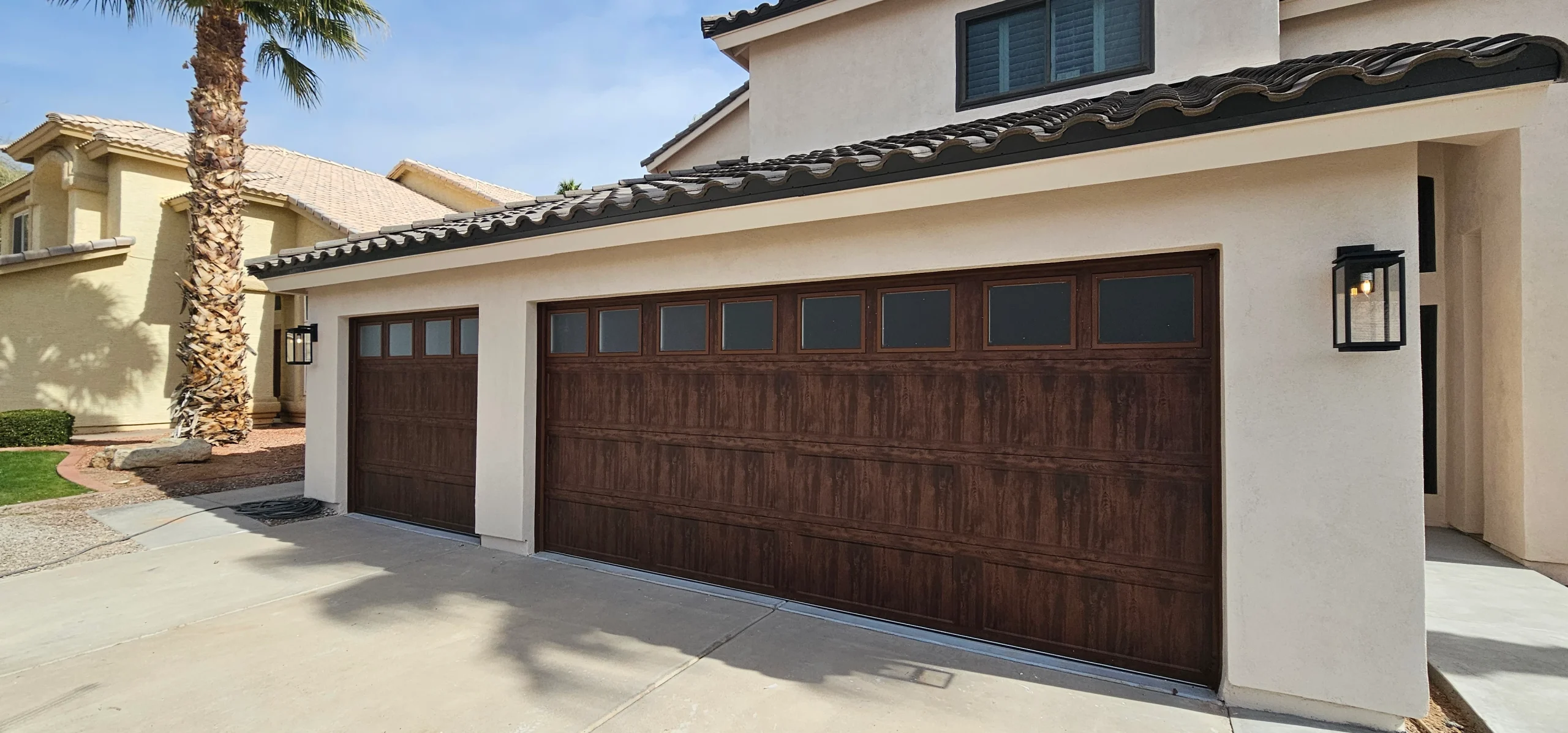
- Raised panel: The most common residential style. Rows of rectangular panels give a clean, traditional look that suits a wide range of home types.
- Carriage house: Designed to look like old-fashioned swing-out doors, these are popular on craftsman, Spanish, and ranch-style homes. Most are sectional doors with a decorative overlay.
- Contemporary or full-view: Clean lines, aluminum framing, and glass panels work well on modern homes. These require more attention to insulation since glass transfers heat more readily than steel.
What to Check Before Finalizing a Style
- Review your HOA guidelines if applicable. Some communities in Chandler restrict color choices, window configurations, or visible hardware.
- Consider how the door color interacts with your exterior paint, trim, and roofline. Lighter colors reflect more heat, which is a practical advantage in Arizona.
- Window inserts add light to the garage interior but also add cost. Insulated glass options are available and recommended if you go this route.
Know the Different Door Types Available
Most homeowners default to sectional roll-up doors without knowing other configurations exist. Taking a moment to understand your options ensures you are not overlooking a format that might actually suit your garage better. Reviewing different types of garage doors to know gives you a solid overview of what is out there before you commit to one format.
Sectional Roll-Up Doors
- The most common type in residential applications. Panels hinge together and roll up along tracks inside the garage, parallel to the ceiling.
- Sectional doors work well in garages with standard headroom and are compatible with most automatic opener systems.
- They offer the widest selection in terms of materials, styles, and insulation options, making them the most flexible choice for most Chandler homeowners.
One-Piece Tilt-Up Doors
- A single solid panel that tilts outward and up when opened. These are less common today but still found in older Chandler homes.
- Tilt-up doors require more clearance in front of the garage when opening and do not seal as tightly as sectional doors.
- If your home currently has a tilt-up door, replacing it with a sectional door is usually a worthwhile upgrade for both security and energy efficiency.
Factor In the Opener Compatibility
The door and the opener need to work together. A heavy insulated door paired with an underpowered opener will wear out the motor faster and create operational problems over time.
Opener Horsepower by Door Weight
- Single-layer steel doors: A half horsepower opener is typically sufficient for standard residential use.
- Double or triple-layer insulated steel doors: Three-quarter to one horsepower is recommended to handle the added weight without straining the motor.
- Wood or wood composite doors: These are among the heaviest options and may require a one-horsepower or belt-drive opener for smooth, reliable operation.
Drive Type Options to Consider
- Chain drive: Affordable and durable, but noisier. Works well for detached garages where noise is not a concern.
- Belt drive: Quieter operation, better suited for attached garages with living space nearby. Typically, it costs slightly more than a chain drive.
- Direct drive: The motor moves along a stationary chain, which reduces vibration and noise significantly. A good long-term investment for daily use.
If your existing door is aging along with your opener, our guide on When Should You Replace Your Garage Door? can help you decide whether it makes sense to replace both at the same time.
Ask the Right Questions Before You Finalize Your Purchase
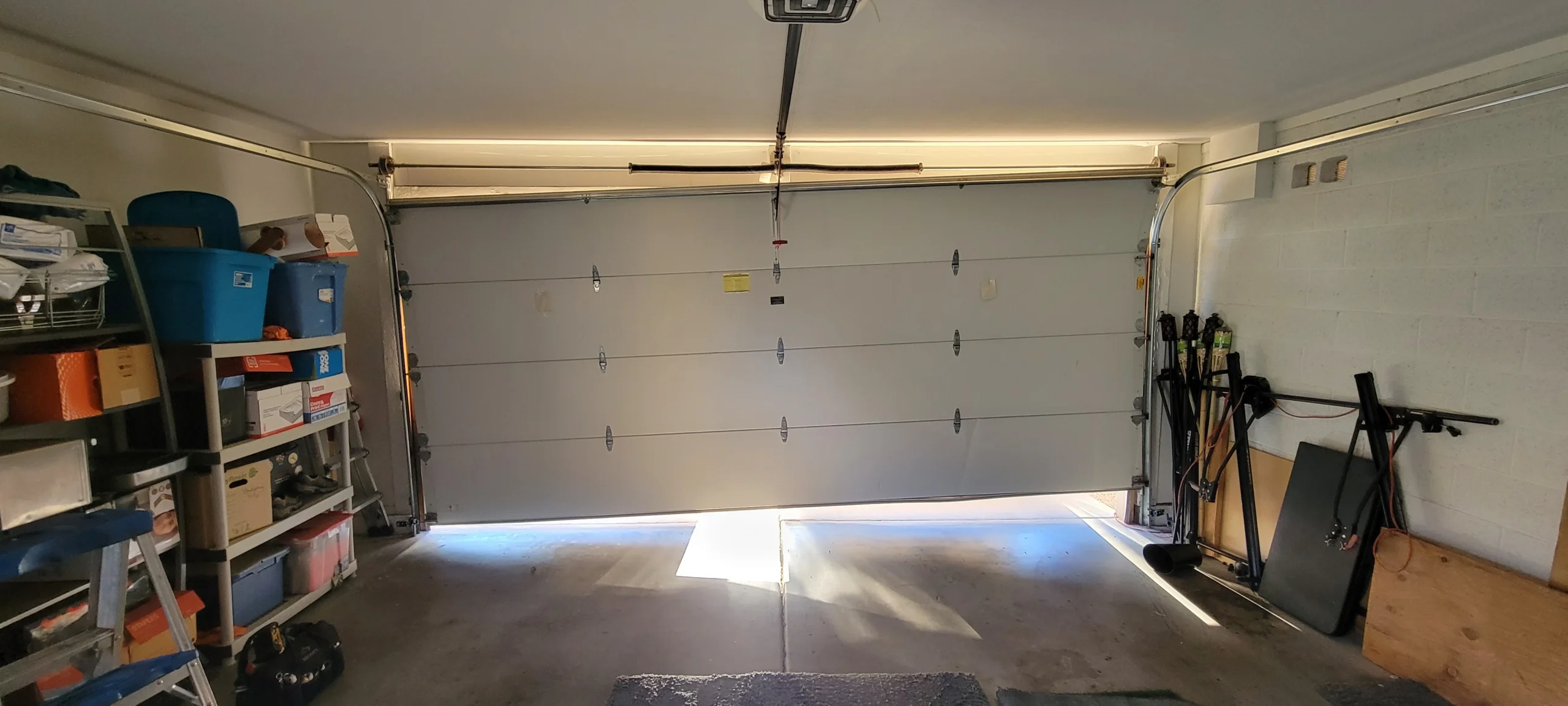
A garage door purchase involves more than choosing a panel and a color. Before you sign off, there are a few important questions worth asking your dealer or installer.
Questions to Ask Your Installer
- What is included in the installation, and what is not? Confirm whether removal of the old door, haul-away, and hardware replacement are part of the quoted price.
- Is the installer an authorized dealer for the brand? Authorized dealers are trained on specific products and can provide warranty service that independent installers may not.
- What is the lead time for the door? Custom sizes, colors, or designs may take several weeks to arrive, so factor that into your timeline if you are working toward a specific date.
Red Flags to Watch For
- A quote that is significantly lower than others without explanation. This often signals cheaper hardware, a lower gauge door, or cut corners on installation.
- No written warranty information provided upfront. Any reputable installer should be able to tell you exactly what the manufacturer covers and for how long.
- Pressure to decide the same day. A garage door is a significant investment. Any installer worth hiring will give you time to review your options
If you want a deeper dive into what the material itself will do over the years, our guide on Why Your Garage Door Material Matters Most covers the long-term picture from a material standpoint.
The Right Door Starts With the Right Information
Buying a garage door becomes a much simpler process when you know what to look for. Measurements, insulation, panel construction, hardware quality, style fit, opener compatibility, and the right questions to ask your installer. Each one of these factors plays a role in whether your new door serves you well for 20 years or becomes a source of ongoing problems. In Chandler’s climate, where heat and UV are relentless, getting the details right from the start is what separates a good investment from a costly one.
If you are ready to make a confident buying decision and want a professional eye on your specific setup, the team at GT Garage Door Repair is here to help. We serve homeowners throughout Chandler, AZ and know exactly what works in this climate. Contact us or give us a call and let us walk you through the options that fit your home, your budget, and your needs.