Most homeowners do not think about their garage door until something goes wrong. A strange noise, a door that will not close all the way, or a panel that looks like it has seen better days. The problem is that waiting too long to replace a failing door often turns a straightforward swap into a more complicated, more expensive situation.
This guide covers the specific signs that tell you it is time for a replacement, not just a garage door repair. It also helps you understand the difference between the two, so you are not spending money on a door that is already past its useful life. If you live in Chandler, AZ, the desert climate adds a few extra factors worth paying close attention to.
Your Door Is More Than 20 Years Old
Age alone is not always a reason to replace a garage door, but it is a strong signal that a closer look is overdue. Most residential garage doors are built to last 20 to 30 years with proper maintenance. Once a door crosses the 20-year mark, its components, finish, and insulation value are all declining, often at the same time.
What Happens to Older Doors Over Time
- The insulation inside older panels degrades, allowing significantly more heat into your garage. In Chandler’s summers, this is felt almost immediately in attached garages.
- Older door panels are more prone to cracking, warping, and surface rust, especially after years of UV exposure and temperature swings.
- Replacement parts for discontinued door models become harder to find, which means even minor repairs can become costly or impossible to complete properly.
How to Check the Age of Your Door
- Look for a manufacturer sticker on one of the inside panels. This often includes a production date or a model number you can look up online.
- Check any paperwork from when you purchased the home. Inspection reports and disclosure documents sometimes note the approximate age of major components.
- If you cannot determine the age, a professional technician can often estimate it based on the hardware style, construction method, and visible wear patterns.
If you are also trying to decide between two popular brands for your replacement, our comparison of Which Garage Door Is Better: Clopay or CHI? is a helpful starting point.
The Door Makes Loud or Unusual Noises During Operation
A garage door that hums, grinds, rattles, or bangs when opening and closing is telling you something. Some noise is normal, especially with older chain-drive openers, but certain sounds point directly to component failure that cannot be addressed with lubrication alone.
Noises That Signal Serious Problems
- A loud bang or pop when the door starts moving often indicates a broken torsion spring. This is one of the most common reasons a garage door stops working and requires immediate professional attention.
- Grinding sounds during movement typically point to worn rollers, damaged tracks, or a misaligned door that is rubbing against the frame.
- Rattling or shaking that does not go away after lubrication suggests that hinges, panels, or mounting hardware have loosened or deteriorated beyond adjustment.
When Noise Means Repair vs Replacement
- A single broken spring on an otherwise sound door is a repair, not a replacement situation. Springs are serviceable components with a known lifespan.
- If noise is coming from multiple sources at once, such as worn rollers, loose hinges, and a bent track, the cumulative cost of repairs may exceed the value of keeping the door.
- A door that continues making noise after professional service is usually signaling that the underlying structure is compromised. That is a replacement conversation.
Visible Damage to Panels, Frames, or Hardware
Physical damage is one of the clearest indicators that a replacement may be necessary. A dented panel here and there is usually cosmetic and manageable. But structural damage, or damage that affects how the door seals and operates, is a different matter entirely.
Types of Damage Worth Taking Seriously
- Warped or bowed panels that no longer sit flush against each other create gaps that allow heat, dust, and pests into the garage, a significant concern in Chandler.
- Rust that has spread beyond the surface level and begun affecting the structural integrity of the panel is not repairable with touch-up paint. At that point, the panel needs to go.
- Impact damage from a vehicle strike that has bent the bottom panel or affected the door’s track alignment is a situation where full replacement often makes more financial sense than panel-by-panel repair.
What to Check on a Quarterly Basis
- Run your hand along each panel seam and press lightly to check for flex or soft spots that suggest the panel core has deteriorated.
- Inspect the bottom seal closely. A seal that is cracked, flattened, or missing in sections is letting heat and debris in and should be replaced promptly, regardless of the door’s overall condition.
- Check the frame and jamb for cracks or separation. A damaged frame affects the door’s ability to seal properly and can compromise the structural support for the entire system.
The Door No Longer Operates Reliably
A garage door that works most of the time is not a door that is working well. Intermittent failures, doors that reverse unexpectedly, or openers that require multiple attempts to respond are all signs the system has degraded beyond normal wear. Reviewing common garage door problems homeowners face (opens in a new tab) can help you identify whether what you are seeing is a known fixable issue or a sign of deeper system failure.
Operational Issues That Point to Replacement
- A door that reverses before fully closing, even after the safety sensors have been cleaned and aligned, may have a track or panel issue causing resistance the opener cannot overcome.
- A door that opens unevenly, with one side moving faster than the other, typically indicates a cable problem or uneven spring tension that puts stress on the entire system.
- An opener that runs but fails to move the door, or moves it only partway, is often a weight and resistance issue related to worn hardware or a door that has warped beyond the system’s capacity.
Safety Concerns That Cannot Be Overlooked
- A door that does not stop when an obstruction is detected by the safety reversal system is a serious hazard. This feature is required on all modern openers and a failure here warrants immediate service.
- Manual operation should feel balanced. If the door feels extremely heavy when disconnected from the opener, the springs may be failing and the door is operating with inadequate counterbalance.
- A door that does not lock or secure properly at the bottom presents a security vulnerability. If the door can be lifted from the outside with minimal resistance, the locking mechanism or bottom bracket system needs attention.
Your Spring System Is Worn or Has Already Failed
Springs are the most mechanically stressed component of any garage door system. They are rated for a specific number of cycles, typically 10,000 for standard springs, and they wear down over time regardless of how well the rest of the door holds up. If your springs have already snapped once or are showing visible wear, it is worth understanding signs your garage door springs need attention (opens in a new tab) so you can act before a full failure leaves your door inoperable.
What to Look For With Springs
- A visible gap in the torsion spring coil above the door is the clearest sign of a broken spring. Do not attempt to operate the door manually if this is the case.
- A door that feels unusually heavy when you try to lift it manually, even after disconnecting the opener, suggests the spring tension is no longer sufficient to counterbalance the door’s weight.
- Springs that are visibly stretched, have gaps between coils, or show rust or corrosion are past their serviceable life and should be replaced before they fail completely.
When a Spring Failure Leads to a Replacement Decision
- If the door is already old, has multiple other issues, and the springs have failed, replacing the entire door system rather than just the springs may be the more economical long-term decision.
- Upgrading to a higher-cycle spring, rated for 25,000 or more cycles, at the time of a new door installation is a worthwhile investment that extends the service life of the entire system.
- Always have spring replacement handled by a professional. Torsion springs are under extreme tension and require proper tools and training to replace safely.
Your Energy Bills Have Gone Up Without Explanation
In Chandler, the garage door is one of the largest surfaces on your home’s exterior. A door that is no longer sealing properly or has lost its insulation value essentially acts as a heat vent during the summer months. If your cooling costs have crept up without a clear reason, the garage door is worth investigating.
Signs Your Door Is Leaking Heat
- Standing inside the garage with the door closed, you can feel warmth radiating through the panels during afternoon hours. A properly insulated door should feel noticeably cooler to the touch on the inside.
- Visible daylight around the door perimeter when it is fully closed indicates the weather seals have failed and hot outside air is moving freely into the garage.
- If the garage temperature routinely exceeds the outside temperature by a wide margin in summer, the insulation value of the door has likely degraded significantly.
Before investing in a replacement, our guide on What To Look For When Buying a Garage Door outlines what R-value and panel construction to look for so your next door actually solves the problem.
Repair Costs Are Adding Up Faster Than They Should
One repair a year is normal for any mechanical system. Two or three repairs in a short period, especially when each one addresses a different component, is a sign the door is in a general decline. At some point, continuing to repair becomes more expensive than replacing. Consistent garage door maintenance can slow that decline, but even a well-maintained door reaches a point where the components simply cannot keep up.
How to Evaluate the Repair vs Replace Decision
- Add up what you have spent on repairs over the past two to three years. If that total is approaching half the cost of a new door and installation, replacement is likely the smarter financial move going forward.
- Ask your technician directly. A trustworthy professional will tell you honestly whether the repair they are completing will hold long-term or whether the system is likely to continue failing.
- Factor in the age of the door. Spending on repairs for a 25-year-old door with no remaining insulation value is rarely a sound investment, regardless of the individual repair cost.
Costs That Are Always Worth Repairing
- Spring replacement on a door that is otherwise in good condition and less than 15 years old is almost always a worthwhile repair.
- Weather seal replacement is an inexpensive maintenance item that makes a real difference in energy efficiency and should be done regardless of door age.
- Roller and hinge replacement on a solid door is a reasonable repair that extends the door’s service life without a large investment.
The Door No Longer Matches Your Home’s Exterior
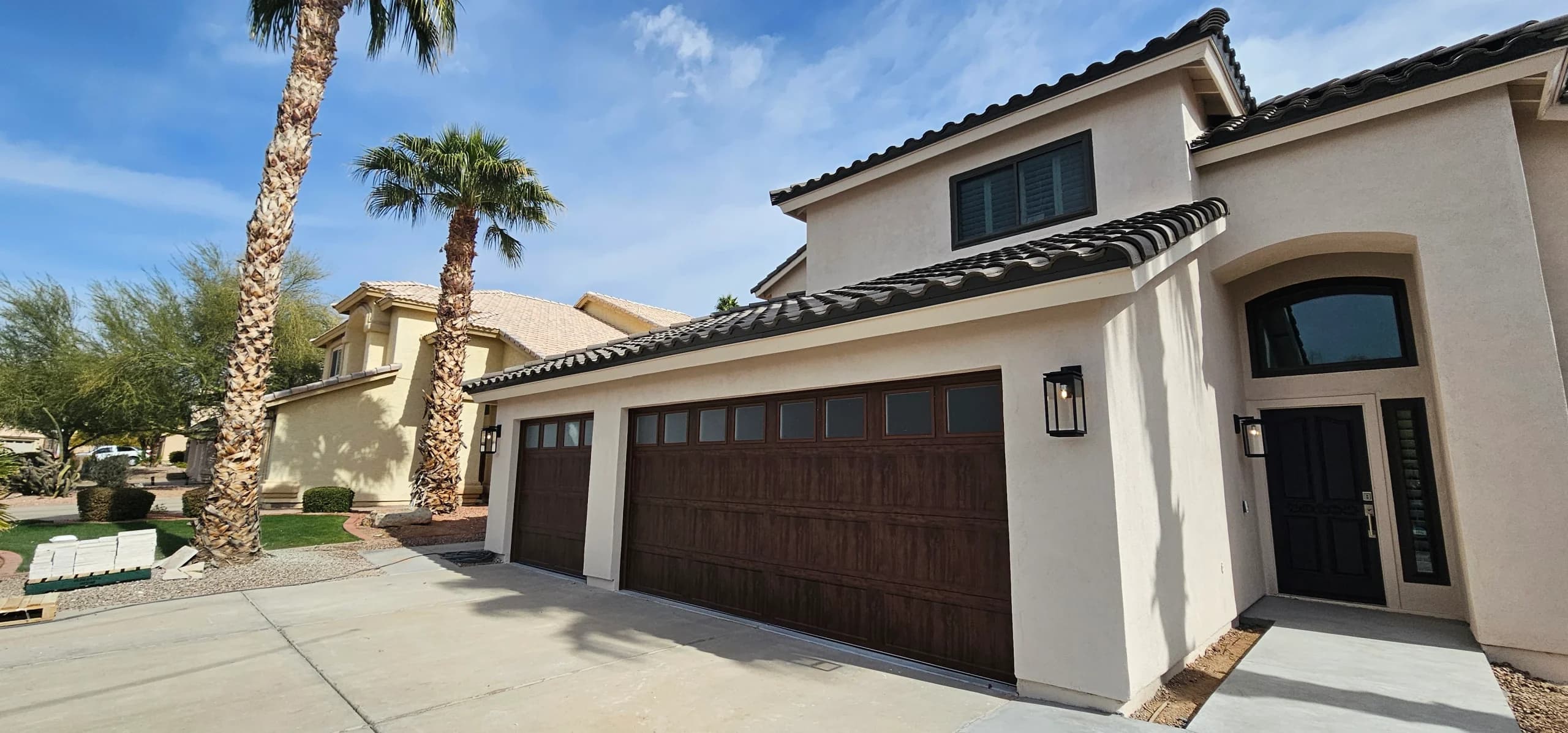
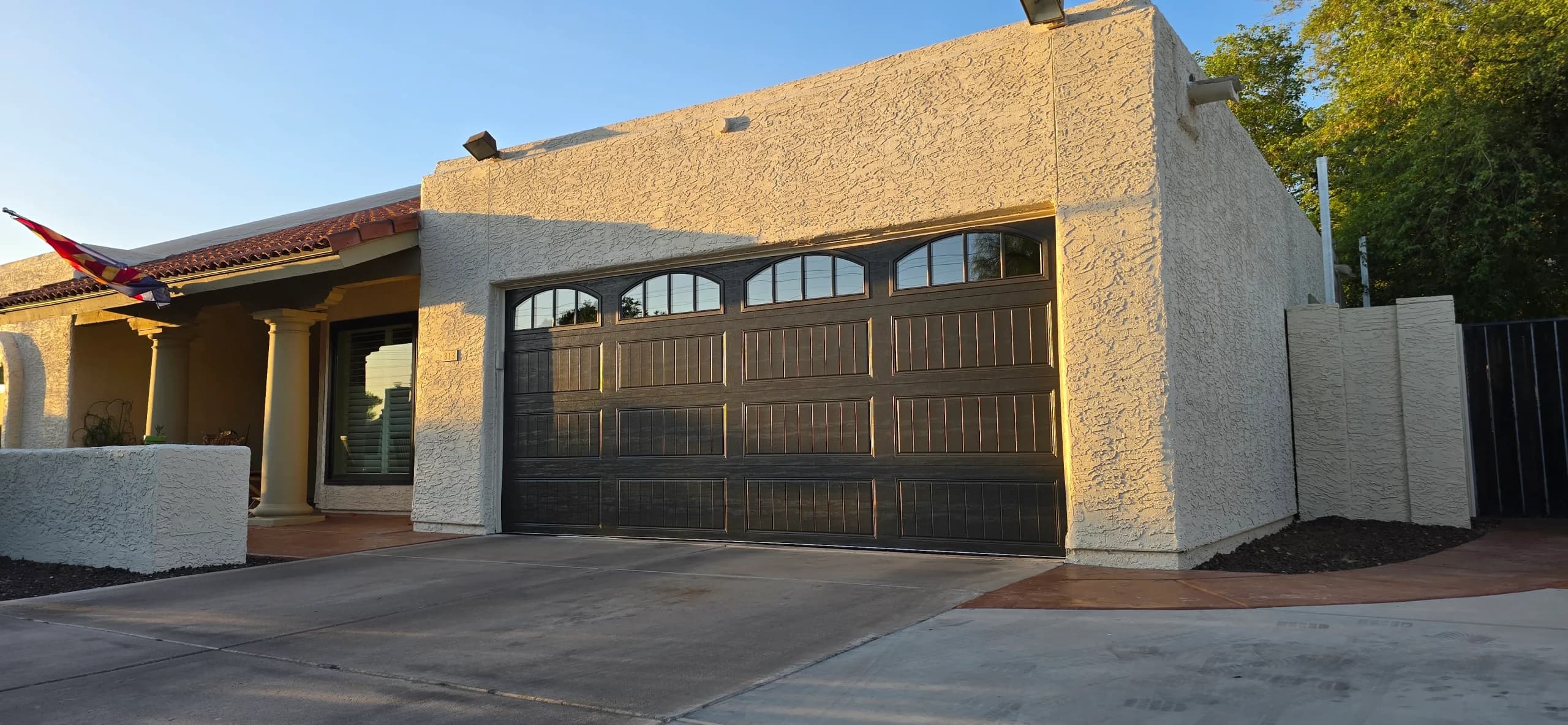
Curb appeal is a practical consideration, not just an aesthetic one. A faded, dented, or outdated garage door can affect your home’s market value and first impression.
Appearance Issues That Justify Replacement
- Fading that has gone beyond touch-up paint and left the door with an uneven, patchy finish that stands out against a freshly painted or updated exterior.
- A style that no longer suits the home, especially after exterior renovations or a neighborhood-wide aesthetic shift toward more modern or updated designs.
- Multiple dents or dings across several panels that cannot be addressed without replacing the panels themselves, at which point a full door replacement often costs less.
The Return on a Garage Door Replacement
- Garage door replacement consistently ranks among the highest return-on-investment exterior upgrades for residential properties.
- In competitive real estate markets like Chandler, updated curb appeal can shorten time on market and support a stronger asking price.
- Even if you are not planning to sell, living with a door that looks and functions well adds daily comfort and reduces the low-level frustration of dealing with an aging system.
If you are also thinking about what material to choose for the replacement, our guide on Why Your Garage Door Material Matters Most walks through what each material option delivers in terms of long-term appearance and performance.
Do Not Wait for a Full Breakdown to Make Your Move
The best time to replace a garage door is before it fails completely. When you catch the warning signs early, you have time to choose the right door, compare options, and schedule installation on your terms rather than in a rush after a breakdown. Whether the issue is age, damage, noise, energy loss, or a spring system that is on its last legs, acting before things get worse saves time, money, and stress.
If you are in Chandler, AZ, and are not sure whether your door needs a repair or a full replacement, the team at GT Garage Door Repair can give you a straight answer. We inspect, repair, and replace garage doors throughout the area and will never recommend a replacement you do not need. Contact us or give us a call today, and let us take a look.