
Most homeowners notice when a garage door cable fails. Fewer know why it happened. That difference matters because without understanding the root cause, the same problem tends to come back.
Garage door cables are built to be durable, but they are not immune to wear, damage, or neglect. Several factors work against them over time, and most of them are predictable. In many cases, routine inspections and timely garage door cable repair can help catch these issues before they lead to sudden failure or expensive damage. When you know what puts stress on your cables, you can make smarter decisions about maintenance, inspections, and when to call a professional.
This guide breaks down the most common reasons garage door cables fail, what each one looks like in practice, and what you can do to slow the process down.
Normal Wear and Tear Over Years of Use
The most common reason garage door cables fail is simply time and use. Every time your garage door opens and closes, the cables flex, carry tension, and release. That cycle repeats thousands of times over the life of the cable.
Steel cable strands are strong, but repeated bending and tension gradually break down the fibers. This process is called metal fatigue, and it is unavoidable. The cable does not need to be damaged or misused to reach this point. It just needs to be used long enough.
Factors that speed up normal wear:
- High-frequency use, such as opening and closing the door six or more times per day
- Heavier door materials like solid wood or thick steel panels
- Cables that were undersized or of low quality at the time of installation
If you have already noticed something wrong with your door, review What Are Signs of a Failing Garage Door Cable? can help you connect the cause to the symptoms you are seeing.
Rust and Corrosion Weakening the Steel Strands
Rust is one of the most destructive forces working against your garage door cables. Steel cables are vulnerable to oxidation, especially in environments with moisture, humidity, or temperature swings. In Chandler, AZ, while the climate is dry, seasonal monsoon rains and overnight temperature drops can introduce enough moisture to start the corrosion process over time.
Rust does not just affect the surface of the cable. It works its way into the individual steel strands, breaking them down from the inside out. By the time rust is visible on the exterior of the cable, the damage underneath is often already significant.
What accelerates rust on garage door cables:
- Poor ventilation inside the garage traps moisture
- Water intrusion from rain, flooding, or a leaking roof
- Skipping lubrication, which leaves the cable exposed to the elements
- Using the wrong lubricant, such as grease or oil, which attracts dirt and holds moisture
Poor Initial Installation
Not all garage door installations are equal. When cables are installed incorrectly, they start their working life at a disadvantage. Problems introduced during installation may not show up right away, but they tend to surface within the first few years of use.
Installation errors can affect how the cable sits on the drum, how much tension it holds, and whether it wears evenly on both sides. A cable that is not wrapped correctly around the drum will slip, fray, or snap far sooner than it should.
Common installation mistakes that lead to early cable failure:
- Cables wound unevenly or too loosely on the drum
- Incorrect cable length or gauge for the door’s weight and size
- Anchor brackets installed at the wrong angle or with insufficient fasteners
- Mismatched cables and spring systems that put an uneven load on one side
Spring System Problems Putting Extra Stress on Cables

Garage door cables and springs work as a team. The springs carry most of the door’s weight, and the cables guide the door along the tracks. When the spring system is out of balance or a spring breaks, the cables suddenly have to handle more load than they were designed for.
A broken torsion or extension spring shifts the entire mechanical burden onto the cable on that side. In many cases, the cable fails shortly after a spring breaks because it simply cannot sustain that level of tension on its own.
Signs that spring problems may be stressing your cables:
- The door feels unusually heavy when lifted manually
- One side of the door rises faster than the other
- You heard a loud bang before the door stopped working correctly
- The cable on one side appears stretched or strained
Because springs and cables are closely connected, understanding how garage door springs affect cable performance can help you see why a failing spring so often leads to cable damage shortly after.
Cable Drum Damage or Misalignment

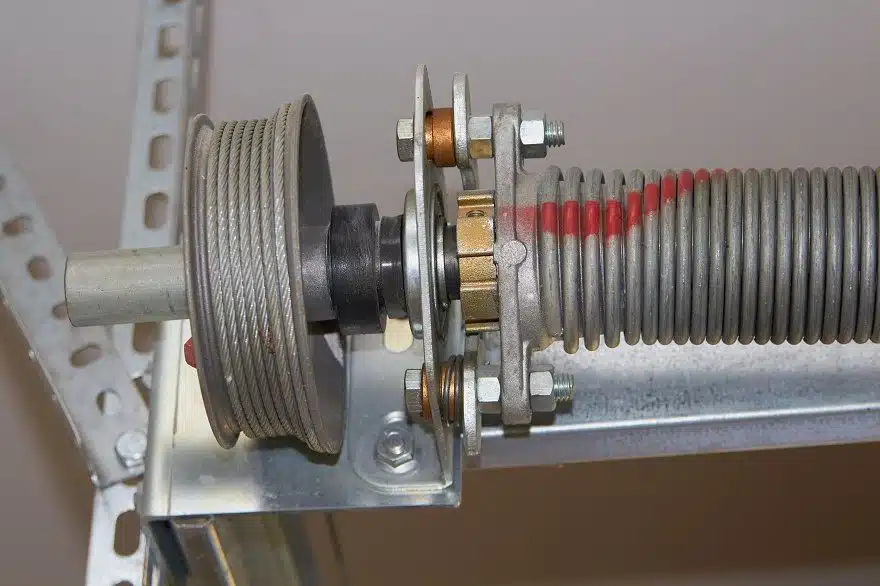
The cable drum is the cylindrical component at the top corner of the door that the cable wraps around. If the drum is cracked, warped, or shifts out of alignment, it disrupts the path the cable follows and causes uneven wear.
A misaligned drum can cause the cable to bunch up on one section of the drum instead of wrapping evenly. This leads to fraying, kinking, or the cable jumping off the drum entirely during operation.
What can cause drum damage or misalignment:
- Physical impact from a vehicle or object hitting the door
- Corrosion affecting the drum’s surface and shape
- A loose set screw allows the drum to shift on the torsion bar
- Normal wear on older drum components that have never been serviced
Physical Damage to the Cable
Cables can be damaged by direct physical impact, even if the rest of the door appears fine. Accidents happen in garages, and a cable that takes a hit from a vehicle, a heavy tool, or stored equipment may develop a weak point that is not immediately obvious. In many cases, professional garage door repair is needed to assess whether the damage has affected other components in the system.
Kinking is another form of physical damage. When a cable is forced into a sharp bend, the internal fibers break at that point. The cable may still hold tension for a while, but the kinked section is significantly weaker than the rest and will eventually fail.
Situations that can cause direct cable damage:
- A vehicle backs into the door while it is partially open
- Heavy objects falling from shelves and striking the cable
- Forced manual operation that bends the cable out of its natural path
- Improper cable handling during a previous repair attempt
Lack of Regular Maintenance

Maintenance is one of the most controllable factors in cable longevity, and it is also one of the most commonly skipped. Cables that are never lubricated, inspected, or cleaned wear out faster than those that receive even basic routine garage door maintenance care.
Without lubrication, the metal strands generate friction against the drum, the pulleys, and each other. That friction produces heat and accelerates wear. Without regular inspections, small issues like minor fraying or early rust go unnoticed until they become serious failures.
A simple maintenance routine that protects your cables:
- Apply garage door lubricant to the cables, drums, and pulleys every six months
- Wipe down the cable surface with a dry cloth to remove dust and debris
- Visually inspect the cables for fraying, rust, or slack every few months
- Schedule a professional inspection once a year to catch what the eye might miss
For a more detailed look at what routine garage door inspection and maintenance involves, this resource walks through the key steps homeowners can take to protect every component in the system.
For context on how early maintenance connects to knowing when replacement becomes necessary, When Is the Right Time to Replace a Garage Door Cable covers the timeline and replacement indicators in detail.
Extreme Temperature Changes
Temperature fluctuations put stress on metal components, including garage door cables. In Chandler, AZ, summer temperatures regularly exceed 110 degrees Fahrenheit. When combined with cooler overnight temperatures, the metal in your cables expands and contracts repeatedly throughout the year.
This thermal cycling does not break cables quickly, but it contributes to cumulative stress over time. Cables that are already showing signs of wear are more vulnerable to the effects of temperature extremes.
How temperature affects cable performance:
- Extreme heat makes metal more pliable and can reduce tension in the cable system
- Cold temperatures make metal more brittle and more prone to cracking under stress
- Rapid temperature changes accelerate the expansion and contraction cycle
- Lubricants can thin out in heat or thicken in cold, affecting how well they protect the cable
Using the Door Beyond Its Design Limits
Every garage door system is rated for a specific weight range and frequency of use. Using the door more often than it was designed for, or installing heavier door panels without upgrading the cables and springs, puts the entire system under strain it was not built to handle.
Commercial-grade use on a residential door is one example. If a home-based business results in the garage door opening and closing dozens of times per day, the cables will wear far faster than the manufacturer’s estimates suggest.
Situations where doors are pushed beyond their limits:
- Adding insulation or decorative overlays that significantly increase panel weight
- Using the garage as the primary entry and exit point for a large household
- Operating the door during a known malfunction instead of pausing use for repair
- Bypassing the opener and forcing the door manually when cables are already stressed
What You Can Do Starting Today
Most causes of garage door cable failure share one thing in common. They progress slowly and give you time to act if you are paying attention. Rust builds over months. Wear accumulates over the years. Installation flaws surface gradually.
Practical steps to take right now:
- Do a visual check of your cables, looking for fraying, rust, or slack
- Check the drum at the top corner of each side for cracks or shifting
- Lubricate the cables and moving parts if it has been more than six months
- Schedule a professional inspection if you have not had one in the past year
If you notice sudden failure or a snapped cable, knowing What to Do Immediately When a Garage Door Cable Breaks can help you respond safely and avoid making the damage worse before repairs are done.
Protecting Your Garage Door System for the Long Haul
Garage door cables do not fail overnight. The causes are gradual, and most of them can be slowed or prevented with the right habits and timely professional help. Knowing what to look for and what conditions to avoid gives your cables the best possible chance of reaching their full lifespan.
If your cables are already showing signs of trouble, do not wait for a complete failure to take action. GT Garage Door Repair serves homeowners throughout Chandler, AZ with professional cable inspections, repairs, and replacements. Their technicians understand the specific demands that the local climate places on garage door systems and can help you stay ahead of the problem. Contact us or give us a call today to book your inspection and get your system back in top shape.