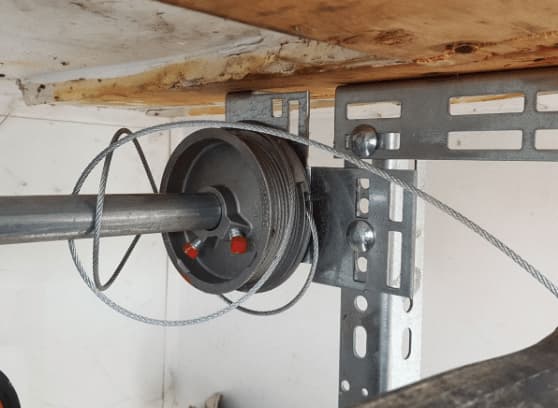
Most homeowners only think about replacing a garage door cable after it has already broken. By that point, the failure has likely caused secondary damage to other components and left the door inoperable at the worst possible moment.
The smarter approach is knowing when to replace a cable before it reaches that point. Garage door cables do not fail without warning. There are clear indicators that signal a cable is approaching the end of its useful life, and recognizing them gives you the opportunity to schedule a replacement or garage door cable repair on your terms rather than react to an emergency.
This guide covers the key replacement indicators, what affects cable lifespan, and how to build a simple routine that keeps your system in good condition year-round.
The Cable Shows Visible Fraying or Broken Strands
Fraying is one of the clearest and most reliable indicators that a cable needs to be replaced. Garage door cables are made up of multiple twisted steel strands. When individual strands begin to separate, snap, or unravel, the cable has entered its final stage of useful life.
A frayed cable can still function temporarily, but the load that the broken strands were carrying is now transferred to the remaining ones. That extra stress accelerates the deterioration of the entire cable. Replacement at this point is not optional. It is overdue.
What fraying looks like during a visual inspection:
- Visible separation or unraveling of strands along any section of the cable
- Small wire ends protruding outward from the cable surface
- A fuzzy or irregular texture where the cable should be smooth and uniform
If you have already noticed something off with your door, What Are Signs of a Failing Garage Door Cable? covers the symptoms to look for in detail.
The Cable Has Reached or Exceeded Its Expected Lifespan
Every cable has a finite lifespan, and that lifespan is measured less in years and more in cycles. One cycle equals one complete open and close of the door. Most residential garage door cables are rated for a range of cycles that corresponds to several years of typical use.
A household that uses the garage door four to six times per day will reach a cable’s cycle limit faster than one that uses it once or twice. Tracking your usage can give you a rough sense of where your cables stand relative to their expected lifespan.
Lifespan factors that vary by household:
- Frequency of daily use across all household members
- Door weight and panel material, with heavier doors wearing cables faster
- The quality of the original cable installed, with higher-grade cables lasting longer
- Maintenance history, including lubrication and professional inspections
You Notice Rust or Corrosion Along the Cable
Surface rust on a garage door cable is not just cosmetic. Rust compromises the structural integrity of the steel strands. Once corrosion has worked its way into the cable fibers, the affected sections are significantly weaker than the rest of the cable and far more likely to snap under normal operating tension.
In Chandler, AZ, the dry heat is generally favorable for metal components, but seasonal monsoon rains, high humidity nights, and temperature swings during transitional months create enough moisture exposure to start the corrosion process over time, especially on cables that are not regularly lubricated.
Rust indicators that suggest replacement is needed:
- Orange or brown discoloration along any portion of the cable length
- Rough or pitted texture where the surface should feel smooth
- Flaking or scaling on the cable when you run a cloth along it
The Cable Has Developed Kinks or Permanent Bends
A healthy garage door cable maintains a consistent, even profile along its entire length. Kinks and permanent bends are signs of physical damage or mechanical stress that has altered the cable’s internal structure at that point.
Once a kink forms, the steel fibers in that section are compromised. The kink creates a stress concentration, meaning that section of the cable takes on more load than the surrounding areas during every cycle of operation. Over time, the cable will break at or near that point, often requiring prompt garage door repair to restore safe operation.
Common causes of kinks in garage door cables:
- A vehicle or object striking the door while the cable was under tension
- The cable jumped off the drum and was forced back into operation without correction
- Improper manual operation that put the cable into an unnatural position
- A previous repair attempt that did not properly re-seat the cable on the drum
Knowing how garage door cables and components are built to perform (opens in a new tab) gives homeowners a useful reference point for understanding why a kinked or bent cable can no longer meet the demands of daily operation.
The Door Has Become Consistently Uneven or Off-Balance
A door that no longer moves straight is a door with a system problem. When one cable stretches, wears unevenly, or loses tension relative to the other side, the result is a door that tilts, wobbles, or drags on one side during operation.
This imbalance is worth taking seriously for two reasons. First, it puts uneven stress on the tracks, rollers, opener, and the door panels themselves. Second, it is often a sign that one cable is nearing failure, and the other may not be far behind.
Signs of imbalance tied to cable condition:
- One side of the door sits higher than the other when the door is partially open
- The door hesitates or jerks on one side during opening or closing
- The opener strains noticeably more than it used to during operation
- The door feels heavier on one side when operated manually
Understanding Common Reasons Why Garage Door Cables Fail Over Time can help you determine whether the imbalance is cable-related or connected to another component in the system.
The Cable Has Already Broken Once Before
A cable that has broken once and been replaced on only one side is a strong candidate for replacement on the other side as well. Cables installed at the same time age together. If one has reached the point of failure, the other is typically operating close to the same threshold.
Many homeowners request that only the broken cable be replaced to minimize cost. This approach can feel practical in the moment, but it often results in a second repair call within a short period. A technician who recommends replacing both cables simultaneously is giving sound advice, not upselling.
Why replacing both cables at the same time makes sense:
- Both cables share the same installation date and usage history
- The intact cable has been under additional stress since the first one broke
- Replacing both during a single visit reduces total labor cost over time
- A matched cable pair ensures even tension and consistent door balance
You Have Not Had an Inspection in More Than a Year
Cables that appear fine to the untrained eye may already be showing signs of wear that only become visible upon closer inspection. Professional technicians look at cable condition as part of a broader system evaluation. They check for wear points that are not obvious from a casual visual check, including the condition of the cable at the drum contact points and anchor bracket locations.
If more than a year has passed since your garage door system received a professional inspection, that gap alone is a reason to schedule one. In a climate like Chandler, AZ, where summer heat and monsoon moisture create accelerated wear conditions, annual inspections are particularly valuable.
What a professional inspection covers beyond the cables:
- Spring tension and condition on both sides of the door
- Drum alignment and surface condition
- Bottom bracket integrity and anchor point security
- Roller and track alignment that affects cable load distribution
Reviewing the industry standards that define safe garage door operation (opens in a new tab) can help homeowners understand what a professional inspection is designed to verify and why annual checks are considered an industry best practice.
A professional inspection is not just a cable check. It is a complete system review that identifies problems before they become failures, for a step-by-step guide on what to do if a cable breaks before your next inspection, What to Do Immediately When a Garage Door Cable Breaks walks through the process clearly.
The Cable Feels or Looks Slack When the Door Is Closed
A properly functioning cable maintains consistent tension when the door is in the closed position. If you look at your cable and it appears to hang loosely, sag between attachment points, or has visibly slipped off the drum, the tension in the system has been lost.
Cable slack is not always the result of the cable itself being damaged. It can also point to a spring that has lost tension, a drum that has shifted, or an anchor bracket that has loosened. However, regardless of the root cause, a cable operating with slack is at high risk of jumping off the drum, tangling, or snapping during the next cycle.
Visual checks for cable tension:
- The cable should run in a straight, taut line from the bottom bracket to the drum
- There should be no visible sag or looping along the cable length
- The cable should not hang noticeably lower on one side compared to the other
How to Build a Simple Cable Maintenance Routine
Replacing a cable at the right time is easier when you have a consistent garage door maintenance routine that keeps you informed about the system’s condition. The following routine does not require special tools or training and can be completed in a few minutes every few months.
A practical maintenance routine for homeowners:
- Visually inspect the cables every three months for fraying, rust, or slack
- Apply a garage door-specific lubricant to the cables, drums, and pulleys every six months
- Test the door’s manual balance once a year using the emergency release cord
- Schedule a professional inspection annually, or every six months for high-use households
Average Cable Lifespan at a Glance
Understanding the general lifespan expectations for your cables helps you plan replacement before failure rather than after. These are general estimates, and actual results will vary based on usage, maintenance, and installation quality.
General lifespan considerations by usage level:
- Light-use households opening the door once or twice daily will see cables last longer under routine maintenance
- Moderate-use households opening the door four to six times daily will reach wear thresholds faster
- Heavy-use households or those using the garage as a primary entry point should expect more frequent inspections and potentially earlier replacements.
- Cables in climates with temperature extremes, like Chandler, AZ summers, may show wear sooner than the manufacturer estimates in milder regions.
Replacing on Your Schedule Beats Replacing in a Crisis
There is a meaningful difference between scheduling a cable replacement during a convenient window and dealing with a broken cable on a busy morning with no alternative exit. The first costs time and a service fee. The second can cost all of that, plus emergency service rates, potential damage to the opener or tracks, and the disruption of an unplanned repair.
Acting on the indicators in this guide puts you in control of the timing. You choose the appointment. You clear the garage beforehand. You ask the questions you want to ask without the pressure of an inoperable door.
When the inspection results or the signs above suggest it is time, GT Garage Door Repair is here to help homeowners throughout Chandler, AZ, make that call with confidence. Their team provides honest assessments, quality replacements, and the kind of service that keeps your garage door running reliably through every season. Contact us or give us a call today to schedule your inspection and stay ahead of the problem before it becomes an emergency.