
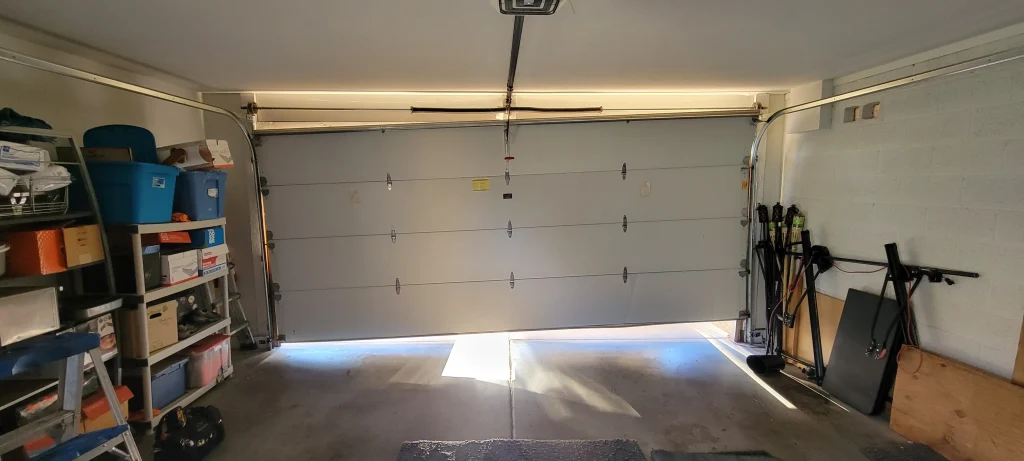
A garage door that stops mid-travel can disrupt daily routines and raise immediate security concerns. Many homeowners notice the problem without warning, especially during the first open of the day or when returning home.
When off-track garage door repair is necessary, the door may jam, hang unevenly, or fail to move due to misaligned rollers and track. A door that sticks halfway can also indicate wear in lift support components or increased friction along the travel path. Professional evaluation helps identify the cause and restore controlled, reliable movement.
When a Door Stuck Halfway Becomes a Safety or Security Problem
A door that stalls mid-cycle can create two immediate risks: uncontrolled movement and reduced security. Even when the door appears stable, the system may be under an uneven load. Continued attempts to run the opener can increase strain on rollers, hinges, and track hardware. Safety concerns also rise when the door hangs crooked or shifts during operation.
Situations that often justify faster service include:
- The door cannot close, leaving the garage open to the street
- The door cannot open fully, blocking a vehicle
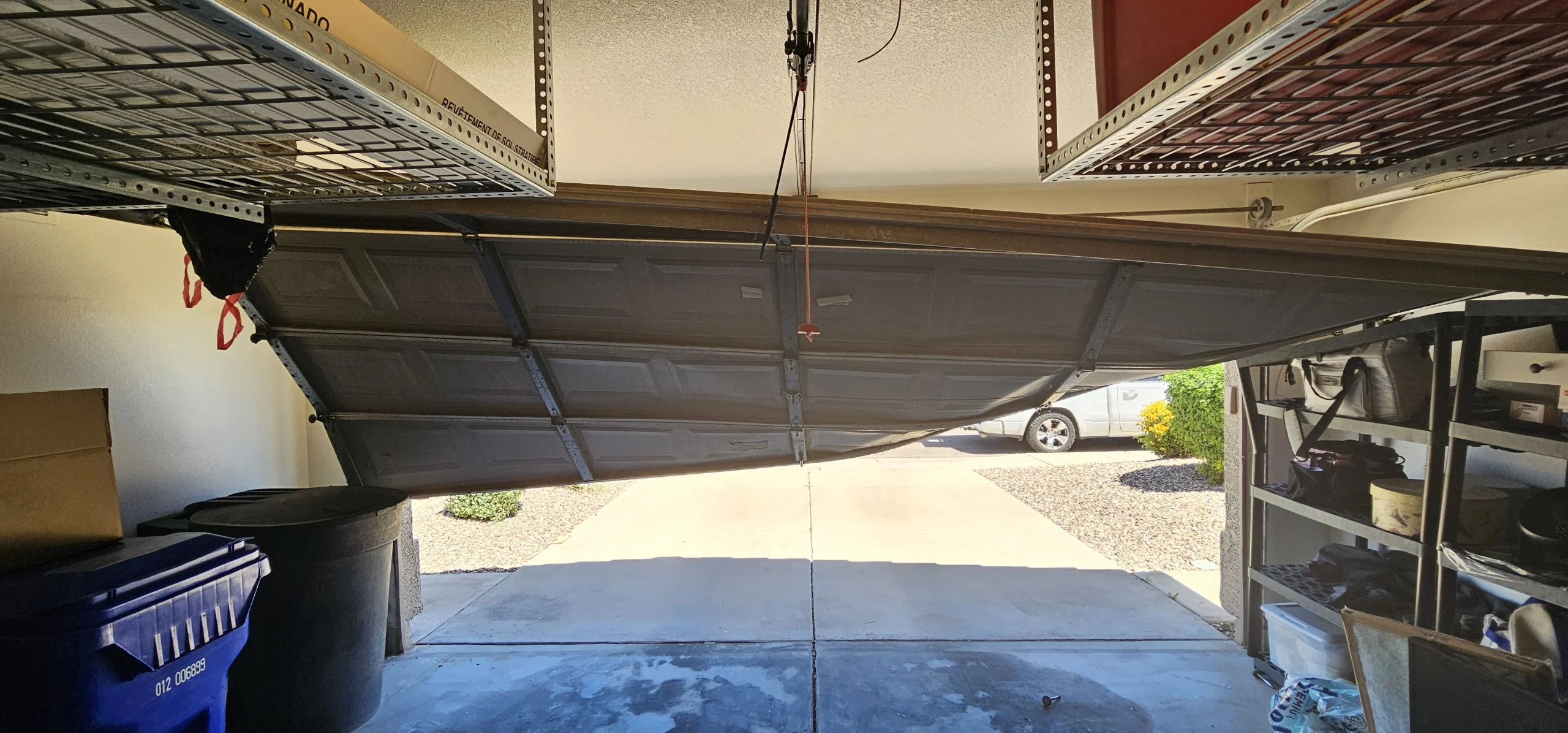
- The door hangs unevenly or appears tilted during travel
- The opener hums, strains, or stops repeatedly while the door remains stuck
- The door drops suddenly when closing resumes
- Loud grinding or scraping begins near the tracks
- Cables appear slack or uneven along the sides
A professional assessment helps confirm whether the door is stable enough to remain in place until service arrives. In many households, urgent service is requested when the garage cannot be secured.
For a broader overview of emergency decision-making, visit our blog, “Emergency Garage Door Repair: When Should You Call?”
How Track and Roller Problems Commonly Cause Mid-Travel Stops
Many halfway stoppages involve friction and misalignment. The door relies on smooth roller travel within properly aligned tracks. When rollers bind or the track shifts, the door can stop at the point of highest resistance. In some cases, the opener detects excessive force and reverses to ensure safety.
Common track and roller contributors include:
- Track brackets loosen, and the track shifts inward or outward
- Track bends after impact or contact with stored items
- Rollers wear down and bind under load
- Debris buildup increases resistance along the track line
- The door is out of square and rubbing against the track
Because roller and track issues often escalate, professional service helps prevent bent sections, damaged hinges, and additional strain on the opener. A technician can also confirm whether the door has started to jump the track line.
If unsafe warning signs are present, visit our blog, “What Are The Signs Your Garage Door Is Unsafe?”
Lift Support Problems That Can Trigger a Halfway Jam
A garage door can stall mid-travel when lift-support conditions change, even when the tracks remain straight and unobstructed. Springs and cables manage most of the door’s weight. When lift support weakens, the opener may no longer have sufficient capacity to move the door smoothly through its full range. Uneven lift force from side to side can also cause binding and unexpected stoppages.
Lift support changes often develop gradually. As balance shifts, additional strain is transferred to connected components, increasing the likelihood of sudden operational failure if the condition remains unaddressed.
Common Lift Support Conditions That Cause Stoppages
Several lift-related issues frequently lead to halfway jams and unstable movement:
- Spring fatigue reduces balance support and increases opener strain.
- Spring failure causes the door to become excessively heavy.
- Cable wear or stretching creates an uneven lift on each side.
- Bottom bracket movement alters cable alignment and load distribution.
- Drum slippage changes the cable wrap and affects door leveling.
Many service calls involve torsion spring concerns when a door feels unusually heavy, drifts downward, or fails to remain open. Cable conditions also contribute, especially when a door hangs unevenly or moves inconsistently along the tracks. Professional evaluation often identifies the need to correct garage door cables when they are slack, fraying, or out of balance.
Why Lift Support Issues Can Escalate Quickly
Lift support failures directly affect door stability. When springs or cables no longer carry weight evenly, the risk of a sudden drop increases, along with added stress on panels, tracks, and mounting hardware. Early evaluation helps confirm whether lift support remains within safe operating limits and whether changes have overloaded the opener system.
For a deeper understanding of how spring-related lift support problems progress from performance issues into urgent safety concerns, our blog “Can A Broken Spring Turn Into An Emergency?” explains why spring failure often leads to immediate service needs and elevated risk when door balance is compromised.
Why “Off-Track” Conditions Often Start as a Halfway Stoppage
A door can begin with minor alignment issues and progress into an off-track condition. Mid-travel stalls often happen at the point where the door transitions between vertical and horizontal track sections. If a roller climbs, binds, or slips, the door may stop halfway and then shift out of alignment.
Track geometry and spacing issues
Even small spacing changes can cause rollers to ride improperly, especially near the curved transition where the track must guide the door smoothly. If the track pulls away from the wall, twists, or develops a slight bend, rollers may lose proper seating. Loose fasteners, shifting brackets, or minor impacts can also change the track opening just enough to affect roller travel. Over time, that poor tracking can create wear marks, vibration, and recurring mid-travel stalls.
Uneven door travel and panel stress
When the door is out of square, the panels can twist slightly as they move. That twisting increases friction and increases the likelihood of a future derailment. You may notice one side rising faster than the other, a slight diagonal tilt, or a rubbing sound that changes as the door moves. As panel alignment worsens, hinges and brackets may carry additional load, and the rollers may ride closer to the outer edge of the track rather than staying centered.
Opener strain and forced movement
Repeated attempts to open a jammed door can cause it to move erratically. Opener strain can worsen alignment concerns and speed up roller wear. Forcing movement can also loosen hardware and cause sudden shifts during travel.
When a derailment is suspected, professional off-track garage door repair can restore safe, stable travel and reduce the chance of repeat stoppages. When urgency or security concerns arise, homeowners often search for emergency garage door repair near me to quickly restore proper closure and reliable access.
What Professional Services Typically Include for a Halfway Stoppage
A service visit usually focuses on restoring stable travel, correcting the underlying cause, and confirming that the opener runs within normal load. The process often includes inspection of door balance, track alignment, roller condition, and cable integrity.
Door balance and force evaluation
Technicians check whether the door remains stable at key positions. Balance issues may require adjustment or repair, depending on the door’s weight and spring condition.
Track alignment and hardware inspection
Fasteners, brackets, and track placement are checked along the full travel path. Track corrections help reduce binding and uneven wear.
Component recommendations and follow-up planning
Repairs can range from targeted part replacement to broader service depending on wear patterns. Many homeowners request residential garage door repair when reliability is needed for daily access, and a complete inspection can identify wear points before another stoppage occurs.
Professional service also helps determine whether a standard garage door repair appointment is appropriate or whether a faster response is safer given the door’s instability.
How to Decide Between Urgent Service and Scheduled Service
A halfway stoppage can feel urgent, yet urgency depends on stability and security. If the garage cannot be closed, exposure and access concerns often justify expedited service. If the door hangs unevenly or feels unstable, the risk of sudden movement increases.
Decision factors that often support a faster response include:
- The garage cannot be secured because the door will not close
- The door shifts or drops unexpectedly during operation
- The door hangs crooked or appears to be leaving the track line
- Cables look slack, uneven, or visibly worn
- Loud grinding, scraping, or banging begins suddenly
- The opener strains repeatedly while the door remains mid-travel
When uncertainty remains, contacting a professional for guidance helps protect safety and reduces the chance of secondary damage. A technician can assess whether the door can stay in place safely until service or whether immediate correction is recommended.
Restore Safe Movement and Reliable Closure Without Guesswork
A garage door that sticks halfway often indicates friction, misalignment, or lift-support issues. Track and roller resistance can trigger reversals, while springs and cables can change door balance and overload the opener. Professional evaluation identifies the cause, restores controlled travel, and helps prevent repeat stoppages that damage panels and hardware. Reliable closure also protects household security and supports daily routines.
GT Garage Door Repair provides homeowners with professional inspections and service focused on safe, consistent garage door operation. The team assesses balance, alignment, and lift components to determine the most effective repair solution based on the door’s condition.
Contact us today or call us to address a garage door that is stuck halfway. A qualified professional can recommend the safest next step based on door behavior and overall system condition.