
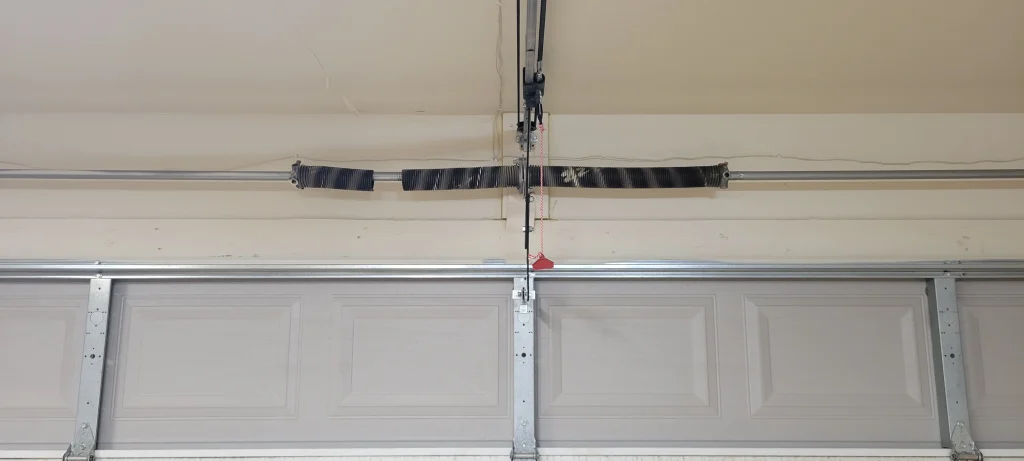
A broken garage door spring often results in a door that feels heavy, moves unevenly, or fails to open normally. Many homeowners notice the problem during a busy moment, which can lead to repeated attempts to run the opener and increased strain on the system.
When a torsion spring is repaired, the garage door may lose balance and become harder to control, even if the opener is still operating. A spring problem can also trigger uneven lift and additional wear across cables, rollers, and tracks. Understanding the warning signs helps homeowners decide when a fast professional response is the safest option.
When a Broken Spring Becomes a True Emergency for Safety or Security
A broken spring becomes urgent when the door creates an immediate safety risk or leaves the home exposed. Springs carry much of the lifting load. When a spring fails, the door can lose stability and may drop faster than expected. Security becomes the priority when the garage cannot close fully.
Emergency conditions often include:
- The garage door will not open, and a vehicle is trapped
- The garage door will not close, and the garage remains unsecured
- The door drops quickly or slams during closing
- The door hangs crooked or appears unstable at mid-travel
- The opener strains, stops repeatedly, or makes unusual sounds
- Cables look slack or uneven after the spring failure
A professional evaluation helps confirm whether the door can remain in a safe position until service or whether immediate correction is needed. Spring failure can also increase stress on other parts, so rapid assessment often reduces secondary damage.
For a broader emergency decision guide, visit our blog, “Emergency Garage Door Repair: When Should You Call?“
How to Recognize Spring Failure and Related System Stress
Spring failure is not always obvious at first glance, especially when the spring is mounted above the door. Many homeowners notice performance changes before spotting a visible break. Recognizing early warning signs can help limit opener strain and reduce the chance of additional damage to door parts.
Garage door springs provide the lifting support needed for smooth, controlled movement. When a spring weakens, cracks, or breaks, the door often becomes unbalanced. An unbalanced door can bind in the tracks, move unevenly, or fail to travel through a full cycle. In many cases, the opener still activates, but the door does not respond normally because the lifting system is no longer carrying the correct load.
Common indicators include:
- A loud bang near the top of the garage, followed by rough or limited door movement
- A door that feels much heavier than usual during manual opening attempts
- A door that rises only a few inches, then stops or reverses
- A door that closes too quickly or bounces near the floor
- A door that drifts downward after reaching the open position
- An opener that runs, but the door barely moves
Spring failure often leads to added stress across related door parts. Rollers and hinges can experience increased friction, cables can lose proper tension, and tracks can take on uneven load when the door tilts during travel. The opener may also work harder than intended, which can increase wear on internal gears and reduce overall reliability. Continuing operation under those conditions can increase the risk of damage, especially if the door jerks, drops, or jams during movement.
A trained technician can assess the full lifting system, verify proper door balance, and check cable condition and hardware alignment. This type of professional inspection helps restore smooth, controlled movement while reducing the risk of recurring problems caused by ongoing mechanical stress.
Independent consumer guidance from Forbes notes that when basic troubleshooting no longer resolves the issue and safety or reliable access is involved, hiring a qualified garage door repair professional is typically the safest next step.
When warning indicators suggest unsafe operation, review our blog, “What Are The Signs Your Garage Door Is Unsafe?”
Why Spring Problems Can Trigger Cable, Roller, and Track Issues
A spring supports controlled movement. When spring tension is removed, the rest of the system absorbs the load unevenly. Cables can shift on drums, rollers may bind under increased weight, and tracks can experience additional force if the door travels out of square.
Secondary issues that often appear after spring problems include:
- Uneven cable wrap that makes the door tilt
- Loose or frayed cables that increase drop risk
- Roller binding that causes mid-travel stalls
- Track rubbing or misalignment from uneven travel
- Panel stresses that changes the door geometry
Many service visits include garage door cable repair when a spring failure leads to slack, fraying, or imbalance. Rollers also matter, since worn rollers can worsen binding under load, and a technician may recommend garage door roller repair when wobble or binding is present.
When a door begins to move unevenly after a spring failure, the risk of an alignment shift increases. In some cases, a door can start to leave the track line, and professional off-track garage door repair may be needed to restore safe travel.
If the door stalls or stops partway through operation as alignment degrades, review our article, “Why Is Your Garage Door Stuck Halfway Open?”
What Professional Spring Service Typically Includes
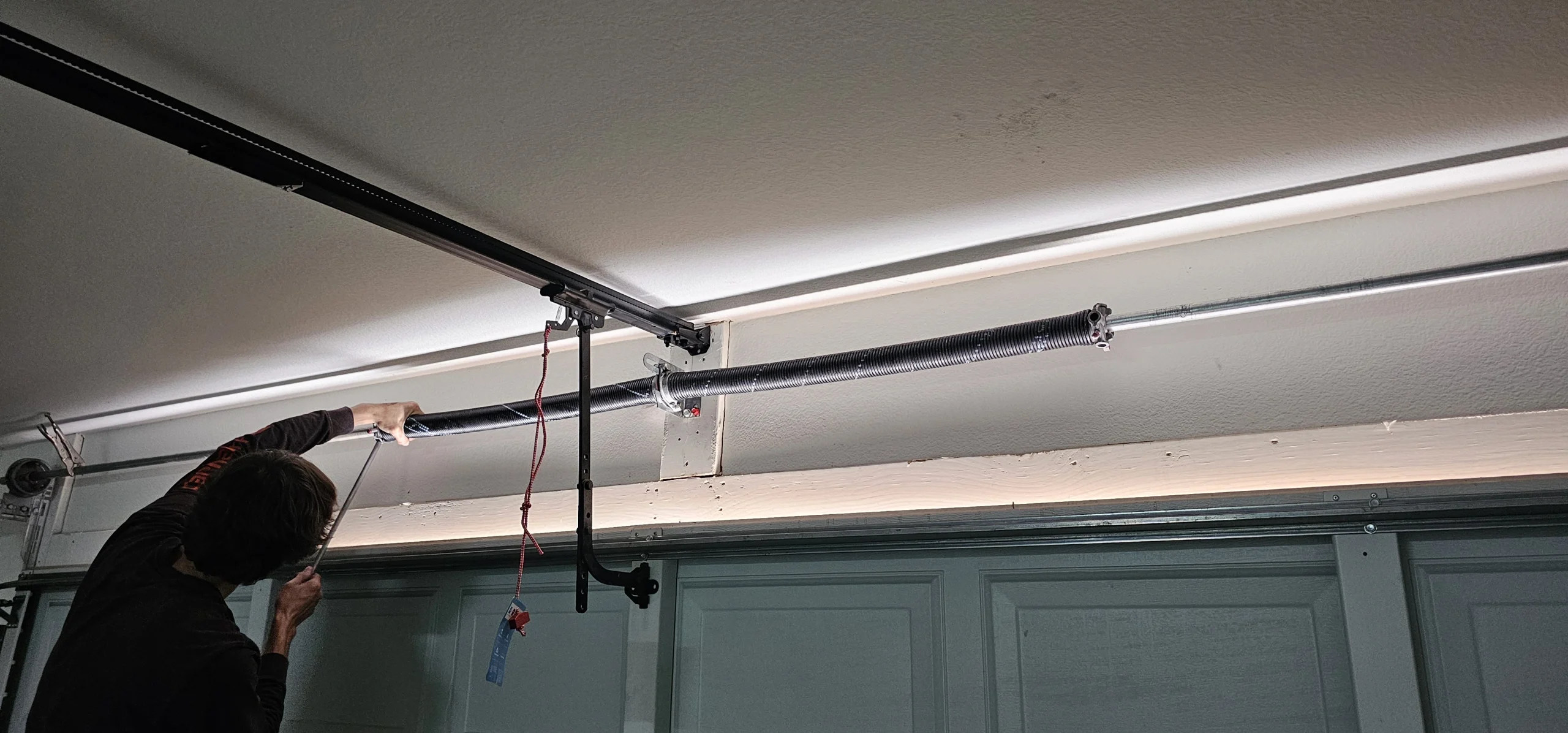
A professional service visit focuses on safe stabilization first, then proper system restoration. The goal is to restore balance so the door travels smoothly and the opener operates within normal load. Spring service also includes checking related parts that the failure may have stressed.
Door balance verification
Technicians confirm that the door can hold steady at key positions and travel without drifting. Balance problems often require spring replacement or adjustment based on door weight and system design.
Lift support inspection
Cables, drums, and bottom brackets are checked for wear and correct positioning. Lift support integrity helps keep the door level and reduces the chance of a sudden drop.
Track and roller travel review
Roller seating, track alignment, and hardware stability are evaluated along the full travel path. These checks help prevent binding and reduce repeat stoppages.
Opener performance confirmation
After spring work, a professional checks the opener’s response and safety behavior. A balanced door reduces stress on the opener and improves reliability.
Homeowners often request residential garage door repair when a spring issue affects daily access or when the system shows multiple signs of wear.
Why Urgent Garage Door Service Demand Increases After Spring Failure
A spring failure can cause a garage door to stop without warning, leaving the space unusable and disrupting daily routines. Access issues often arise immediately, especially when schedules depend on reliable entry and exit or when security becomes a concern. A door that will not close properly can expose vehicles, stored equipment, and interior access points.
Spring-related failures also change how the door behaves. Sudden imbalance can cause unstable movement, increased strain on connected components, and a heightened sense of risk during operation. These conditions often prompt fast action rather than delayed scheduling.
Reasons homeowners seek rapid service include:
- The garage cannot be secured, and exposure is immediate
- A vehicle is trapped, and access is required
- The door moves unpredictably and feels unsafe
- The opener strain and continued use feel risky
Many homeowners search for emergency garage door repair near me when a spring failure affects security or access. In other cases, a scheduled garage door repair appointment may be appropriate if the door remains secure and stable, yet a technician should still confirm safe conditions.
How to Decide Whether the Situation Is an Emergency
A broken spring can range from inconvenient to urgent, depending on the door’s position, stability, and security. The deciding factors usually involve whether the garage can be closed, whether the door is stable, and whether the movement feels unpredictable.
Factors that often point to urgency include:
- The door cannot close, and the garage remains open
- The door drops or slams when attempting to close
- The door hangs crooked or shifts during operation
- Cables appear slack, uneven, or visibly worn
- The opener strains repeatedly while the door remains stuck
If uncertainty remains, contacting a professional for guidance helps avoid unnecessary risk. A technician can confirm whether immediate correction is recommended or if service can be safely scheduled.
Restore Safe Balance and Reliable Access After a Spring Failure
A spring failure can create safety risk, opener strain, and secondary damage across cables, rollers, and tracks. Warning signs such as sudden heaviness, uneven travel, or a door that will not close should be taken seriously. Professional diagnosis restores balanced movement, protects the opener, and helps prevent repeat problems that disrupt daily routines.
GT Garage Door Repair supports homeowners with professional inspections and service focused on safe, controlled operation. Our team evaluates door balance, lift support, and travel alignment to recommend the right repair approach based on system condition.
Contact us today or call us to address spring-related garage door concerns. A knowledgeable professional can assess door operation, pinpoint underlying issues, review available repair solutions, and recommend the safest path forward based on system condition and household requirements.