
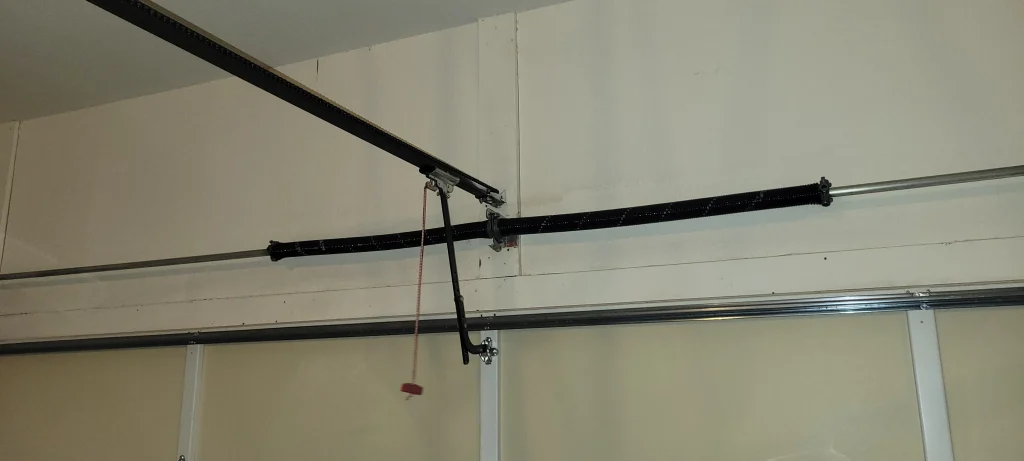
Most homeowners never think about their garage door torsion spring until it stops working. But here is the thing: every torsion spring has a lifespan, and once it hits that limit, failure is not a matter of if. It is a matter of when, often leading to the need for torsion spring repair.
Knowing how long your spring is expected to last gives you the upper hand. Instead of dealing with a sudden breakdown on a busy morning, you can plan ahead, schedule a replacement at a convenient time, and avoid the stress of an unexpected repair.
This guide breaks down exactly how torsion spring lifespan works, what shortens it, what extends it, and how Chandler, AZ, homeowners can stay ahead of the problem before it becomes one.
Torsion Springs Are Rated by Cycles, Not Years
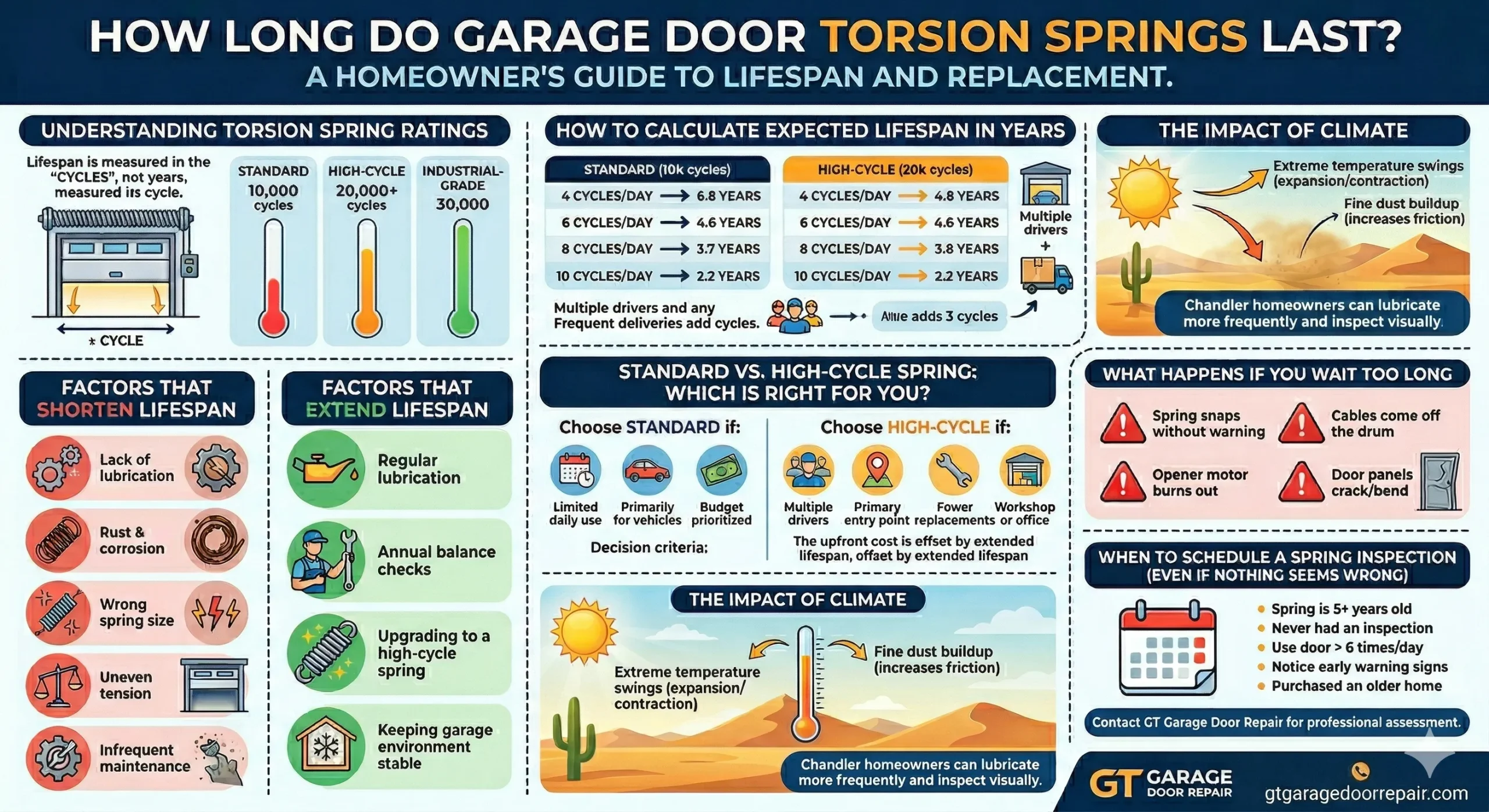
The lifespan of a torsion spring is not measured in years. It is measured in cycles. One cycle equals one complete open and one complete close of the garage door.
Here is how the standard ratings break down:
- Standard torsion springs are typically rated for around 10,000 cycles
- High-cycle torsion springs are rated for 20,000 cycles or more
- Extended-life or industrial-grade springs can reach 30,000 cycles in some cases
The reason cycles matter more than years is simple. A household that opens the garage door twice a day puts far less wear on the spring than one that opens it eight or ten times a day. The clock is really counting actions, not time.
Understanding the root causes behind spring deterioration in more detail can help you make smarter maintenance decisions, read Causes of Garage Door Torsion Spring Failure You Should Know.
How to Calculate Your Spring’s Expected Lifespan in Years
Once you know the cycle rating of your spring, you can estimate how long it will last based on your daily usage. Here is a simple way to think about it:
For a standard 10,000-cycle spring:
- 4 cycles per day = approximately 6.8 years
- 6 cycles per day = approximately 4.6 years
- 8 cycles per day = approximately 3.4 years
- 10 cycles per day = approximately 2.7 years
For a high-cycle 20,000-cycle spring:
- 4 cycles per day = approximately 13.7 years
- 6 cycles per day = approximately 9.1 years
- 8 cycles per day = approximately 6.8 years
- 10 cycles per day = approximately 5.5 years
If your household has multiple drivers, uses the garage as the main entry point, or runs a home business with frequent deliveries, your spring is cycling far more than the average estimate. Factoring in your actual usage gives you a much more realistic picture.
Factors That Shorten a Torsion Spring’s Lifespan
Not every torsion spring reaches its rated cycle count. Several conditions can cause a spring to fail earlier than expected:
- Lack of lubrication. A dry spring creates friction with every wind and unwind. That friction builds up heat and wears down the coils faster than normal use alone.
- Rust and corrosion. Corroded coils are weakened coils. Once rust sets in, the metal loses flexibility and becomes more likely to crack under tension.
- Wrong spring size. A spring that does not match the door’s weight is under constant stress from the moment it is installed. It will wear out well before its rated cycle count.
- Uneven tension. If the spring tension is off, either too high or too low, the system works harder than it should, and the spring ages faster.
- Infrequent maintenance. Skipping annual inspections means small problems go unnoticed until they become big ones, making regular garage door maintenance one of the most important steps in extending spring lifespan.
Garage door safety and maintenance tips emphasize regular lubrication, inspection, and proper care to extend the life of springs and other moving parts.
Factors That Extend a Torsion Spring’s Lifespan
Just as certain habits wear out faster, others can meaningfully extend how long it lasts:
- Regular lubrication. Applying a garage door lubricant to the spring coils every three to six months reduces friction and slows corrosion. This single habit alone can add years to the spring’s life.
- Annual balance checks. Testing the door balance once a year confirms that the spring tension is correct and the system is not overworking any single component.
- Upgrading to a high-cycle spring. If your household uses the garage door frequently, investing in a higher-cycle spring during your next replacement pays off in fewer replacements over time.
- Keeping the garage environment stable. Insulating your garage reduces the temperature swings that stress metal components, especially during Arizona’s cooler desert nights.
- Addressing small issues early. A slow door, a grinding sound, or a slight imbalance are early signals. Fixing them before they escalate protects the spring and every component connected to it.
Standard Spring vs. High-Cycle Spring: Which One Is Right for You?
When it is time for a replacement, you will likely have the choice between a standard spring and a high-cycle spring. Here is how to think about it:
Choose a standard spring if:
- Your household opens the garage door four times or fewer per day
- The door is used primarily for vehicle storage, not as a main entry point
- Budget is a priority, and the door is not used heavily
Choose a high-cycle spring if:
- Multiple drivers use the garage door daily
- The garage is the primary entry and exit point for your home
- You want fewer replacements and more long-term reliability
- The door is attached to a home office, workshop, or rental unit
For most active households, the upgrade to a high-cycle spring is worth the difference. The additional cost upfront is offset by the extended lifespan and the avoided cost of an earlier replacement.
How the Climate in Chandler, AZ Affects Spring Lifespan
Climate plays a role in how long a torsion spring lasts, and Chandler, AZ, has its own set of conditions worth knowing about.
The desert heat puts metal components through daily thermal cycling. Daytime highs in summer can reach well above 100 degrees Fahrenheit, while nights can drop significantly cooler. The expansion and contraction of metal over time contribute to wear, particularly in springs that are already aging.
Dust is another factor. Fine desert dust can work its way into the coils and increase friction, especially in garages that are not fully sealed. Combined with a lack of lubrication, this speeds up wear and increases the risk of corrosion.
What Chandler homeowners can do:
- Lubricate the spring more frequently if the garage is exposed to dust or temperature extremes
- Inspect the spring visually every few months for early signs of rust or uneven coils
- Consider adding weatherstripping and insulation to reduce the impact of outdoor conditions on the spring system
Proper home insulation and energy efficiency can help stabilize garage temperatures and reduce stress on metal components like torsion springs.
Signs Your Spring Is Approaching the End of Its Life
Even if you do not know the exact age of your spring, there are physical signs that it is getting close to the end of its useful life:
- The door feels heavier than usual when lifted manually
- The opener sounds like it is straining or running louder than normal
- The door moves more slowly than it used to, especially when opening
- There is visible rust, discoloration, or uneven spacing between coils
- The door does not stay in place when raised manually and released
Any one of these signs is worth taking seriously. A spring that is nearing failure is not just an inconvenience. It puts extra stress on the opener, the cables, and the drums, which can turn one repair into several.
For a complete guide on identifying these warning signs before a full breakdown occurs, visit Garage Door Torsion Spring Replacement: Signs It Is Time.
What Happens If You Wait Too Long to Replace the Spring
Pushing a worn spring past its limit is a gamble that rarely works out in the homeowner’s favor. Here is what tends to happen when a spring is left in place beyond its useful life:
- The spring snaps without warning. A sudden break can leave the door stuck in the down position, locked out of the garage until a technician arrives.
- Cables come off the drum. When a spring breaks, the cable tension changes instantly. This can cause one or both cables to slip off the drums and tangle.
- The opener motor burns out. Running an opener without proper spring support forces the motor to carry weight it was never designed to handle.
- Door panels can crack or bend. A door that falls or is pulled unevenly puts stress on the panels themselves, which can lead to cosmetic and structural damage.
None of these outcomes is cheap to resolve. Replacing a spring before it fails is almost always more cost-effective than dealing with the cascade of problems that come after a sudden break.
When to Schedule a Spring Inspection Even If Nothing Seems Wrong
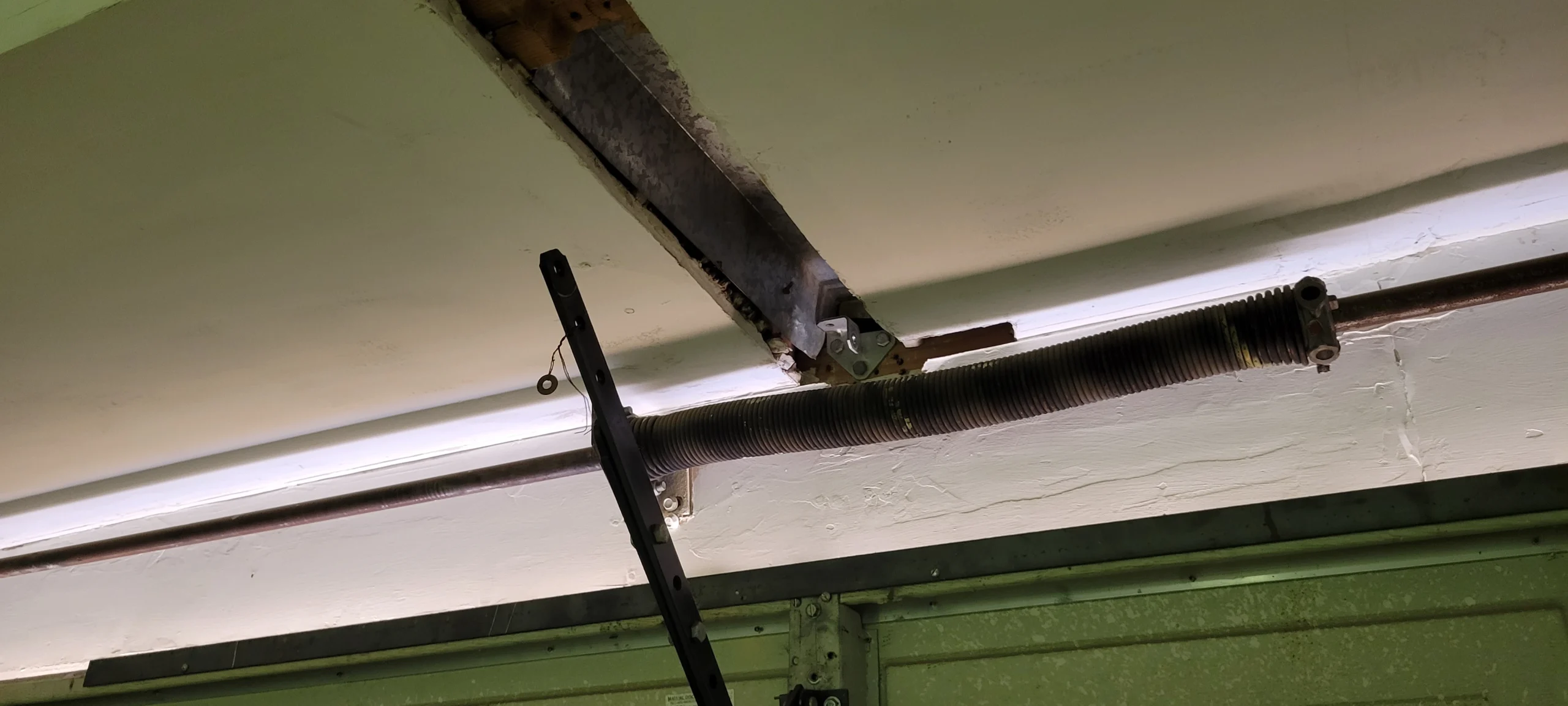
Most homeowners wait for a problem before calling a technician for garage door repair. A smarter approach is to schedule an inspection based on time and usage rather than waiting for failure.
Consider scheduling a professional spring inspection if:
- Your garage door spring is five years old or more
- You have never had the spring inspected since moving into the home
- You use the garage door more than six times per day
- Have you noticed any of the early warning signs described in this guide
- You recently purchased an older home and do not know the spring’s history
A trained technician can assess the spring’s remaining life, check the tension and lubrication, and give you a clear picture of where things stand. That kind of information lets you plan a replacement on your terms rather than reacting to an emergency.
If you are unsure what happens after a spring fails, What to Expect from a Garage Door Torsion Spring Replacement explains each step in a simple way.
How Long Is Long Enough? Know Before It Is Too Late
Torsion springs do not last forever, but with the right habits and the right information, you can get the most out of every spring and avoid the frustration of an unexpected breakdown.
Whether your spring is brand new or you are not sure how old it is, taking a proactive approach always works better than waiting for something to go wrong. A quick inspection, a tube of garage door lubricant, and a basic understanding of your usage habits are all it takes to stay ahead of the problem.
GT Garage Door Repair works with homeowners across Chandler, AZ, to inspect, maintain, and replace torsion springs before small issues turn into bigger ones. If you are not sure how much life your spring has left, contact us or give us a call today to schedule an inspection and get a straight answer from a technician who knows garage doors inside and out.