
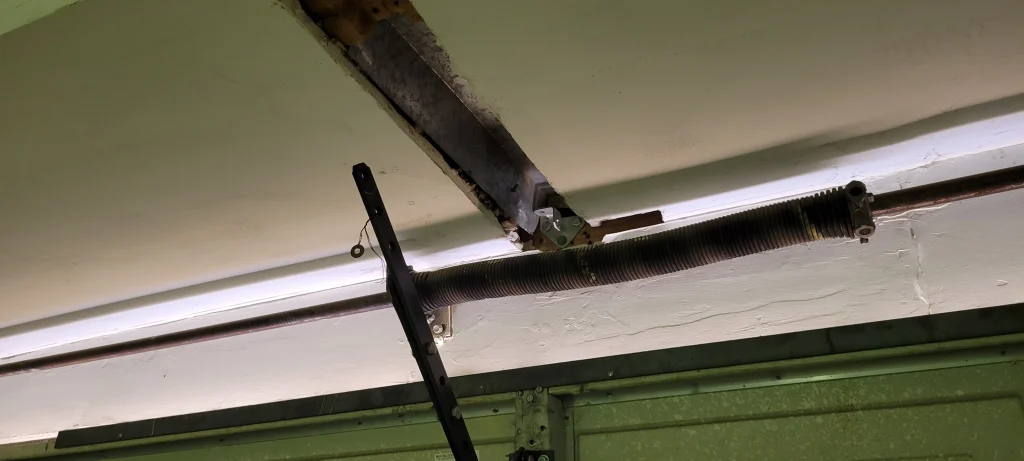
A garage door that suddenly stops working can throw off your entire day. In most cases, the culprit is a failed torsion spring that requires immediate torsion spring repair. But what actually causes these springs to fail?
Most homeowners assume it just happens over time with no warning. The reality is that torsion spring failure almost always has a root cause, and many of those causes are preventable. Understanding what puts stress on your spring can help you extend its life and avoid an unexpected breakdown.
This guide breaks down the most common causes of torsion spring failure, what contributes to each one, and what you can do to slow down the wear before it becomes a costly problem.
Normal Wear from Daily Use
Every torsion spring has a cycle rating. One cycle equals one full open and one full close of the garage door. Standard springs are typically rated for around 10,000 cycles. Higher-grade springs can handle 20,000 or more.
For a household that opens and closes the garage door four times a day, a standard spring reaches its cycle limit in roughly seven years. The more you use it, the faster it wears.
What contributes to this:
- Multiple vehicles are using the same garage
- Running errands throughout the day, adding extra cycles
- Using the garage as a main entry point to the home
What you can do:
- Ask your technician about high-cycle spring options during your next replacement
- Keep track of your spring’s age so you are not caught off guard
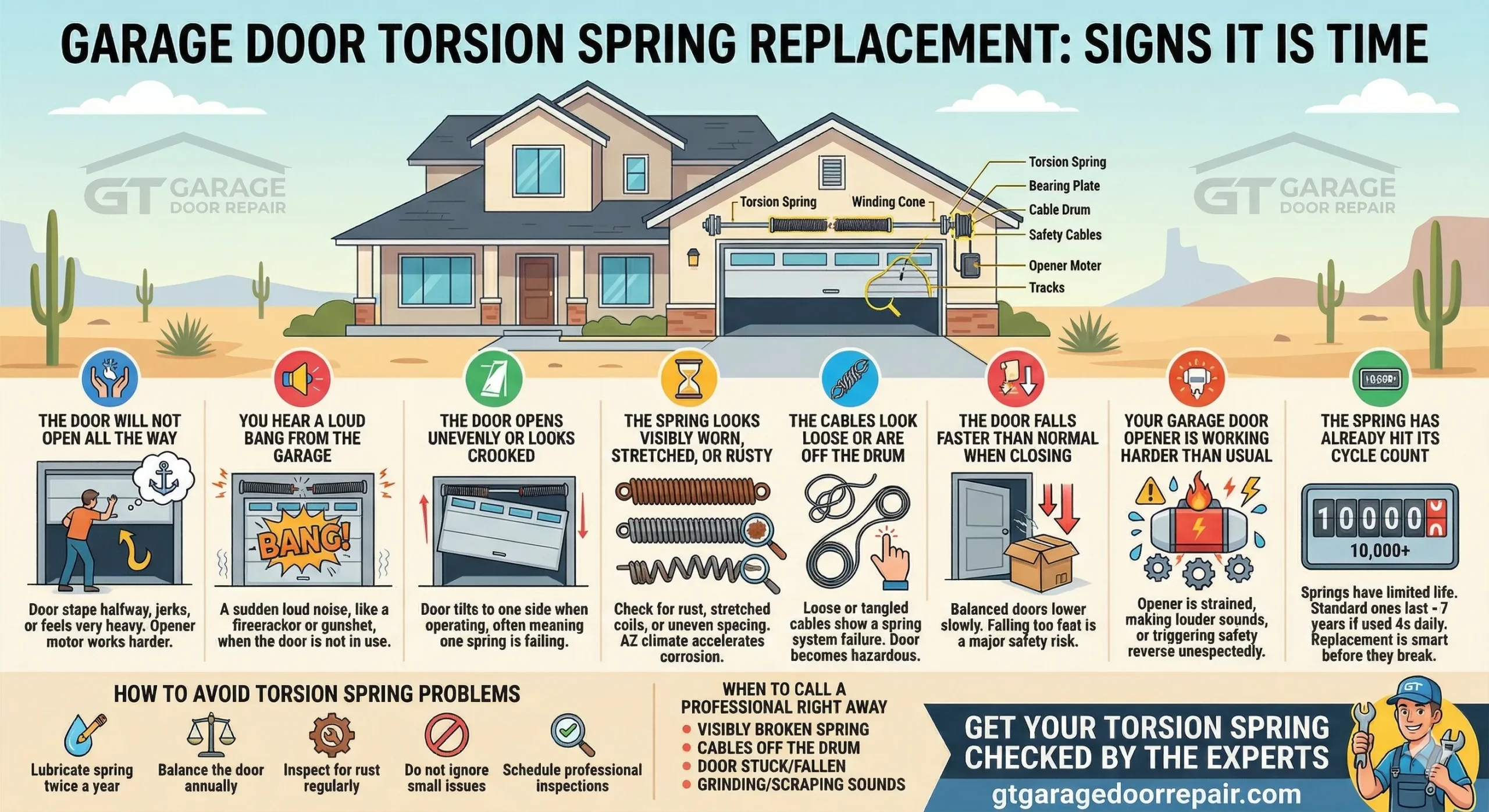
If you have already noticed warning signs with your door, you may want to review Garage Door Torsion Spring Replacement: Signs It Is Time to understand what to look for before things get worse.
Rust and Corrosion on the Coils
Rust is one of the most common causes of early torsion spring failure. When corrosion builds up on the coils, it increases friction every time the spring winds and unwinds. That added friction creates stress points on the metal, and over time, those stress points lead to cracks and breaks.
In Chandler, AZ, the combination of dust, occasional humidity, and temperature changes can accelerate corrosion on metal garage door components, including torsion springs.
What contributes to this:
- Lack of regular lubrication
- Moisture getting into the garage from rain or sprinkler overspray
- Springs that have never been treated or maintained
What you can do:
- Apply a garage door lubricant to the spring coils at least twice a year
- Use a product made specifically for garage door hardware, not a general household spray
- Wipe away dust buildup from the spring before lubricating
Poor Installation or the Wrong Spring Size
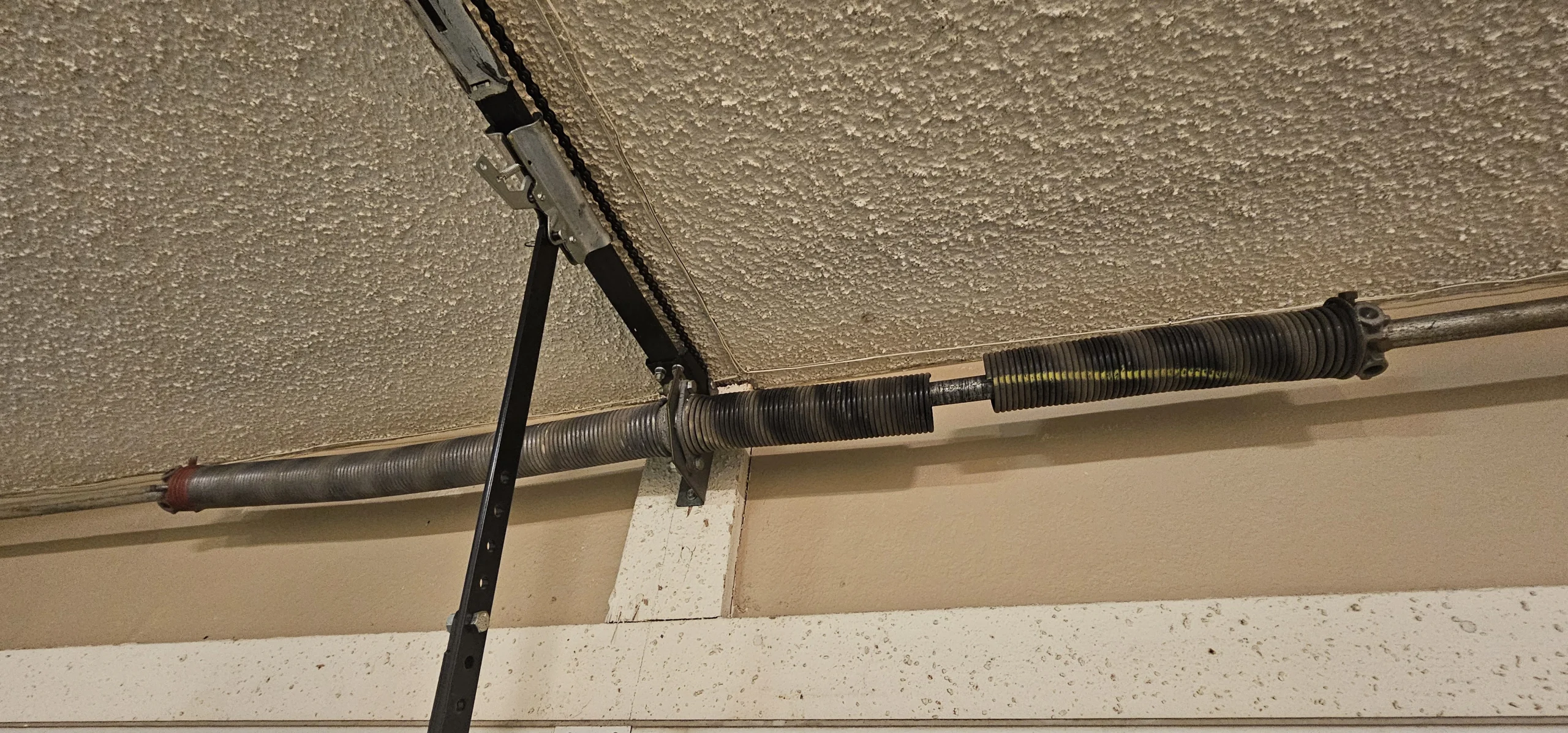
A torsion spring that was not installed correctly, or that was sized incorrectly for the door, will fail earlier than expected. Springs are engineered to match specific door weights and sizes. Using the wrong spring puts uneven stress on the coil from day one.
This is a more common issue than most homeowners realize, especially when springs are replaced by someone without proper training or when low-cost parts are used to cut corners.
What contributes to this:
- Hiring an unqualified technician or attempting a DIY replacement
- Using a spring that does not match the door’s weight or height
- Improper winding during installation, leading to uneven tension
What you can do:
- Always hire a licensed and experienced garage door technician for spring replacement
- Ask the technician to confirm that the spring specifications match your door before installation
Before your spring reaches the end of its life, How Long Do Garage Door Torsion Springs Last? can help you understand the timeline and warning signs.
Lack of Regular Lubrication
A torsion spring that is never lubricated wears out much faster than one that is properly maintained. Without lubrication, the metal coils grind against each other as they wind and unwind, creating unnecessary friction and heat.
Over time, that friction breaks down the metal surface and leads to micro-cracks that eventually cause the spring to snap.
What contributes to this:
- Homeowners do not know that springs need to be lubricated
- Using the wrong type of lubricant, such as WD-40, which can actually dry out the coils
- Skipping routine garage door maintenance entirely
What you can do:
- Lubricate the torsion spring every three to six months using a silicone-based or lithium-based garage door lubricant
- Apply it directly to the coils while the door is in the closed position
- Avoid over-applying. A thin, even coat is enough
Proper garage door care and maintenance includes regular lubrication of moving parts to reduce friction and extend component life.
Improper Spring Tension or Adjustment
The tension in a torsion spring must be set precisely to match the weight of the garage door. Too much tension, and the spring is constantly under stress. Too little tension and the opener is doing all the work, which wears both the spring and the motor.
When spring tension is off, the door may not open evenly, the opener may strain, or the spring may wear out far before its rated cycle count.
What contributes to this:
- Previous adjustments were done incorrectly
- Using the same spring after a door upgrade or panel replacement that changed the door’s weight
- Springs that have stretched slightly over time without being recalibrated
What you can do:
- Have a technician check and calibrate the spring tension during annual maintenance visits
- If your door was recently replaced or upgraded, confirm the spring tension was adjusted to match
Physical Damage to the Spring
A torsion spring can suffer direct physical damage from impact, tools, or debris. This kind of damage creates a weak point in the coil that can snap under normal operating tension.
This is less common than wear-related failure, but it does happen, particularly in busy garages where tools and equipment are stored near the spring system.
What contributes to this:
- Items stored near the spring, falling or striking the coil
- Attempted DIY repairs using improper tools
- Accidental impact during moving or renovation projects
What you can do:
- Keep the area around the spring clear of stored items
- Never use tools to manually wind or adjust a torsion spring unless you are a trained technician
Extreme Temperature Changes
Metal expands in heat and contracts in cold. While Chandler, AZ, has a warm climate, the desert does experience overnight temperature drops that can stress aging springs. When a spring is already worn, rapid temperature shifts can push it past its breaking point.
This is why many spring failures seem to happen on colder mornings or after a sudden weather change.
What contributes to this:
- Springs that are already near the end of their cycle life
- A garage that is not insulated, exposing components to more extreme temperature swings
- Skipping lubrication, which makes metal more vulnerable to temperature stress
What you can do:
- Make sure your garage door is properly insulated to reduce temperature swings inside
- Inspect and lubricate the spring before the cooler months arrive
Using Only One Spring When Two Are Needed
Some garage door systems require two torsion springs to handle the door’s weight correctly. When only one spring is installed, or when one breaks and is not replaced along with the other, the remaining spring carries double the load it was designed for.
This dramatically shortens the life of the surviving spring and puts extra stress on the cables, drums, and opener.
What contributes to this:
- Cost-cutting during a previous repair, where only the broken spring was replaced
- Incorrect assessment of the door’s spring requirements during installation
What you can do:
- If your door uses two springs, always replace both at the same time
- Ask your technician to confirm the correct spring setup for your specific door
A closer look at garage door system components helps explain why springs, cables, and hardware need to be properly matched to the door’s size and weight.
Age Beyond the Rated Cycle Life
Even a well-maintained torsion spring will eventually reach the end of its rated cycle life. Once a spring has exceeded its designed cycle count, it becomes unpredictable. It may hold on a little longer, or it may snap without warning.
Homeowners who are unsure of their spring’s age or cycle count should treat this as a reason to schedule an inspection rather than wait for something to go wrong.
What contributes to this:
- Springs that were never replaced after the original installation
- No maintenance records to track spring age or replacement history
- Assuming the spring is fine because the door still opens
What you can do:
- Ask a technician to assess the spring’s age and condition during a routine service visit
- If your spring is over seven years old and has never been replaced, have it inspected soon
Understanding what to expect when you finally need to move forward with a replacement can help you prepare and make informed decisions. Get the full picture in What to Expect from a Garage Door Torsion Spring Replacement.
Simple Habits That Help Prevent Torsion Spring Failure
Preventing torsion spring failure does not require much time or effort. A few consistent habits can add years to the life of your spring:
- Lubricate the spring every three to six months using a proper garage door lubricant
- Test the door balance once a year by disconnecting the opener and lifting the door manually
- Inspect the spring visually every few months for rust, uneven coils, or visible gaps
- Schedule a professional tune-up annually so a trained technician can catch issues early
- Replace both springs at the same time if your system uses two
When the Damage Is Already Done
If your torsion spring has already failed or is showing serious signs of wear, it is time to act quickly with professional garage door repair. A damaged spring does not just affect how the door moves. It puts stress on every connected component, from the cables to the opener motor.
Continuing to operate a door with a failing spring can turn a single repair into multiple repairs, and in some cases, a full system replacement.
Call a licensed garage door technician as soon as you notice any of the warning signs. Do not attempt to wind, adjust, or replace a torsion spring on your own. The tension stored in the spring is extremely high and can cause severe injury without the proper tools and training.
Protect Your Home Before It Becomes an Emergency
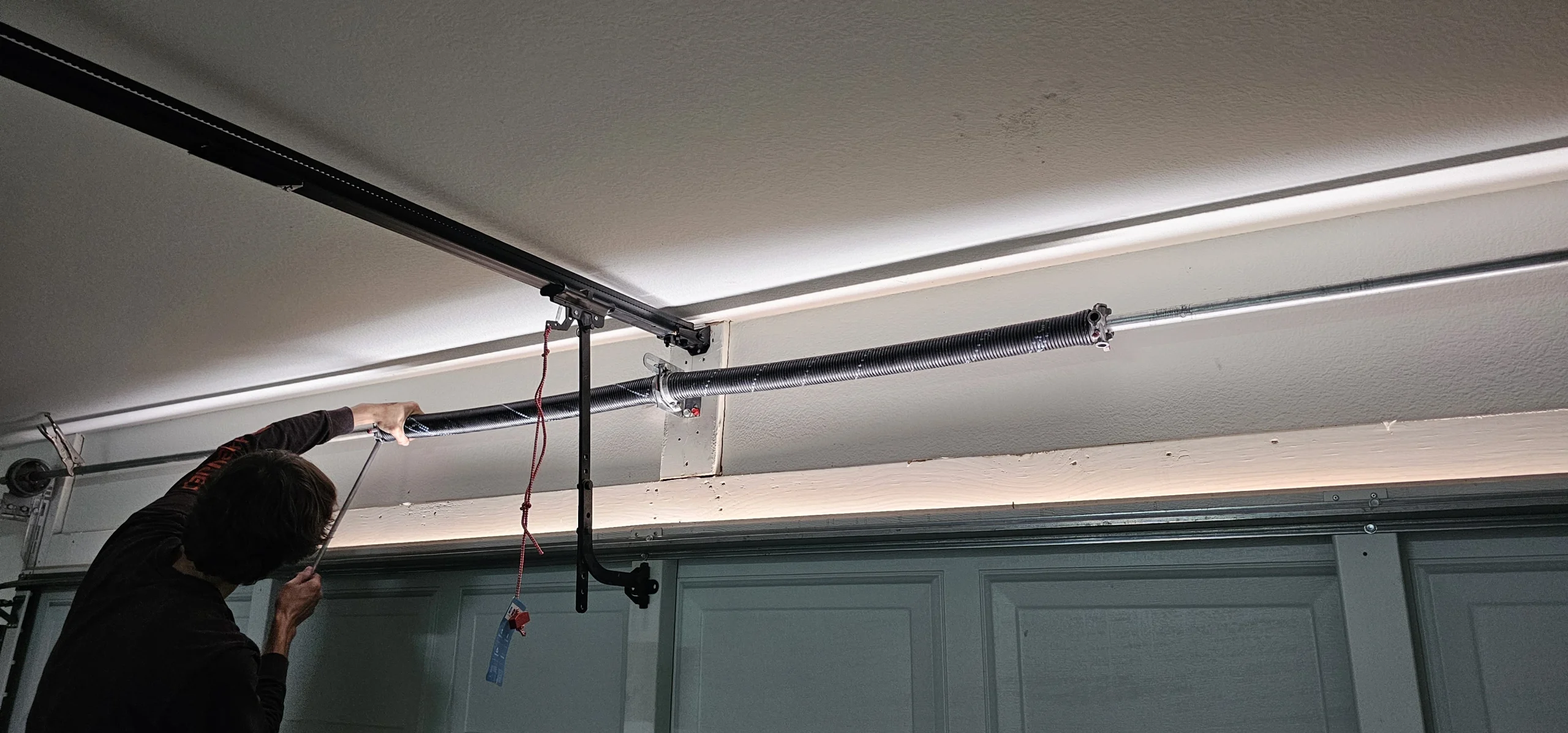
Your torsion spring works quietly in the background every single day. Most homeowners never think about it until it fails. But now that you know what causes it to wear out, you have everything you need to stay ahead of the problem.
GT Garage Door Repair has been helping homeowners across Chandler, AZ keep their garage door systems running safely and reliably. Whether you need a spring inspection, routine maintenance, or a full replacement, our team is ready to help. Contact us or give us a call today to schedule a visit and get your garage door back in top shape.