
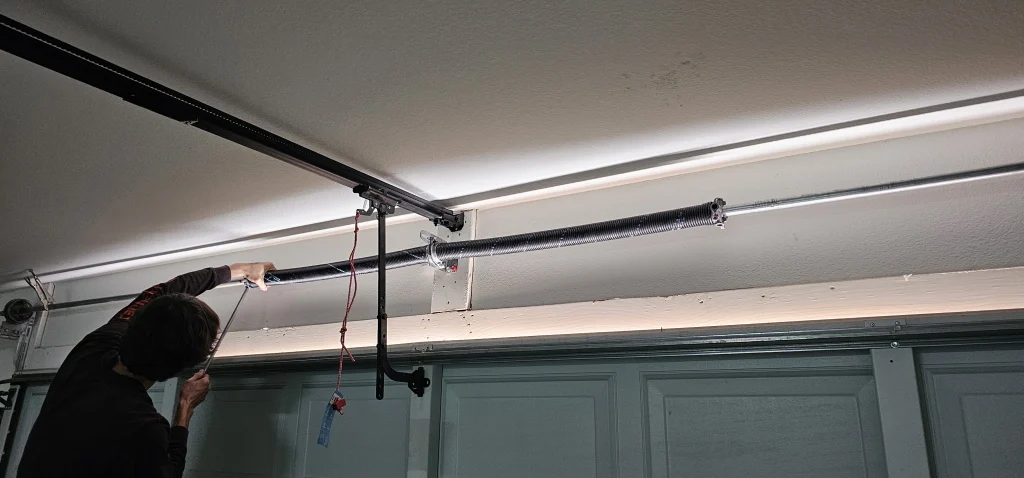
Your garage door works hard every single day. It opens and closes dozens of times a week, and most of the heavy lifting falls on one small but critical component: the torsion spring. When that spring starts to wear out, things go wrong fast.
Most homeowners in Chandler, AZ, do not think about their torsion spring until the door stops working completely. But the truth is, there are warning signs that show up well before a full breakdown. Catching them early and addressing them with timely torsion spring repair can save you time, stress, and a much bigger repair bill down the road.
This guide walks you through the most common signs that your garage door torsion spring needs to be replaced, what to check, and how to stay ahead of the problem before it catches you off guard.
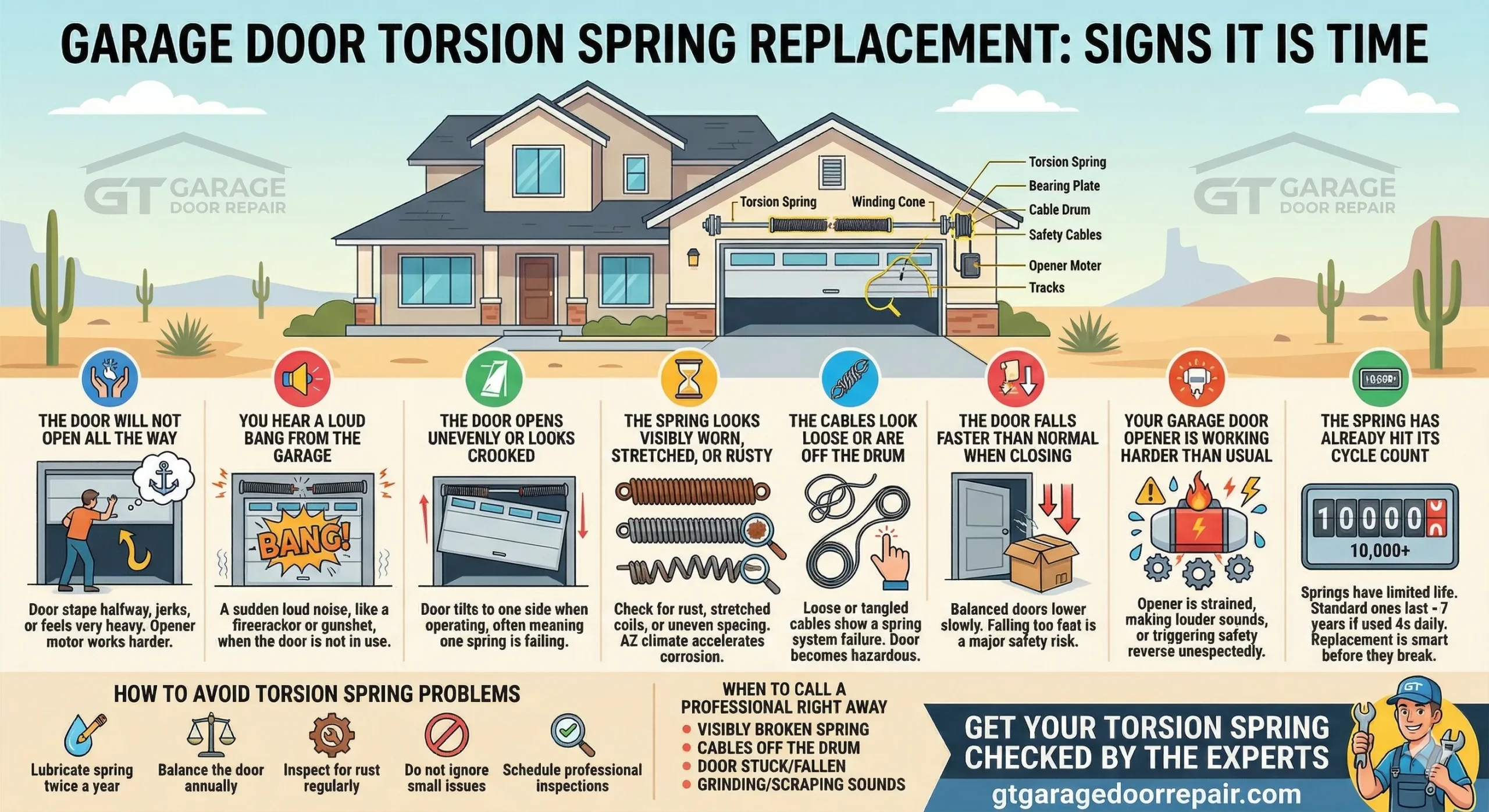
The Garage Door Will Not Open All the Way
One of the first things homeowners notice is a door that struggles to open fully. It may stop halfway, jerk during movement, or feel heavier than usual when you try to lift it manually.
This happens because the torsion spring is responsible for counterbalancing the weight of the door. When it starts to lose tension, the opener motor has to work harder, and the door can no longer move smoothly.
What to check:
- Disconnect the opener and try lifting the door by hand. It should feel light and stay in place when raised halfway.
- If it feels heavy or drops back down, the spring is likely losing its tension.
Quick tip: Never force a door that feels stuck or too heavy. You could damage the opener, the cables, or injure yourself in the process.
What to expect during the actual replacement process, including whether to go with a professional or attempt it yourself, is something every homeowner should understand before getting into this job. Get the full breakdown in What to Expect from a Garage Door Torsion Spring Replacement.
You Hear a Loud Bang Coming From the Garage
A sudden loud bang or snap from inside your garage, especially when you were not using the door, is almost always a broken torsion spring. Many homeowners describe it as sounding like a firecracker or a gunshot.
When a torsion spring breaks, it releases all of its stored tension at once. That noise is the energy released in a split second.
What to check:
- Look at the spring mounted above your garage door. If you see a visible gap in the middle of the spring coil, it is broken.
- Do not attempt to operate the door after a spring breaks. The door can fall unexpectedly without the spring holding its weight.
Understanding why springs break in the first place is just as important as spotting the damage. Learn more in Causes of Garage Door Torsion Spring Failure You Should Know.
The Door Opens Unevenly or Looks Crooked
If your garage door tilts to one side when it opens or closes, that is a red flag. This usually means one spring has worn out or broken while the other is still functioning, causing an imbalance.
Some garage door systems use two torsion springs. When only one fails, the door will pull toward the side with the working spring.
What to check:
- Watch the door from a safe distance as it opens and closes. Does it move straight, or does one side lag behind?
- Look for visible wear, rust, or stretched coils on either spring.
Quick tip: Even if only one spring is broken, most professionals recommend replacing both at the same time. They were installed together and likely have similar wear, so the second one is not far behind.
Many alignment and balance issues are covered in guides on common garage door problems, which explain how uneven movement often points to spring or cable issues.
The Garage Door Moves Slowly or Stops Mid-Way
A healthy garage door should open and close smoothly in about 12 to 15 seconds. If your door is moving more slowly than usual, pausing, or reversing mid-cycle, the torsion spring could be the cause.
The opener is designed to work with a properly tensioned spring. When the spring is weak, the motor compensates and works beyond its designed load, which shortens its lifespan too.
What to check:
- Test the door speed over a few cycles. Inconsistent speed or stopping points suggest spring tension issues.
- Check if the opener is straining, making unusual motor sounds, or running longer than normal.
Understanding how garage door opener systems work helps explain why a failing spring can cause the motor to slow down or stop mid-cycle.
The Spring Looks Visibly Worn, Stretched, or Rusty
Sometimes the sign is right in front of you. A visual inspection of your torsion spring can tell you a lot about its condition. Springs that are heavily corroded, stretched out, or have uneven coil spacing are past their prime and often indicate the need for prompt garage door maintenance.
In Arizona’s climate, dust and occasional moisture can accelerate corrosion on metal components. Chandler homeowners should inspect their springs at least once or twice a year.
What to check:
- Look for rust or reddish-brown discoloration on the coils.
- Check if the coils look stretched or uneven compared to the rest of the spring.
- A spring in good condition should look tight, evenly wound, and free of visible damage.
Quick tip: Apply a garage door lubricant to the torsion spring every few months to reduce friction and slow down corrosion. Use a product specifically designed for garage door components, not a general-purpose spray.
The Cables Look Loose or Are Off the Drum
Torsion springs and cables work together. When a spring breaks or loses tension, the cables that run along the sides of the door often go slack or come off the drum entirely.
Loose or tangled cables are a strong indicator that the spring system is failing. They can also create a safety hazard if the door is operated in that condition.
What to check:
- Look at the cables running from the bottom corners of the door up to the drums on either side of the spring bar.
- If they look slack, frayed, or have come off the drum, stop using the door immediately.
The Door Falls Faster Than Normal When Closing
A properly balanced garage door should lower itself slowly and evenly when you release it manually. If it drops quickly or slams down, the spring is no longer providing the resistance it should.
This is not just a mechanical issue. A door that falls too fast is a safety risk, especially for children, pets, and vehicles parked underneath.
What to check:
- With the opener disconnected, raise the door to about waist height and let go. It should stay in place or lower very slowly.
- If it drops right away, the spring tension is significantly reduced.
Knowing how long a torsion spring is expected to last can also help you plan ahead before problems start. Read more in How Long Do Garage Door Torsion Springs Last?.
Your Garage Door Opener Is Working Harder Than Usual
Your garage door opener is not designed to carry the full weight of the door on its own. It relies on the torsion spring to do most of the lifting. When the spring weakens, the opener picks up the slack, and you will notice it.
Signs your opener is being overworked include louder motor sounds, slower operation, and the opener light flashing or the unit reversing unexpectedly.
What to check:
- Listen for changes in the motor sound during operation.
- Check if the opener is triggering its safety reverse function more often than normal.
- If the opener is struggling, the problem may not be the opener itself but the spring behind it.
The Spring Has Already Hit Its Cycle Count
Torsion springs are rated for a certain number of open and closed cycles. Standard springs are typically rated for around 10,000 cycles, while higher-end options can reach 20,000 or more. For a household that uses the garage door four times a day, a 10,000-cycle spring lasts roughly seven years.
If your spring is approaching or past that range, replacement is a smart move, even if it has not broken yet.
What to check:
- If you know when your garage door was installed or when the spring was last replaced, do the math based on your daily usage.
- Ask a technician to assess the spring condition if you are unsure of its age.
How to Avoid Torsion Spring Problems Before They Start
Prevention is always easier than repair. Here are a few practical habits that can extend the life of your torsion spring and keep your garage door running smoothly:
- Lubricate the spring twice a year. Use a garage door lubricant and apply it to the coils. This reduces friction and slows down wear.
- Balance the door annually. Disconnect the opener and test the door manually. It should open and close evenly and stay in place when raised to waist height.
- Inspect for rust regularly. In Chandler, dust and heat can affect metal parts. A quick visual check every few months catches corrosion early.
- Do not ignore small issues. A slow door, a minor grinding sound, or a slightly uneven movement are early warning signs. Address them before they become major failures.
- Schedule professional inspections. Having a garage door technician check the spring system once a year is one of the simplest ways to avoid unexpected breakdowns.
When to Call a Professional Right Away
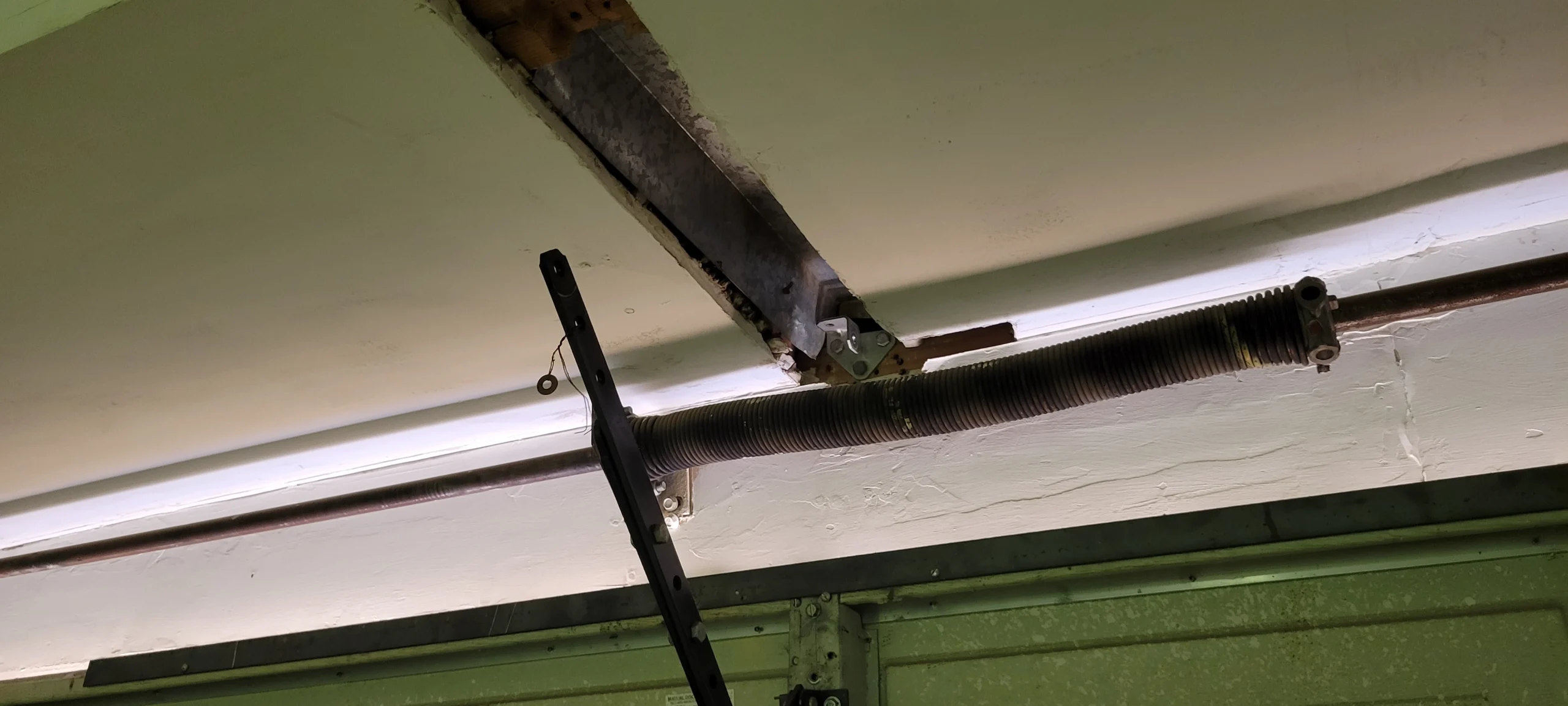
Some situations call for immediate professional garage door repair. Do not wait if you notice any of the following:
- A visibly broken spring with a gap in the coil
- Cables that are off the drum or tangled
- A door that has fallen or is stuck in the down position
- Any grinding or scraping sounds during operation
Torsion spring replacement is not a DIY-friendly job. The springs are under extreme tension and can cause serious injury if handled without the right tools and training. Always call a licensed garage door technician.
Get Your Torsion Spring Checked by the Experts
Your garage door is one of the most used entry points in your home. A failing torsion spring does not just cause inconvenience. It can damage your opener, create safety risks, and leave your home vulnerable.
If you are seeing any of the signs listed in this guide, do not wait for a complete breakdown. GT Garage Door Repair serves homeowners throughout Chandler, AZ, and surrounding areas with reliable, professional garage door torsion spring replacement and inspection services. Contact us or give us a call today to schedule a service visit and get your door working safely again.