
Many homeowners notice small changes first, like a new sound, uneven movement, or a door that feels heavier than usual. Safety concerns can build quietly, especially when the door still opens and closes most of the time.
Knowing when to schedule garage door repair helps reduce injury risk and prevents a minor issue from turning into a sudden failure. Daily use, temperature swings, and everyday wear can expose weaknesses in springs, cables, rollers, and track alignment. Clear warning signs make it easier to determine when professional services are the safest option.
Safety Red Flags That Call for Fast Action and Professional Help
An unsafe garage door often gives early signals that point to rising risk. A door can weigh enough to cause significant property damage or serious injury if the balance support fails. Safety red flags usually involve uncontrolled movement, instability, or failing lift support. A homeowner also faces security concerns when the door cannot close fully or remains unreliable during routine use.
Watch for warning signs such as:
- The door drops quickly or closes with extra force
- The door feels unusually heavy, even with the opener’s assistance
- Door shakes, jerks, or stutters during travel
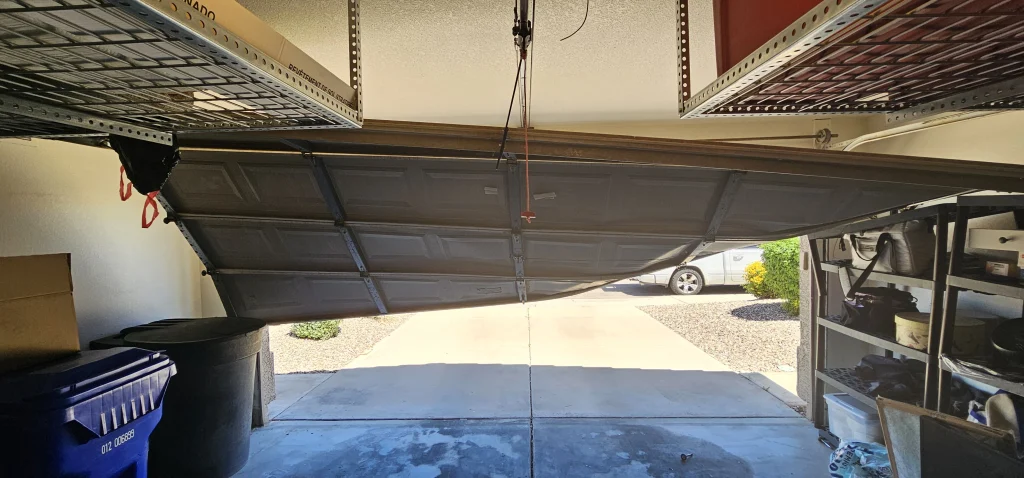
- The door hangs crooked or drifts down after reaching the open position
- A loud bang near the spring area, followed by poor movement
- Grinding, scraping, or squealing sounds during operation
- Visible gaps, fraying, or slack in lift cables
- Track appears bent, separated, or pulling away from the wall
- Opener strains, stops repeatedly, or hums without lifting the door
Fast action often prevents secondary damage, especially when an unstable door bends tracks, wears rollers, or twists panels. Repeated attempts to operate a door with poor balance can also overload the opener. A professional inspection helps identify the failing part and restore controlled movement.
For a deeper overview of when a situation becomes urgent, visit our blog, “Emergency Garage Door Repair: When Should You Call?”
Why an Unsafe Door Often Becomes a Security and Access Problem
Safety issues often lead to security problems, especially when the door cannot close, and the garage remains exposed. A door that sticks open can create an entry point into the home, while a door that sticks closed can block vehicle access and disrupt daily routines. Many homeowners store tools, bikes, and household items in the garage, which raises the importance of reliable closure and stable travel.
Common outcomes linked to unsafe operation include:
- The door cannot close fully, leaving a wide opening to the street.
- The door reverses unexpectedly and remains partially open.
- The door jams mid-travel, blocking entry or exit.
- The door binds against the track, damaging the hinges or panels.
- The door moves unpredictably, creating a risk of injury near the opening.
When a door begins to cause access or security issues, urgency increases, even if it still moves occasionally. A technician can confirm whether the issue involves balance, travel alignment, or lift support and restore safe closure.
If the door stops mid-cycle, see our article, “Why Is Your Garage Door Stuck Halfway Open?”
Mechanical Warning Signs That Suggest High Risk
Mechanical wear becomes dangerous when a door loses balance, hardware loosens, or lift support weakens. Many high-risk problems involve parts under tension. A door can appear typical one day and become unstable the next after a component reaches its limit. Homeowners often notice changes during the first open of the morning or at the end of the day, when the system has cycled many times.
High-risk mechanical signs include:
- The spring area shows a visible gap, stretch, or irregular coil spacing
- Cables appear frayed, uneven, or slack along one side
- Rollers wobble, bind, or appear chipped or worn
- Track alignment looks uneven, or spacing changes along the travel path
- Hinges show cracking, bending, or loose fasteners
- Bottom seal catches and pulls sections out of line
- Door slams, bounces, or fails to stay open reliably
A professional evaluation helps clarify whether parts can remain in service or require replacement. Uncontrolled movement or a door that will not hold position should be treated as a higher-risk condition.
For spring-related emergency risk, visit our blog, “Can A Broken Spring Turn Into An Emergency?”
Common Causes Behind Unsafe Operation in Chandler, AZ Homes
Unsafe operations usually stem from a small set of root causes. A technician can confirm the exact cause during an inspection, but homeowners often benefit from knowing the patterns. Chandler, AZ, conditions often include dust, heat, and frequent daily cycles, all of which increase wear across moving parts.
Loss of balance from spring wear
A door that feels heavy or drifts down often points to a balance problem. Many service calls involve torsion spring repair when spring tension drops or a spring fails.
Track alignment problems after impact or shifting
A bump from a vehicle, settling hardware, or loose mounting points can change track geometry when a roller jumps or the door rides outside the track line. Off-track garage door repair may be needed to restore safe travel.
Roller wear that increases friction and binding
Rollers guide the door along the track. When rollers bind or wobble, movement becomes uneven, and safety risk rises. A technician may recommend garage door roller repair to restore smooth, controlled travel.
Cable wear or uneven lift support
Cables help lift and keep the door level. A skewed door, slack on one side, or visible fraying can increase the risk of failure. A service plan may include garage door cable repair to correct the lift balance.
Understanding these causes helps homeowners make safer decisions and avoid repeatedly cycling a door that behaves unpredictably. Many home maintenance guides from The Spruce identify frayed or rusted lift cables as a common cause of crooked and unsafe garage doors and consistently recommend professional repair whenever cable damage is visible.

How Professionals Confirm Safety and Restore Controlled Movement
A safe service visit focuses on stabilizing the door, confirming the cause, and restoring predictable travel. The evaluation typically includes door balance checks, a track alignment review, and an inspection of lift support components that carry the most load. A technician also confirms the opener’s behavior after repairs, as a balanced door reduces strain on the motor and drive components.
Safety inspection of high-load parts
Springs, cables, rollers, hinges, and bottom brackets receive careful attention. The goal is to identify wear that could cause sudden movement.
Alignment and travel testing
Track spacing and roller movement are checked across the whole travel path. Binding or rubbing often signals alignment issues or worn rollers.
Repair planning and part selection
Repair recommendations depend on door weight, system design, and wear patterns. Many homeowners request residential garage door repair when reliability and safety become priorities in their daily routines. According to Wikipedia, garages in most modern homes often serve as the primary entry point, making the condition of the door and opener closely tied to household safety, consistent access, and everyday convenience.
Guidance on urgency and next steps
A professional can explain whether a condition requires immediate correction or a scheduled service visit. When access or security is compromised, many homeowners search for “emergency garage door repair near me” and benefit from a rapid evaluation.
A professional inspection helps ensure safer outcomes by restoring balance, alignment, and controlled travel without adding strain to the system.
What to Do When a Door Feels Unsafe, and Risk Feels Unclear
Uncertainty often happens when the door still moves, yet behavior feels different. A homeowner can reduce risk by prioritizing safety and limiting use until a professional confirms the cause. The right response depends on symptoms, door stability, and whether the garage can close securely.
Helpful decision points include:
- The door cannot close, and the garage remains open to the street.
- The door drops, slams, or moves with sudden changes in speed.
- The door hangs crooked or drifts downward when open.
- A loud bang near the spring area is followed by poor operation.
- Cables, rollers, or track hardware show visible damage.
- The opener strains or stops while the door remains mid-travel.
When any of these conditions appear, contacting an expert is often the safest choice. Continuing to cycle an unstable door can increase damage and raise the risk. If the situation feels urgent because the garage cannot close or the door movement feels unpredictable, a professional can restore safe access and closure.
Stay Safe, Protect Property, and Restore Confidence in Daily Use
Unsafe garage door behavior typically involves instability, loss of balance, or failure of the lift support. Warning signs such as uneven movement, heavy operation, or visible cable or track issues should be taken seriously, especially when security or access is affected. A professional evaluation helps identify the root cause, reduces the chance of sudden movement, and supports a long-lasting repair plan. For homeowners in Chandler, AZ, reliable operation protects daily routines and helps keep the garage secure.
GT Garage Door Repair offers professional garage door inspections and service centered on safety, system stability, and preventive care. The team focuses on restoring smooth, controlled movement, confirming reliable closure, and identifying the most appropriate repair approach based on the door’s overall condition.
Contact us today or give us a call to review your garage door concerns. A trained professional can guide you toward the safest next step based on observed door behavior and system performance.
Frequently Asked Questions