
Emergencies rarely start with a dramatic failure. More often, they begin with subtle shifts in how the door operates, such as slower travel, uneven movement, new grinding or popping sounds, or a door that feels off when it starts and stops. Those small changes can be early signals that key components are slipping out of alignment or losing support, increasing the risk for a homeowner.
Knowing when to request emergency garage door repair can help protect vehicles, property, and household safety. A door that cannot close, cannot open fully, or cannot remain in position can create immediate exposure to intruders, the elements, or sudden movement. Clear warning signs and smart decision-making reduce the risk of further damage and limit downtime in daily operations.
Situations That Qualify as an Emergency and Why Timing Matters
An urgent call is warranted when the door creates a safety hazard, blocks access, or leaves the garage unsecured. A garage door system is heavy enough to cause severe damage if its components fail under load. Emergency calls also matter when door movement becomes unpredictable, as a door can drop, bind, or drift when key components lose integrity. Homeowners also face a higher risk when a door stops mid-cycle and refuses to move, because repeated attempts to operate the opener can strain components and worsen alignment issues.
Common emergency situations include:
- The door cannot close, and the garage remains open to the street
- The door cannot open, and a vehicle remains trapped inside
- The door drops quickly or feels unusually heavy
- Loud bang sounds occur near the spring area, followed by poor movement
- Cables appear loose, frayed, or uneven on the drums
- Rollers jump the track, or the track bends after impact
- The opener strains, hums, or stops repeatedly while the door remains stuck
A fast response often prevents secondary damage. A door that drags can scar tracks and wear rollers. A jammed door can twist sections and stress hinges. A door that hangs unevenly can pull on cables, causing a sudden release of tension. For many households, emergency services also restore a sense of security and routine.
In an urgent situation, a professional can inspect the entire system and restore safe movement without adding strain through trial and error.
For deeper warning signs and household safety red flags, visit our blog, “What Are The Signs Your Garage Door Is Unsafe?”
What a Stuck or Unstable Door Often Indicates
A door that stops, shifts, or hangs unevenly usually points to a mechanical issue rather than a simple nuisance. The system depends on balanced lift, smooth track travel, and reliable opener logic. When one element slips out of alignment, the door can stop halfway, reverse unexpectedly, or refuse to move. For homeowners, the key question becomes risk. A stuck door can leave a home exposed, while a moving door that jerks or binds can damage panels and hardware.
Common underlying causes include:
- Track misalignment from impact, settling, or loose mounting brackets
- Roller wear or binding that increases friction during travel
- Cable wear that creates uneven lift and skewed door position
- Spring fatigue that removes balance and overloads the opener
- Sensor or opener travel setting issues that interrupt the cycle
- Damaged hinges or cracked sections that change the door geometry. When a door stalls, forcing it to move can increase damage, especially if the door is already out of square. Professional service focuses on restoring alignment, reducing friction, and returning balance so the opener operates within normal load. A repair plan also helps prevent repeated lockouts.
If a door stops mid-cycle, the reason matters, and the safest path usually involves expert diagnosis.
For a focused breakdown of common causes, check our article, “Why Is Your Garage Door Stuck Halfway Open?”
The Most Common Safety Risks Homeowners Should Not Ignore
A garage door can fail in ways that escalate quickly, especially when high-tension parts lose integrity. A door that feels heavy, moves unevenly, or makes new grinding sounds can signal a growing hazard. Risk increases when hardware is loose, track placement shifts, or lift support weakens. Homeowners also face a higher risk when the door becomes unreliable during daily use, because timing often forces rushed decisions.
Warning signs that often justify urgent attention include:
- A new sharp snap or loud bang near the spring area
- Visible gaps in a spring coil or a spring that looks stretched
- Cables that appear frayed, slack, or uneven on each side
- Rollers that wobble, bind, or appear worn down
- Track sections that appear bent, separated, or pulling away from the wall
- Door movement that shakes, jerks, or pauses repeatedly
- A door that will not stay open without drifting downward
Emergency service helps in two significant ways. First, it restores safe movement so vehicles and households regain regular access. Second, it limits secondary damage that can occur when a door becomes misaligned or unbalanced. Many urgent calls also involve security concerns when the door cannot close.
A professional can assess whether the issue remains localized or has spread to multiple parts. When spring integrity becomes uncertain, the situation can shift from inconvenient to unsafe within a short window.
For spring-specific risk and escalation pathways, visit our blog, “Can A Broken Spring Turn Into An Emergency?“
How Professionals Diagnose an Emergency Service Call
Emergency evaluations focus on safety, stability, and the restoration of controlled operation. Technicians generally begin by checking door balance, confirming track alignment, and inspecting lift support. The goal is to identify the failing part and catch secondary wear that could cause another stoppage soon after service.
Balance and lift inspection
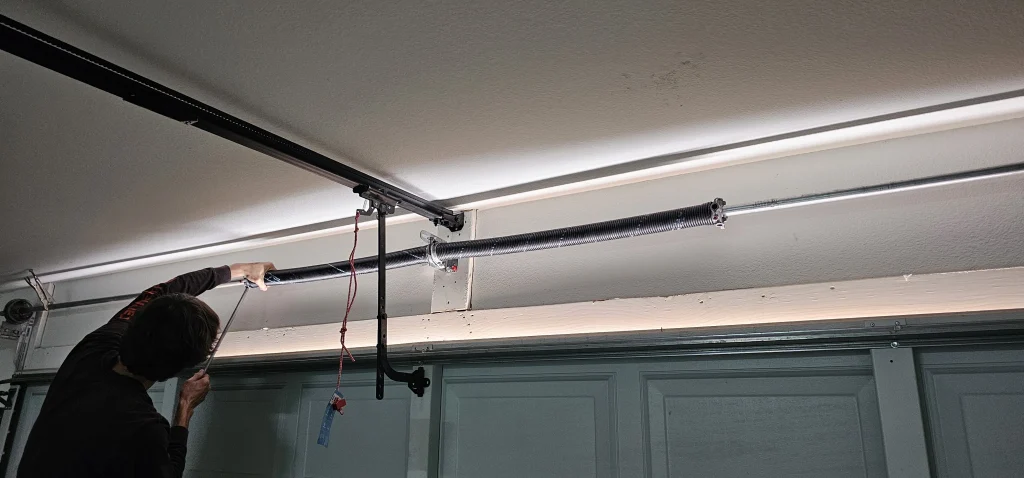
A door should travel smoothly and remain stable at key positions. When the door feels heavy or drifts, spring support may be compromised, and the opener may be pulling more load than designed. Problems commonly lead to torsion spring repair when a spring loses tension, breaks, or no longer supports the door evenly.
Track travel and alignment review
Technicians check vertical and horizontal track geometry, fasteners, and spacing to confirm rollers remain guided without binding. A door that jumped a track often requires off-track garage door repair to restore safe operation and prevent further panel damage.
Roller and hinge condition check
Rollers and hinges guide movement and handle force during travel. Worn rollers increase friction and can contribute to mid-cycle stops. A professional may recommend garage door roller repair when binding, wobbling, or wear creates unstable movement.
Cable and drum assessment
Cables transfer the lift from the spring system to the bottom brackets. Uneven cable wrap or fraying can skew the door and create sudden drops. Many emergency calls require garage door cable repair to restore the even lift and reduce the risk of failure.
Following the diagnosis, the repair plan focuses on ensuring safe operation and long-term stability. Expert service also helps confirm that opener settings match the repaired door’s balance, reducing repeat stoppages.

What to Expect During Emergency Service and Follow-Up Care
An emergency call typically prioritizes stabilizing the door first, then completing a repair to restore safe, predictable movement. Technicians often secure the door in a safe position, verify that household access remains manageable, and then address the failing part. After a safe operation returns, follow-up care focuses on preventing recurrence through inspections and minor adjustments.
Immediate stabilization and safety steps
A technician may secure the door to prevent sudden movement while evaluating lift support and track travel. Stabilization protects property and lowers risk during service.
Focused repair and system reset
Repair often addresses the root issue plus related stress points. The final goal involves smooth travel, reliable stopping points, and normal opener load.
Verification of full travel and security
After repair, a professional checks opening and closing behavior to confirm that the door seals correctly and remains stable. Security is a concern when the original issue involved a door that would not close.
Maintenance-minded recommendations
A homeowner may receive guidance about inspection timing and early warning signs. For many households, residential garage door repair planning includes periodic professional checks to keep minor issues manageable.
Emergency support also often includes a recommendation for future service if multiple parts show wear. That approach helps reduce the chance of a second lockout or another unsafe event soon after repair.
Choosing the Right Response When Urgency Feels Unclear
Not every garage door problem requires an immediate dispatch, but many issues become urgent when safety or security is at risk. A reliable way to decide is to evaluate three areas: door stability, property exposure, and the likelihood of sudden movement. If the garage door cannot close, the security risk increases. If the garage door cannot open, access becomes the priority. If the garage door moves unevenly, the risk of a sudden drop or hardware damage increases.
Factors that often justify a faster response include:
- The garage door will not close, and the garage is left open
- The garage door will not open, and your car is trapped inside
- The garage door feels heavy, unstable, or hard to lift
- The garage door hangs crooked or jerks while moving
- You see damaged cables, rollers, or track parts
- The opener strains, stalls, or stops with the door stuck halfway
- You do not feel safe being near the door while it moves
When the urgency is unclear, contacting a professional for an evaluation helps reduce risk and prevent further damage. Many homeowners search for emergency garage door repair near me during lockouts or security concerns, and a quick inspection can determine whether the issue requires immediate repair or can be addressed during a scheduled visit. For non-urgent concerns, garage door repair service may be the better fit, especially when the door still moves safely and the garage remains secure.
Get Back to Safe, Reliable Access Without Guesswork
Emergency problems with a garage door usually involve safety, access, or security. A door that will not close can expose a home, while a door that moves unpredictably can damage property or create injury risk. Clear warning signs help homeowners make confident decisions, including when to stop operating the door and request a professional evaluation. Understanding common causes also helps households avoid repeated strain on the opener and reduces the chance of secondary damage to tracks, rollers, panels, and lift support. When professional service restores balance and alignment, the door can return to controlled travel and regular daily use.
GT Garage Door Repair supports homeowners with professional inspection and service focused on safety and preventive care. Our team evaluates door balance, track alignment, lift support, and opener performance to restore controlled movement and reduce the risk of recurring emergencies.
Contact us today or call us to discuss garage door concerns. A professional can recommend the appropriate service plan based on the door’s condition and household needs.