
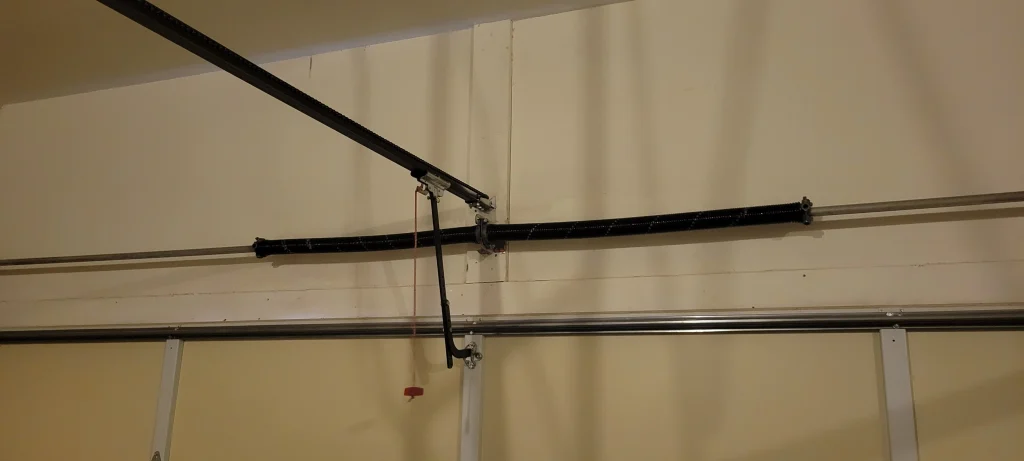
Using the garage door manual release lets you disconnect the opener and operate the garage door by hand during a power outage or system failure. However, once power is restored, the door must properly reconnect to the automatic opener to prevent strain, imbalance, and potential garage door repair needs.
If the opener carriage does not reattach correctly, the garage door system may fail to operate safely or smoothly. Understanding how reengagement works helps protect the door’s weight distribution, preserve normal functionality, and reduce the risk of mechanical damage.
Why Won’t My Garage Door Reengage After Manual Release?
After pulling the release cord and moving the door by hand, the opener carriage can remain out of sync with the opener track, preventing the garage door opener from reconnecting cleanly and creating a safety hazard if the door’s weight is not controlled during the next cycle.
Common reasons reengagement fails include:
- The opener carriage is not aligned with the attachment point on the opener track.
- The manual release latch is not fully reset back into the engaged position.
- The door is sitting unevenly because the garage door springs are out of balance or tension.
- A manual lock or manual locking system is still engaged, blocking movement.
- The opener senses abnormal resistance and stops to protect its safety features.
To understand how manual operation changes what the system can safely handle and why reconnection problems occur after disengagement, read our blog on How to Use the Garage Door Manual Release Safely, which explains the safest way to manage a garage door manual release event from start to finish.
What Reengaging Actually Means in the Opener System
Reengaging means reconnecting the opener carriage to the trolley on the opener track so the garage door opener can move the garage door system normally again.
Key details that explain what reengaging involves include:
- The release mechanism disconnects the opener, allowing manual operation.
- The attachment point must align so the latch can reconnect during the opener’s travel.
- A loud click often signals that the connection has seated and control is restored.
- Door balance affects whether the connection holds under the door’s weight.
- Safety features can stop the cycle if resistance or misalignment is detected.
If alignment and latch reset do not happen together, the garage door manual release may remain disengaged and require service.
Common Reasons Reengagement Fails After Manual Operation
After manual operation, reengagement usually fails when alignment, door balance, or travel resistance prevents the latch from reconnecting.
Common reasons reengagement fails include:
- The opener carriage and door position are out of sync on the opener track
- The release mechanism does not reset, so the latch cannot lock back in
- The door balance is off due to the garage door springs losing tension
- Manual lock blocks travel and prevents reconnection
- Track binding or worn rollers disrupt smooth movement
- Safety features stop the garage door opener when resistance is detected
When secure latching cannot happen at the attachment point, the garage door manual release may stay disengaged, and garage door cable repair helps restore even lift support so reconnection holds under load.
Ways to Reengage the Opener After Manually Opening the Door
Using the Opener’s Automatic Trolley Catch
Automatic reconnection often works by running the opener so the trolley and the opener carriage meet and lock back together after a manual release of the garage door.
Reconnection usually follows a pattern like:
- Confirm the door feels steady and supported before powered movement starts.
- Return the release cord to neutral so the latch can seat during travel.
- Use the wall control to run a full opener cycle without stopping mid-way.
- Let the opener carriage travel the opener track until engagement occurs at the attachment point.
- Verify normal functionality by confirming smooth travel and stable safety features.
Chamberlain Group explains that when the trolley becomes lodged against a stop bolt or stop tab due to travel misadjustment, the opener carriage cannot reconnect properly, which directly affects the automatic trolley catch during reengagement.
Restoring Carriage Alignment Along the Rail
Reengagement may require alignment so the opener carriage meets the trolley on the opener track and reconnects after manual release of the garage door.
Alignment-based ways to support reconnection include:
- Place the door so the trolley and the opener carriage can meet without binding.
- Confirm the release mechanism is neutral, not held by the red handle angle.
- Run the opener so the carriage approaches the trolley under controlled travel.
- Allow the latch to seat fully before reversing or attempting another cycle.
- Confirm the door returns to powered movement instead of manual operation.
Reliable reconnection along the rail depends on a smooth approach to the attachment point so the latch can seat cleanly without forcing strain into the garage door mechanism.
When the Door Was Left in the Open Position
Reengaging from an open position depends on stable positioning so the opener carriage can lock to the trolley without stressing the full weight of the garage door.
Open-position reengagement approaches often include:
- Use extreme caution if the door feels heavy, since the balance may be off.
- Return the emergency release cord to neutral so the latch can reset.
- Run a controlled opener cycle using the wall control to bring parts together.
- Allow the opener carriage to reach the attachment point without jerky movement.
- Confirm the door does not drift, drop, or bind during the first cycle.
Open-position reconnection depends on smooth, controlled travel along the rail, and garage door roller repair reduces binding that can keep the opener carriage from seating correctly.
When the Door Was Left in the Closed Position
Closed-position reconnection is often smoother because the trolley and the opener carriage are usually closer together after a manual release.
Closed-position ways that help reconnection include:
- Confirm the manual lock is disengaged so the door can travel normally.
- Return the red cord to neutral so the release mechanism can latch.
- Start a powered cycle with the garage door opener using wall control.
- Let the latch seat sit completely at the attachment point before repeating cycles.
- Verify stable travel that completes a full open-and-close cycle.
Smooth reconnection from the closed position depends on an unobstructed latch path, so the opener carriage seats at the attachment point and restores powered control without added alignment stress.
After a Power Outage or Opener Reset Event
Power outages can cause the opener and trolley to become out of sync, so reconnection depends on restoring latch timing after manually releasing the garage door.
Reset-related reengagement paths often include:
- Confirm stable power or backup battery support before running the opener.
- Return the emergency cord to neutral so the emergency release mechanism can latch.
- Run the opener so the carriage travels the opener track toward reconnection.
- Allow full latch seating before testing additional cycles or direction changes.
- Verify the opener completes a full cycle without early stopping or reversal.
Manufacturer guidance for LiftMaster openers states that reattachment happens automatically during a complete cycle after the emergency release handle is returned to its engaged position.
Safety and Liability Risks When the Door Isn’t Properly Reengaged
Improper reengagement after a manual garage door release can leave the door unstable, strain the opener, and increase safety risks for homeowners in Chandler, AZ.
High-impact risks to be aware of include:
- Sudden drop risk as the full weight of the garage door shifts into the lift system without powered control
- Opener overload that strains the opener carriage, opener track, and garage door motor during the next cycle
- Safety feature interruptions that trigger unexpected reversal or stop the door mid-travel
- The release mechanism slip that leaves the system stuck in manual operation without warning
- Lock or track interference from a manual lock or garage door track binding that creates added resistance
To confirm whether conditions are safe for manual movement in the first place, read our blog on Is It Safe to Manually Open a Garage Door?, which explains the warning signs professionals use to determine whether manual operation should continue or stop immediately.
When Reengagement Problems Indicate a Bigger Mechanical Issue
Repeat reconnection failure after a garage door manual release often points to a mechanical problem in the garage door system, not just latch timing.
|
Mechanical Issue |
What It Affects |
Why It Blocks Reengagement |
|
Worn or weakened garage door springs |
Door balance and lift support |
An unbalanced door shifts the door’s weight unevenly, preventing the opener carriage from seating securely at the attachment point |
|
Broken spring |
Counterbalance system stability |
Sudden loss of tension makes the door too heavy for safe reconnection during powered travel |
|
Slack or misaligned lift cables |
Vertical tracking and drum rotation |
Uneven cable tension pulls the door off-center, which keeps the trolley and carriage from lining up |
|
Bent or misaligned garage door track |
Smooth travel along the rail |
Binding along the track interrupts the carriage path before the latch can engage |
|
Worn opener carriage or damaged attachment point |
Trolley-to-carriage connection |
Excess wear prevents the latch from locking firmly during a powered cycle |
|
Faulty garage door motor or internal drive gear wear |
Powered movement consistency |
Weak drive force stops the opener before full seating occurs |
Persistent reconnection problems often require professional repair to restore balance, protect garage door safety, and return the garage door opener to stable, reliable operation.
Does an Emergency Release Kit Change How Reengagement Works?
A garage door emergency release kit changes the outside access, but reengagement still requires reconnecting the opener carriage to the trolley after a manual release.
Key ways an emergency release kit can affect reengagement include:
- Exterior key access increases how often the release is used, which can speed up wear in the release mechanism
- Added linkage can stick or bind, making the latch reset less reliable after manual operation
- Cord routing changes can affect how smoothly the release returns to a latch-ready position
- Travel misadjustment can leave the trolley in a position that makes reconnection inconsistent
To learn what to do when the release mechanism will not reset or keeps binding, read our blog on What to Do If the Garage Door Manual Release Is Stuck?, which explains the most common failure points and the safest next step.
Professional Service for Reengagement Issues
Professional service restores safe reconnection after a manual garage door release by confirming alignment, door balance, and secure engagement of the opener.
|
Service Focus |
What a Professional Checks |
What the Service Restores |
|
Reconnection hardware |
Opener carriage, trolley latch, attachment point, release mechanism |
Secure engagement and consistent powered travel |
|
Door balance and lift support |
Garage door springs, cable tension, door’s weight feel during movement |
Stable motion and reduced overload on the opener |
|
Track and travel alignment |
Garage door track condition, roller wear, and opener track alignment |
Smooth travel that allows clean latch seating |
|
Opener function and safety |
Garage door opener response, wall control behavior, and safety features performance |
Normal functionality and safer, predictable cycles |
|
Repair scope and cost drivers |
Part wear, opener type, door size, labor complexity |
Clear service plan where the average cost may depend on system condition and parts needed |
Balanced spring tension is often the difference between repeat disconnects and stable operation, so torsion spring repair can restore proper load control and support consistent reengagement.
How to Prevent Repeat Disengagement Events
Preventing repeat disconnects after a manual garage door release depends on balanced door movement, a reliable release mechanism, and smooth opener travel.
Key prevention factors that support consistent reengagement include:
- Regular maintenance that verifies door balance and smooth travel under the door’s weight
- Spring and cable condition checks to reduce overload and prevent sudden drift or heavy movement
- Track and roller inspection to prevent binding that interrupts the opener carriage alignment on the opener track
- Release cord and latch inspection to confirm the manual release resets cleanly after manual operation
- Safety feature testing to confirm the opener responds correctly during closing and reversal behavior
Consistent upkeep reduces the risk of re-engagement failure and helps the garage door manual release return to normal functionality after each use.
Reconnect Your Opener Safely After Manually Opening Your Garage Door
Reengaging the garage door manual release restores controlled movement and protects the garage door system from unnecessary strain during the next cycle. If reconnection feels unstable or the door’s weight seems uneven, professional service can prevent safety hazards and long-term mechanical damage.
GT Garage Door Repair helps homeowners in Chandler, AZ restore safe, reliable operation after manual release events by confirming secure engagement and proper door balance. Contact us or give us a call today to schedule service with a local expert and get your opener back in sync.
Frequently Asked Questions
Can reengaging fail even if the opener turns on?
Yes. The motor can run even when the opener carriage is disconnected from the trolley, so the door will not move normally. A professional inspection can confirm whether alignment, latch reset, or internal wear is preventing reconnection.
Will re-engaging problems damage the opener over time?
Yes. Repeated attempts can overload gears, strain the garage door motor, and wear the opener carriage connection points. Service helps prevent further damage and reduces the risk of a full-opener failure.
Is reengaging different between belt-drive and chain-drive openers?
Yes. Engagement style and trolley design can differ by drive type and model, which affects how the latch seats on the opener track. A technician can confirm the correct reconnection behavior for the specific opener design.
Can a lock or slide bolt prevent reengagement?
Yes. A manual lock or slide bolt can block door travel, keeping the trolley and opener carriage from meeting at the attachment point. Removing the obstruction restores the path needed for a secure latch.
Why does the door move a few inches then stop after reengaging?
Safety features often stop the cycle when resistance, binding, or imbalance is detected during travel. Track friction, spring tension issues, or limit behavior can cause short movements followed by abrupt stops.
Does reengaging affect remote controls or wall buttons?
No. Remotes and wall controls typically keep working, but the opener may not move the door if the latch is not seated. A reconnect issue can appear as a control problem even when the signal is fine.
Can a disengaged door trigger sensor light codes?
Yes. Misalignment or resistance during a cycle can trigger sensor indicators or diagnostic light codes on the opener. A system check can confirm whether the issue is sensor-related or due to an unstable reconnection.
Is it normal for the release rope to hang lower after reengaging?
Yes. The rope can hang slightly differently depending on the trolley position and how the release mechanism resets during the cycle. A major change in length, slack, or routing can signal wear that needs service.
Can weather or temperature changes affect the reliability of reengagement?
Yes. Heat expansion, cold contraction, and wind-driven debris can increase track friction and change how smoothly the door moves. Seasonal resistance can make reconnection less consistent, especially on older hardware.
When should the opener trolley or carriage be replaced?
Replacement is recommended when the latch will not hold, the connection slips under load, or wear prevents secure engagement after an emergency garage door release. A technician can confirm part wear and replace the correct components to restore stable operation.