
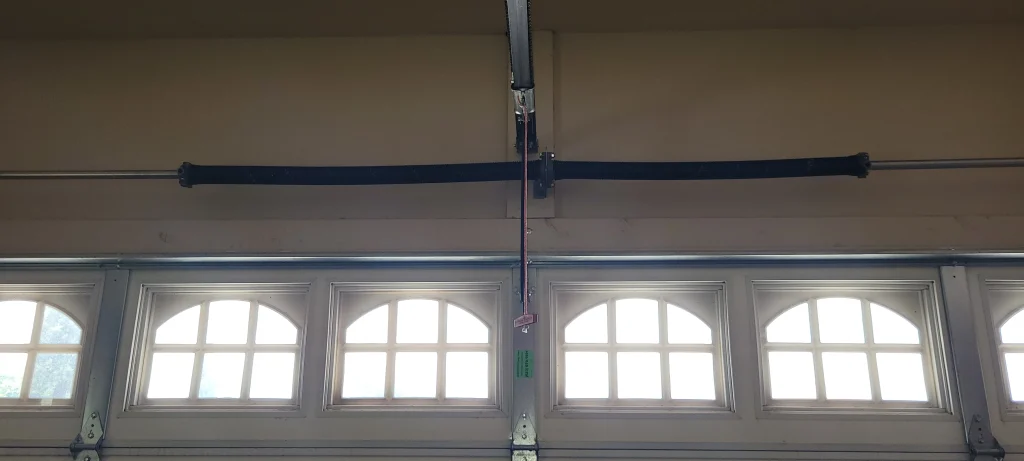
Using the garage door manual release can be necessary during a power outage or when your automatic opener stops responding. However, manual operation is only safe when the garage door system is balanced, undamaged, and functioning as designed.
If springs, cables, or other lift components are compromised, disengaging the opener can create serious safety hazards and increase the need for garage door repair. Understanding when manual operation is appropriate helps reduce risk, avoid sudden door movement, and prevent added strain on the lift system.
When Should You Use the Garage Door Manual Release for Safe Access?
The garage door manual release is most appropriate when the opener cannot move the door normally, and the door appears stable enough for controlled manual operation without added strain.
Common situations where using it may be appropriate include:
- A power outage prevents the garage door opener from running, and access is needed.
- The wall control does not respond even though the opener has power, suggesting a drive-side issue.
- The automatic opener runs, but the door will not move, indicating the problem may involve the opener carriage connection rather than the door path.
- The door must be disconnected to determine whether resistance is coming from the garage door motor or the garage door track.
- A garage door emergency involves urgent access, and the door is fully closed, level, and not showing signs of lift failure.
To understand how these access situations connect to safe release timing and the warning signs that signal lift-system trouble, read our blog on How to Use the Garage Door Manual Release Safely, which explains the safest sequence to reduce risk and avoid unnecessary garage door repair.
Conditions That Make Manual Operation Safe
The Door Feels Balanced and Holds Position Without Drifting
Manual operation is safer when the door’s weight feels controlled, and the door holds its position after a manual release.
Confirm balance with practical indicators:
- The door holds midway without drifting down or floating upward.
- Lift effort stays consistent instead of becoming suddenly heavy.
- Movement stays steady near the center of the door during travel.
- The open position holds briefly without needing force to keep it there.
- Lowering by hand stays controlled instead of accelerating unexpectedly.
Consistent balance supports predictable movement, reduces the risk of sudden drops, and keeps manual lifting safer across repeated cycles.
Lift Cables Stay Taut and Route Cleanly on the Drums
Manual lifting is safer when lift cables stay evenly tensioned and remain seated correctly so the door does not twist during movement.
Evaluate cable stability using clear signs:
- Cable lines stay taut on both sides during manual operation.
- Drum wraps remain even without stacking, crossing, or bunching.
- Bottom attachments appear secure, with no pulling or visible distortion.
- Door travel stays level instead of lifting faster on one side.
- Side lift path stays smooth without sharp pops or sudden slack.
Even cable routing keeps lift support stable and limits side tilt, while garage door cable repair addresses slack, fraying, and drum tracking issues before control becomes unpredictable.
Track Alignment Supports Straight, Even Travel
Controlled manual operation depends on track alignment, as binding or side drag often indicates a safety hazard in the garage door system.
Check track alignment using observable markers:
- Roller path stays centered instead of riding the track edge.
- Door travels straight without drifting toward either jamb.
- Contact stays smooth without scraping sounds along metal surfaces.
- Mounting brackets stay firm without flexing during movement.
- Travel feels consistent from floor to header without tight spots.
Guidance from the International Door Association outlines why routine inspection of tracks, rollers, and mounting hardware is critical for safe operation and injury prevention during manual use.
Rollers Travel Smoothly With No Grinding, Snapping, or Skipping
Manual lifting is safer when rollers move smoothly, as stable rolling reduces changes in resistance that can cause sudden jerks.
Assess roller performance with sound and motion cues:
- Travel sounds stay steady without grinding during movement.
- Roller wheels spin freely instead of dragging inside the track.
- Door motion stays fluid rather than jumping forward in bursts.
- Side movement stays minimal without wobble as the door rises.
- Hinge connection points stay steady without shifting under load.
Smooth roller travel reduces friction spikes and protects hinges and panels, and garage door roller repair restores consistent movement when wear begins to cause binding or jerky travel.
The Door Stays Level Without Racking, Tilting, or Dragging
Manual operation is safer when the door stays level, as a tilt can shift the load and cause unstable movement.
Verify level travel using simple alignment checks:
- The bottom edge remains parallel to the floor as lifting begins.
- Both sides rise together without one corner lagging behind.
- Panel edges clear the frame without rubbing or catching.
- Door sections track evenly without twisting through full travel.
- The closing path stays square without dragging along any side.
Level travel keeps the load evenly distributed, reduces racking tension, and prevents track drag that escalates system stress.
Springs, Bottom Brackets, and Fasteners Show No Signs of Active Failure
Manual release use is safer when load-bearing parts are intact, because damaged hardware can transfer the full weight of the garage door without warning.
Scan load points for clear failure signals:
- Springs appear continuous, with no visible gap or separation.
- Bottom brackets sit firm without bending or pulled fasteners.
- Attachment point hardware stays tight without shifting under load.
- Side hardware stays quiet, with no sharp snaps during movement.
- Metal surfaces show no fresh dust near load-bearing parts.
Intact load hardware supports stable counterbalance, prevents sudden drops, and reduces the risk of unsafe manual lifting.
The Opener Is Not Mid-Cycle, and the Door Is Not Under Drive Force
Manual operation is safer when the opener is fully stopped, because releasing the opener carriage under load can cause abrupt movement.
Confirm safe timing using control-based checks:
- The opener is fully stopped, with no humming or cycling attempts.
- Wall control stays untouched during the use of the release mechanism.
- The opener carriage sits still on the opener track without strain.
- The door starts fully closed before disengagement begins.
- The emergency release cord hangs slack rather than pulling taut.
Chamberlain Group guidance states that the emergency release should be used only when the door is fully closed and warns that weak springs can cause a sudden drop.
What the Manual Release Actually Does Inside the Opener System
Using the garage door manual release disconnects the door from the garage door opener, allowing it to move without the automatic opener driving it.
What changes after manual release:
- The opener carriage disengages from the opener track, stopping the drive force from the garage door motor.
- Door movement shifts to manual operation, so the door’s weight control depends on the garage door springs and balance.
- The release cord and red handle identify the emergency release mechanism.
- A manual lock or manual locking system can still hold the door in place even after being disconnected.
- Reconnection requires the opener carriage to re-link during normal functionality when the opener runs again.
Manual release shifts control away from the opener, so safe handling depends on a stable garage door system and extreme caution.
The Risks of Manually Opening a Garage Door
Manually opening a garage door after using the manual release can be risky if the door’s weight is not properly supported or the lift system is already compromised.
Main risks during manual operation include:
- A rapid drop can occur when the spring support is weak or a broken spring is present.
- A crooked lift can happen when one side loses cable tension, causing the door to rack.
- Track binding can force the door to jerk, increasing strain on rollers and hinges.
- Pinch points become more dangerous when sections shift, and hands move near joints.
- Opener linkage issues can follow if the opener carriage reengages while alignment is off.
When the door disconnects, and the opener carriage will not reengage properly, our guide on How to Reengage a Garage Door After Manually Opening? explains what professionals verify to prevent misalignment, strain, and repeated failure.
Common Situations Where Manual Release Is Used and What Safety Depends On
Manual garage door release use is common when the opener cannot run, but safety depends on stable lift hardware and controlled door travel.
Common situations include:
- A power outage prevents the electric garage door from operating, and access is needed.
- The wall control fails to respond, even though the garage door opener is powered.
- The automatic opener runs, but the opener carriage does not pull the door on the opener track.
- A loud click or sudden change in the door’s weight suggests a lift-system problem.
- A manual lock or manual locking system holds the door even after manual release.
A release cord that will not disengage points to a separate issue, and our blog on What to Do If the Garage Door Manual Release Is Stuck? explains the most common causes professionals diagnose and how the release function is restored safely.
When to Avoid Manual Use and Call a Professional Immediately
Using the garage door manual release is not safe when warning signs suggest the garage door system cannot control the door’s weight or the door cannot travel smoothly.
Situations that require professional repair include:
- The door feels unusually heavy, which can indicate weak or damaged garage door springs.
- A broken spring is visible, or a loud click was heard before the door stopped moving.
- Cables appear loose, frayed, or uneven, which can allow a sudden door drop.
- The door sits crooked, binds in the garage door track, or jerks during manual operation.
- The release mechanism will not move, or the emergency release cord feels locked in place.
Unsafe weight, crooked travel, and visible hardware damage signal loss of lift support, and emergency garage door repair services address the underlying mechanical failure before further strain or sudden door movement occurs.
Why Some Homes Need a Garage Door Emergency Release Kit
A garage door emergency release kit can be important when the garage is the main entry point, and the garage door opener cannot run during a power outage or system failure.
Homes that often need this setup include:
- Garages without a side-entry door, which limits access during an emergency garage door situation.
- Homes where the garage is the primary entry, creating a garage door emergency if the automatic opener fails.
- Setups with a locked interior door that limit entry when the garage door manual release cannot be reached.
- Households that rely on quick access for daily use, delivery entry, or mobility needs.
- Properties where emergency services may need fast access without forcing entry.
Better exterior access planning reduces delays during garage door emergency conditions and supports safer manual release use when the opener cannot operate normally.
Make Manual Release Use Safe and Stress-Free in Chandler, AZ
Garage door manual release use can be safe when the door is balanced, the lift hardware is stable, and manual operation stays under control from start to finish. A broken spring, loose cables, or an opener strain can remove support quickly and turn manual lifting into a serious safety hazard, leading to garage door repair.
GT Garage Door Repair helps homeowners in Chandler, AZ restore safe access by diagnosing release mechanism problems and correcting lift-system issues that affect normal functionality. We provide responsive garage door services for emergency situations and stability concerns, so contact us or give us a call today to schedule service with a local expert.
Frequently Asked Questions
Can a garage door be too heavy to open manually, even if nothing looks broken?
Yes. A door can feel too heavy when spring tension is weak or failing, even if no damage is obvious. Continued manual operation can pose safety hazards because the door’s weight is no longer being properly managed.
Does manually opening the door damage the opener over time?
No. Manual operation does not damage the opener when the door is properly disconnected, and the system is stable. Damage risk increases when the opener is forced or when the door is reengaged while alignment is off.
Is it safe to leave a garage door disconnected from the opener overnight?
Yes, but only if the door is fully closed and stable. A disconnected door can be easier to move if the hardware is worn, so security and the risk of unexpected movement should be considered.
Can wind or temperature changes affect manual door control?
Yes. Wind can push against the door surface, affecting control during manual lifting. Temperature swings can also affect metal parts and spring performance, altering how the door feels.
What happens if the door is opened manually while the opener is locked?
It depends. Some systems prevent movement, while others may resist, leading to rough operation. Professional inspection can confirm whether the lock setting, carriage position, or drive setup is causing the restriction.
Can a manual release be used on smart openers and belt-drive systems the same way?
Yes. Most smart openers and belt-drive systems use a similar release setup that disconnects the opener carriage for manual movement. Design details vary by model, so safe operation still depends on door balance and hardware condition.
Why does the manual release cord sometimes feel hard to pull?
A release cord can feel hard to pull when the opener carriage is under tension or the door is not in a stable position. A jammed release mechanism or misalignment in the opener track can also increase resistance.
Can a garage door move on its own after disengaging the opener?
Yes. A door can drift, drop, or rise if spring tension is weak or the door is out of balance after disengagement. Wind pressure or uneven track alignment can also trigger unexpected movement, especially on heavier doors.
Are there differences in manual safety between single and double-garage doors?
Yes. Double doors typically have greater weight and surface area, increasing handling risk during manual operation. Door size also increases the impact of wind pressure and uneven lift support.
Should landlords or property managers handle manual release issues differently from homeowners?
Yes. Property managers should treat manual release concerns as a safety and liability issue and document the condition immediately. Emergency garage door release issues should be addressed by a professional to confirm safe operation and restore controlled access.